James Jankowski - Böcker
Visar alla böcker från författaren James Jankowski. Handla med fri frakt och snabb leverans.
6 produkter
6 produkter
671 kr
Skickas inom 10-15 vardagar
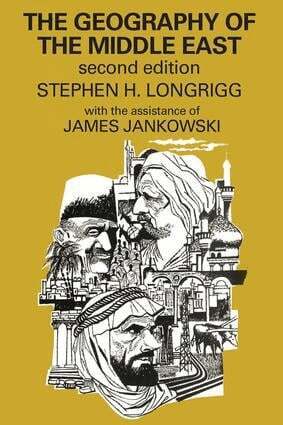
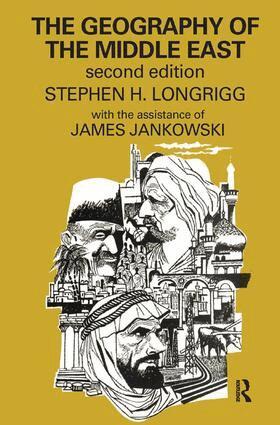
Much of the Middle East is in a continuing state of visible, often revolutionary, change in almost every field--social, cultural, economic, political. Although time will have greatly modified the conditions here presented, the author emphasizes those aspects which, being the least ephemeral, were likely to remain valid for some years and indicates the areas in which the most change can be expected. Therefore, in evaluating any change that has occurred, the reader will at least be informed of the conditions out of which--or because of which--such an event occurred.In some cases Longrigg passes over important aspects of the Middle Eastern region and its component countries, almost or entirely in silence: among such aspects being those of military resources, prominent personalities, constitutional or legal issues, budgets and balances of trade. And even on matters upon which he has said something fairly specific--topography, races and languages, religions, climates, natural resources and agronomy, industry, communications--there may be too little detailed information to satisfy a reader desirous of a full picture of a given aspect of things in this or that territory. For most of such detail, and not less for an appreciation which may be widely different from the author's, the student can very easily look elsewhere: the literature of these countries is abundant and accessible.Longrigg's attempt has been to offer an objective but informed account of the different nationalities and social forces found in Middle Eastern environments, urban and rural, in terms of the particular circumstances, problems and hopes of the dozen separate and more or less divided states of the region. The non-specialist reader may from all this learn something true and perhaps suggestive, while the expert may find not too much to offend him.
331 kr
Skickas inom 7-10 vardagar
Today's discourse on nationalism is engaged by dynamic theoretical models derived from studies in literary criticism, cultural anthropology, socioeconomics, and psychology. This is the first book of its kind to apply this new theoretical framework to the Arab Middle East, with essays by Beth Baron, Fred Halliday, Rashid Khalidi, and Emmanuel Sivan.
1 436 kr
Skickas inom 10-15 vardagar
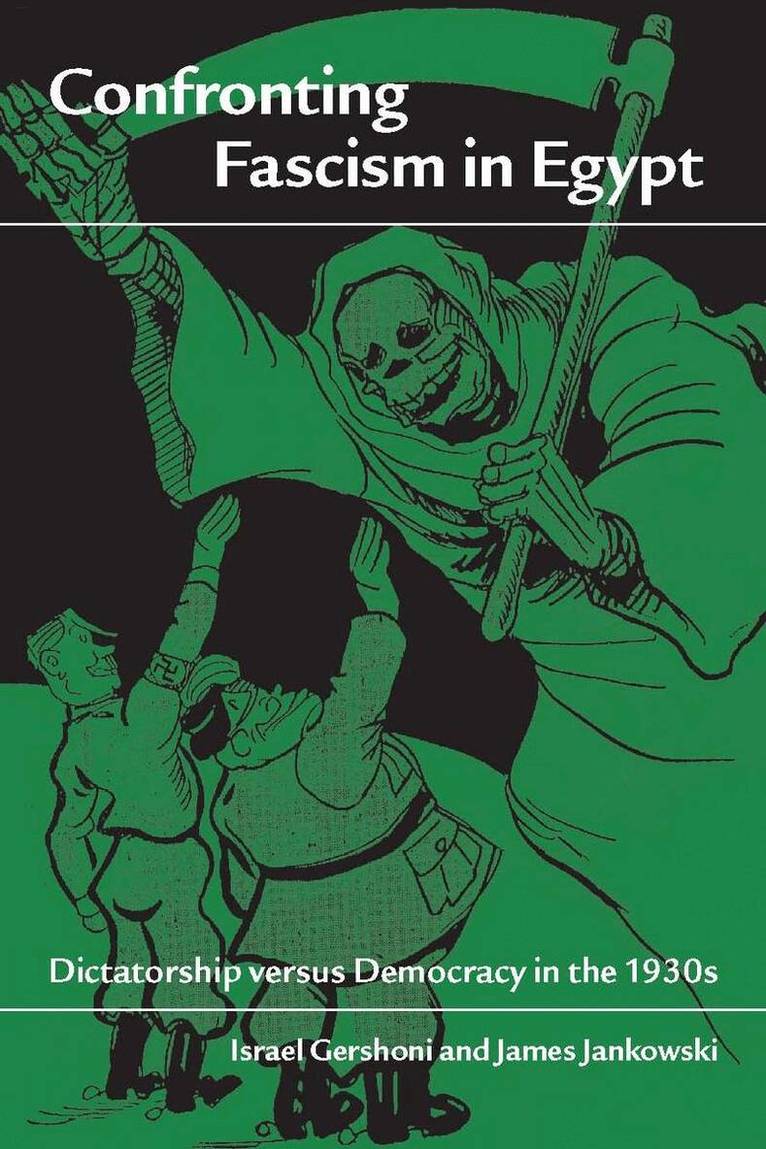
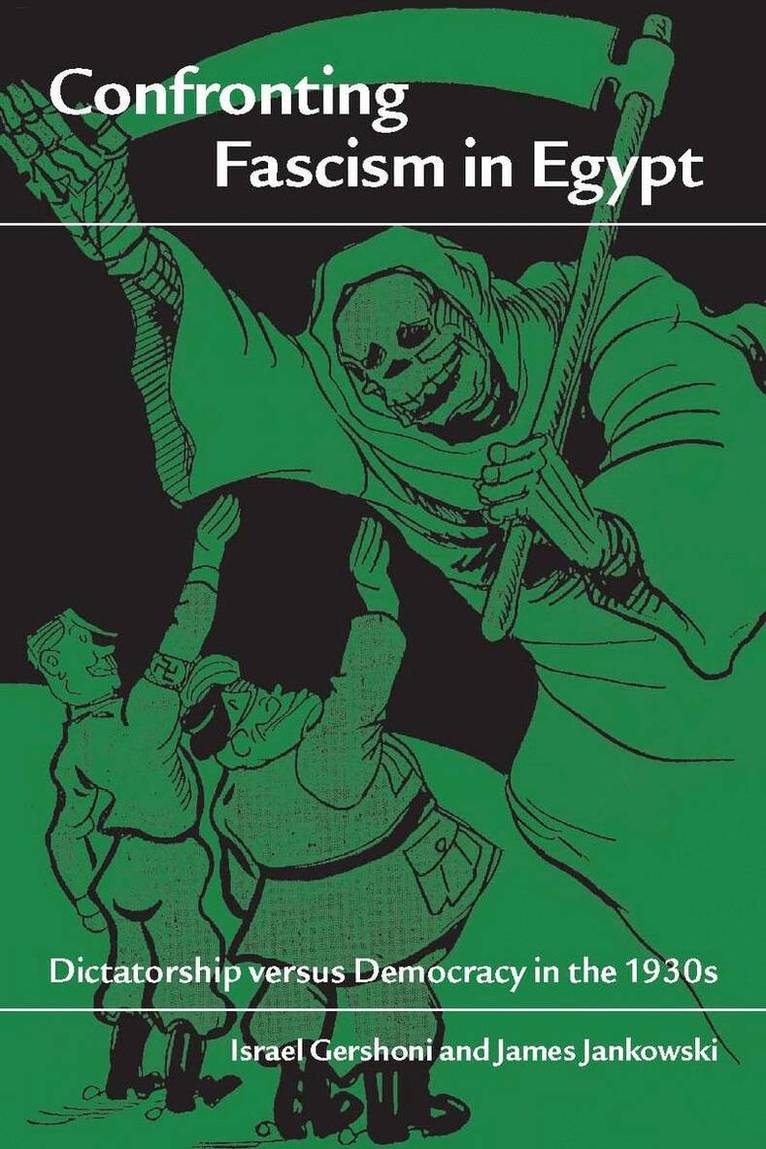
Confronting Fascism in Egypt offers a new reading of the political and intellectual culture of Egypt during the interwar era. Though scholarship has commonly emphasized Arab political and military support of Axis powers, this work reveals that the shapers of Egyptian public opinion were largely unreceptive to fascism, openly rejecting totalitarian ideas and practices, Nazi racism, and Italy's and Germany's expansionist and imperialist agendas. The majority (although not all) of Egyptian voices supported liberal democracy against the fascist challenge, and most Egyptians sought to improve and reform, rather than to replace and destroy, the existing constitutional and parliamentary system. The authors place Egyptian public discourse in the broader context of the complex public sphere within which debate unfolded—in Egypt's large and vibrant network of daily newspapers, as well as the weekly or monthly opinion journals—emphasizing the open, diverse, and pluralistic nature of the interwar political and cultural arena. In examining Muslim views of fascism at the moment when classical fascism was at its peak, this enlightening book seriously challenges the recent assumption of an inherent Muslim predisposition toward authoritarianism, totalitarianism, and "Islamo-Fascism."
332 kr
Skickas inom 7-10 vardagar
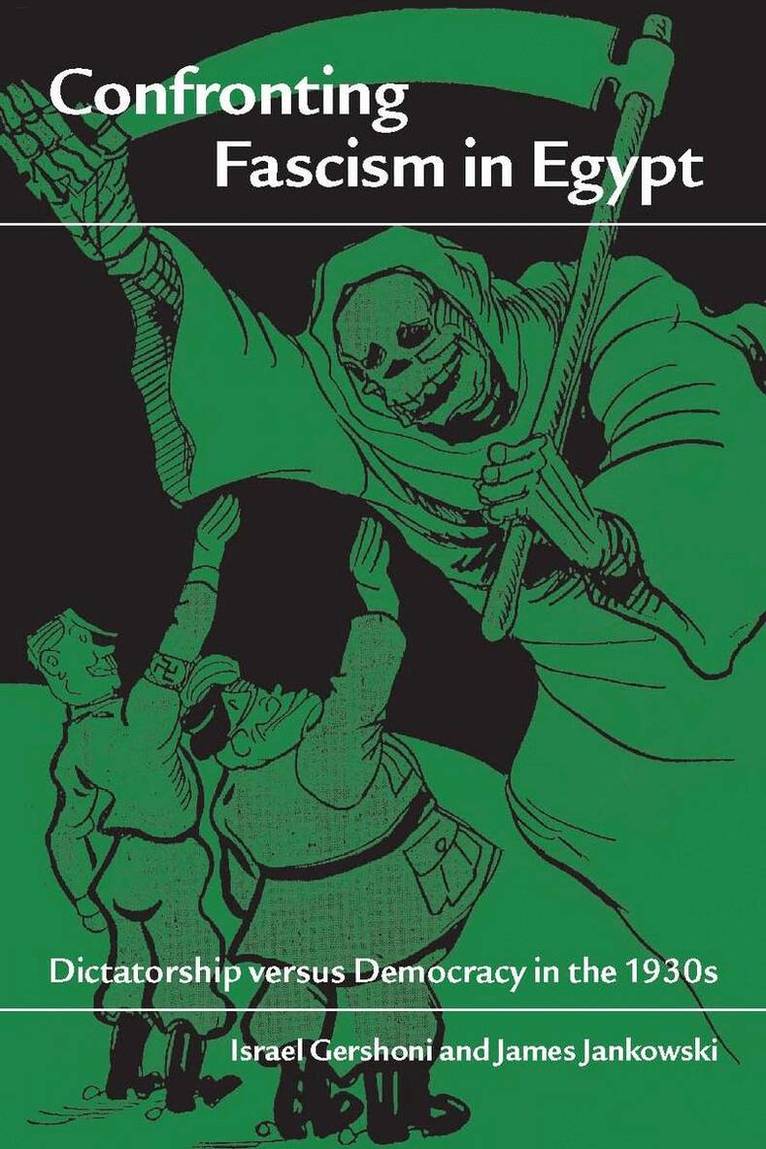
Confronting Fascism in Egypt offers a new reading of the political and intellectual culture of Egypt during the interwar era. Though scholarship has commonly emphasized Arab political and military support of Axis powers, this work reveals that the shapers of Egyptian public opinion were largely unreceptive to fascism, openly rejecting totalitarian ideas and practices, Nazi racism, and Italy's and Germany's expansionist and imperialist agendas. The majority (although not all) of Egyptian voices supported liberal democracy against the fascist challenge, and most Egyptians sought to improve and reform, rather than to replace and destroy, the existing constitutional and parliamentary system. The authors place Egyptian public discourse in the broader context of the complex public sphere within which debate unfolded—in Egypt's large and vibrant network of daily newspapers, as well as the weekly or monthly opinion journals—emphasizing the open, diverse, and pluralistic nature of the interwar political and cultural arena. In examining Muslim views of fascism at the moment when classical fascism was at its peak, this enlightening book seriously challenges the recent assumption of an inherent Muslim predisposition toward authoritarianism, totalitarianism, and "Islamo-Fascism."
Del 2 - Chicago Studies on the Middle East
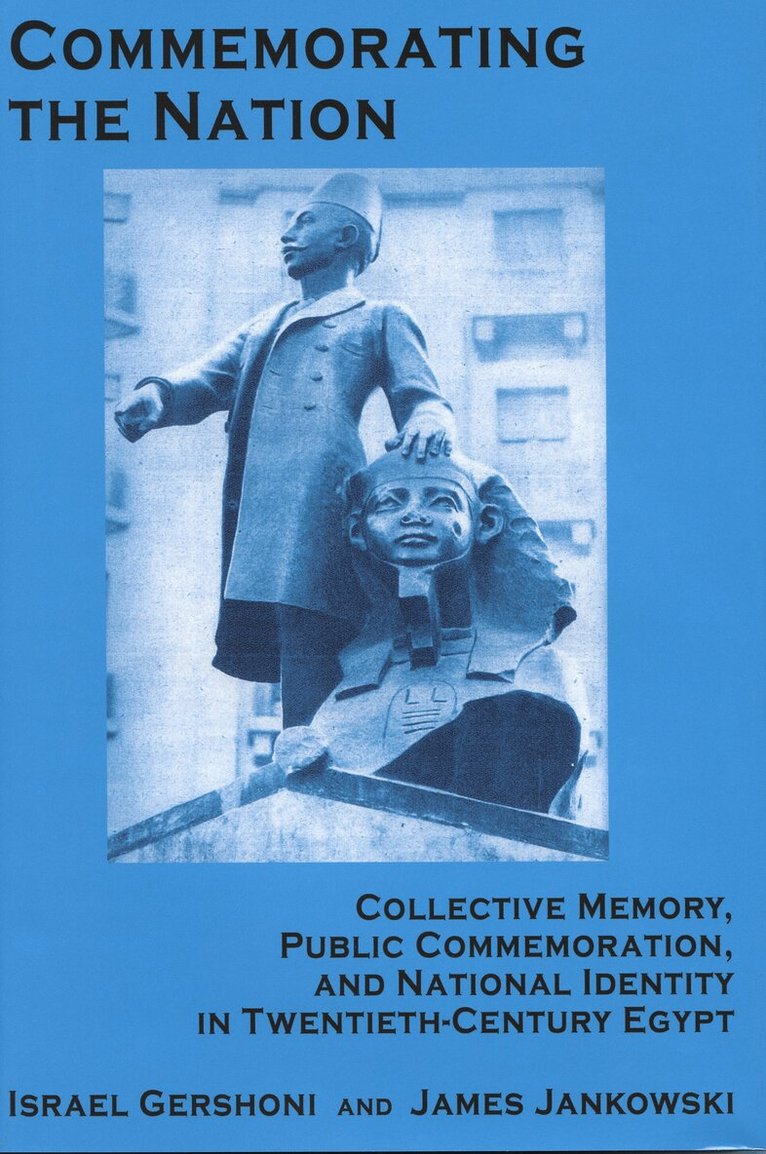
Commemorating the Nation
Collective Memory, Public Commemoration, and National Identity in Twentieth-century Egypt
Inbunden, Engelska, 2004
903 kr
Skickas inom 5-8 vardagar
Includes 18 illustrations. Commemorating the Nation is a study of the relationship between public commemoration and national identity in Egypt over the course of the twentieth century. Appropriating insights from recent theoretical discussions of collective memory and public commemoration, it examines the modes by which different Egyptian communities of memorythe state under successive regimes; rival political forces and movements; elite and non-elite groups within civil societyremembered and commemorated the Egyptian national struggle, its defining moments and heroic figures, in specific sites of national memory. The book's analysis ranges across the twentieth century, tracing the changing place of selected sites of national memory from the pre-World-War-I years through the decades of the parliamentary monarchy to the era of the Egyptian Republic. Each of its three main sections is devoted to a different form of commemoration. The first is the nationalist art of Egypt's "national sculptor" Mahmud Mukhtar (1891-1934) and how his monumental icons expressing the nationalist ethos, specifically his sculpture Nahdat Misr and his statues of the leader of the 1919 Revolution, Sa`d Zaghlul, have been represented and re-represented by successive generations of Egyptians. The second section analyzes the modalities through which the historic figures of Egypt's Nationalist Party, Mustafa Kamil (1874-1908) and Muhammad Farid (1868-1919), have been preserved and commemorated through the remainder of the twentieth century. The third section considers national holiday celebrations as sites of Egyptian collective memory, particularly the celebration of the July 1952 Revolution during the reign of Gamal Abdel Nasser and the commemoration of the 1973 Crossing of the Suez Canal under his successor Anwar al-Sadat. The book is the product of fieldwork in Egypt as well as of extensive research in Egyptian publications. By analyzing nationalism through the prism of public commemoration, the work extends our understanding of the shaping of national identity and the evolution of national imagining in modern Egypt. Although it focuses on Egypt, its findings have implications for the study of collective memory and public commemoration in general.
2 289 kr
Skickas inom 10-15 vardagar
Much of the Middle East is in a continuing state of visible, often revolutionary, change in almost every field--social, cultural, economic, political. Although time will have greatly modified the conditions here presented, the author emphasizes those aspects which, being the least ephemeral, were likely to remain valid for some years and indicates the areas in which the most change can be expected. Therefore, in evaluating any change that has occurred, the reader will at least be informed of the conditions out of which--or because of which--such an event occurred.In some cases Longrigg passes over important aspects of the Middle Eastern region and its component countries, almost or entirely in silence: among such aspects being those of military resources, prominent personalities, constitutional or legal issues, budgets and balances of trade. And even on matters upon which he has said something fairly specific--topography, races and languages, religions, climates, natural resources and agronomy, industry, communications--there may be too little detailed information to satisfy a reader desirous of a full picture of a given aspect of things in this or that territory. For most of such detail, and not less for an appreciation which may be widely different from the author's, the student can very easily look elsewhere: the literature of these countries is abundant and accessible.Longrigg's attempt has been to offer an objective but informed account of the different nationalities and social forces found in Middle Eastern environments, urban and rural, in terms of the particular circumstances, problems and hopes of the dozen separate and more or less divided states of the region. The non-specialist reader may from all this learn something true and perhaps suggestive, while the expert may find not too much to offend him.