James Jay Carafano - Böcker
Visar alla böcker från författaren James Jay Carafano. Handla med fri frakt och snabb leverans.
8 produkter
8 produkter
585 kr
Skickas inom 10-15 vardagar
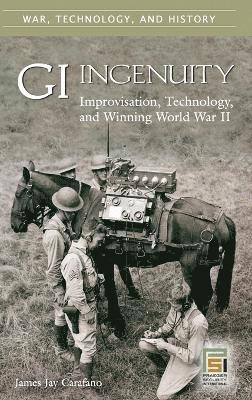
World War II saw the first generation of young men that had grown up comfortable with modern industrial technology go into combat. As kids, the GIs had built jalopies in their garage and poured over glossy, full-color issues of Popular Mechanics; they had read Buck Rogers in the Twenty Fifth Century comic books, listened to his adventures on the radio, and watched him pilot rocket ships in the Saturday morning serials at the Bijou. Tinkerers, problem-solvers, risk-takers, and day-dreamers, they were curious and outspoken—a generation well prepared to improvise, innovate, and adapt technology on the battlefield. Since they were also a generation which had unprecedented technology available to them, their ability to innovate with technology proved an immeasurable edge on the field of combat. This book tells their story through the experience of the battle of Normandy, bringing together three disparate brands of history: (1) military history; (2) the history of science and technology; and (3) social, economic, cultural, and intellectual history. All three historical narratives combine to tell the tale of GI genius and the process by which GI ingenuity became an enduring feature of the American citizen-soldier.GI Ingenuity is in large part an old-fashioned combat history, with mayhem and mass slaughter at center stage. It tells the story of death and destruction on the killing fields of Normandy, as well as the battlegrounds that provide the prologue and postscript to the transformation of war that occurred in France in 1944. This story of GI ingenuity, moreover, puts the battles in the context of the immense social, economic, scientific, and technological changes that accompanied the evolution of combat in the twentieth century. GI Ingenuity illustrates the great transition of the American genius in battle from an industrial-age army to a postmodern military. And it does it by looking at the place where the transition happened—on the battlefield.
Private Sector, Public Wars
Contractors in Combat - Afghanistan, Iraq, and Future Conflicts
Inbunden, Engelska, 2008
665 kr
Skickas inom 5-8 vardagar
Contractors are big business and a big part of war, with businesses taking upon themselves many tasks previously designated to the armed forces. By 2007, there were over 100,000 individuals working on U.S. contracts in Iraq and Afghanistan-versus about 160,000 U.S. combat troops. By some estimates, contractors account for some 40 percent of the costs of running operations. This important work examines how that came to be, as well as answering a number of critical questions: How have Congress, public interest groups, and other parties dealt with the issue? How is the marketplace affecting the American way of war? What impact will this have on force structure? How will the growing involvement of the private sector influence such matters as the all-volunteer force and the procurement and maintenance of advanced warfighting systems?The emergent role of contractors on the battlefield reflects a deeply significant transition in the nature of armed conflict, a significant rebalancing between the roles of the private and public sectors. This change is the most significant upheaval in the nature of warfare since the rise of the nation-state in the 17th century. It represents a transformation started long before the invasion of Iraq and, absent a dramatic change in the evolution of the global marketplace, it will continue to increase, regardless of the course of American domestic politics. Government will have to change to keep up.Understanding why the private sector has come to play such a prominent role in public wars requires tracing a story as torturous and, at times, mysterious as the search for the Holy Grail, a tale filled with deceit, greed, courage, selflessness, stupidity, misdirection, and myth. It includes following a winding path from Medieval Tuscan hills, to England, to colonial America, to the sands of Iwo Jima and of Iraq, the mountains of Afghanistan, the corridors of Wall Street, and the halls of the Pentagon. It demands walking through the cross sections of military, political, social, cultural, economic, intellectual, and business history. At the end of the journey lies the unvarnished truth about contractors in combat. That is the story Private Sector, Public Wars means to tell.
809 kr
Skickas inom 10-15 vardagar
One of the greatest sources of America's troubles in Iraq, Afghanistan, and New Orleans was the inability of our government's many parts to work well together. Often called interagency operations, applying everything that official Washington can do to keep Americans safe, free, and prosperous, is no easy task. The Pentagon, State Department, Homeland Security, Treasury, FBI, CIA, and other agencies have different capabilities, budgets, cultures, operational styles, Congressional oversight committees, and even operate under different laws. Getting them all organized on battlefields, after disasters, and during other times of crisis is often equated with herding cats. The history of getting government agencies to cooperate is replete with stories of courage, heart-breaking tragedy, and blundering incompetence. To meet the dangers of the 21st century, interagency operations will be more important than ever, yet few Americans understand the troubling history of Washington's failures and the pressing needs for reform.One of the greatest sources of America's troubles in Iraq, Afghanistan, and New Orleans was the inability of our government's many parts to work well together. Often called interagency operations, the coordination of everything official Washington can do to keep Americans safe, free, and prosperous, is no easy task. The Pentagon, State Department, Homeland Security, Treasury, FBI, CIA, and other agencies have different capabilities, budgets, cultures, operational styles, Congressional oversight committees, and even operate under different laws. Getting them all organized on battlefields, after disasters, and during other times of crisis is often equated with herding cats. The history of getting government agencies to cooperate is replete with stories of courage, heart-breaking tragedy, and blundering incompetence. To meet the dangers of the 21st century, interagency operations will be more important than ever, yet few Americans understand the troubling history of Washington's failures and the pressing needs for reform.This book is the first comprehensive history and sober analysis of one of the most pressing national security challenges of the century. The goal is to make a serious and unappreciated subject accessible to a wide audience through a series of engaging and informative historical case studies. The case studies span American history from the turn of the 20th century to today. They cover a variety of subjects from dealing with the great flu epidemic of 1918, to responding to natural disasters at home and abroad, to fighting wars and rebuilding countries after war. Each engaging chapter is a single case study written by a distinguished scholar who covers the historical context, the key players, actions, incidents, and, perhaps most important, lessons learned.
238 kr
Skickas inom 5-8 vardagar
The U.S. forces that fought in Normandy during the summer of 1944 met a battle-hardened German enemy and a forbidding landscape of earthen hedgerows, sunken roads, and thick bushes and trees. American GIs lacked the combat experience of their opponents but made up for it with their ability to innovate, adapt, improvise, and experiment on the battlefield, finding ingenious ways to blow through hedgerows and slam the Germans with massive firepower. Their innovations helped win World War II and transformed the American way of war.
254 kr
Skickas inom 5-8 vardagar
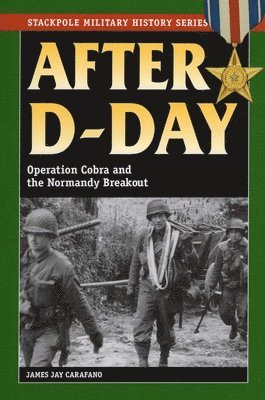
After storming the beaches on D-Day, June 6, 1944, the Allied invasion of France bogged down in seven weeks of grueling attrition in Normandy. On July 25, U.S. divisions under Gen. Omar Bradley launched Operation Cobra, an attempt to break out of the hedgerows and begin a war of movement against the Germans. Despite a disastrous start, with misdropped bombs killing more than 100 GIs, Cobra proved to be one of the most pivotal battles of World War II, successfully breaking the stalemate in Normandy and clearing a path into the heart of France.
495 kr
Skickas inom 7-10 vardagar
As US troops marched into vanquished Austria at the end of World War II, they faced the dual tasks of destroying the remnants of Nazi power and establishing a new democratic nation. The American military forces were adept at the first task; they were woefully unprepared for the second. Their halting efforts, complicated by the difficulties of managing the occupation along with Britain, France, and the Soviet Union, exacerbated an already monumental undertaking and fueled the looming Cold War confrontation between East and West. In this first English-language study of secret postwar US military operations during the occupation of Austria and of the American effort to create a garrison state for NATO's defense, James Jay Carafano traces US policy and behaviour from the end of the war until 1955 and the signing of the treaty that finally led to the withdrawal of the occupation forces. He demonstrates that from the very beginning of an American presence in Austria, the US Army could not wean itself from the operational habits it had forged in war, practices that skewed US postwar foreign policy while earning Austrian resentment and Soviet mistrust. The fog of peace, Carafano concludes, befuddled US planners. In crystal-clear detail, Carafano lays out the course of the US presence in Austria, the problems America encountered, and the problems it caused. He sheds new light on this little-studied aspect of the Cold War, and he underscores the mundane truth that peace is fundamentally different from war and that if armies are used during peacetime, they have to be retrained to manage their postwar tasks successfully. Those interested in contemporary military peace-keeping efforts, as well as those trying to understand the lessons of the Cold War, should find this study an invaluable aid.
428 kr
Skickas inom 7-10 vardagar
In 2011, amid the popular uprising against Egyptian president Hosni Mubarak, the government sought in vain to shut down the Internet-based social networks of its people.WikiLeaks editor-in-chief Julian Assange has been branded “public enemy number one” by some in the United States for posting material on the World Wide Web that concerns airstrikes in Iraq, US diplomatic communications, and other sensitive matters.In Wiki at War, James Jay Carafano explains why these and other Internet-born initiatives matter and how they are likely to affect the future face of war, diplomacy, and domestic politics.“The war for winning dominance over social networks and using that dominance to advantage is already underway,” Carafano writes in this extremely timely analysis of the techno-future of information and the impact of social networking via the Internet. Drawing on his extensive knowledge of history and defense strategy, Carafano creates a cogent analysis of what is truly new about the “new media,” and what is simply a recasting of human warfare in contemporary forms.Wiki at War is written in a lively, accessible style that will make this technological development comprehensible and engaging for general readers without sacrificing the book’s usefulness to specialists. Outlining the conditions under which a difference in degree becomes a difference in kind, detailing how ancient wisdom can still apply to national security decisions, and examining the conditions under which new expertise is required to wage effective diplomacy or successful military strategy, Carafano casts in stark relief the issues that face political, military, and social leaders in trying to manage and control information, in both the international and domestic arenas. Wiki at War affords stimulating thought about and definitive discussion of this vital emerging topic.
454 kr
Skickas inom 3-6 vardagar
“In the modern world,” author James Jay Carafano asserts, “winning online could be the key to being free, safe, and prosperous—or being consumed.” In his previous book, Wiki at War: Conflict in a Socially Networked World, Carafano explored how social networks operate; how digital networks could impact contemporary national security affairs; and how to dominate the “high ground” in cyberspace. In the ensuing decade, real-world actors have put this knowledge into practice.Written as a sequel, Digital Dominance: Winning in a Socially Networked World is divided into four parts. The first explores the time from Wiki at War to now, updating the ideas and domination strategies through a modern lens as the digital world impacts the physical. The second and third parts break down both sides of the national security challenge: how to not only build an effective, powerful, and impactful network of your own, but how to take apart the networks of adversaries. Carafano concludes with an eagle’s-eye view of the environment where this digital war is playing out, what public and private sector actors are participating, and the role of emerging new technologies.Digital Dominance looks at both sides of the national security challenge: how to build networks and make them powerful and impactful, while also weakening the enemy’s. Given the growing impact of the “metaverse,” the questions raised in this book are only likely to become more crucial over time. Digital Dominance promises to guide and shape our understanding of how strategic success or failure online could increasingly predict outcomes in real time.