James Ker - Böcker
Visar alla böcker från författaren James Ker. Handla med fri frakt och snabb leverans.
6 produkter
6 produkter
596 kr
Skickas inom 5-8 vardagar
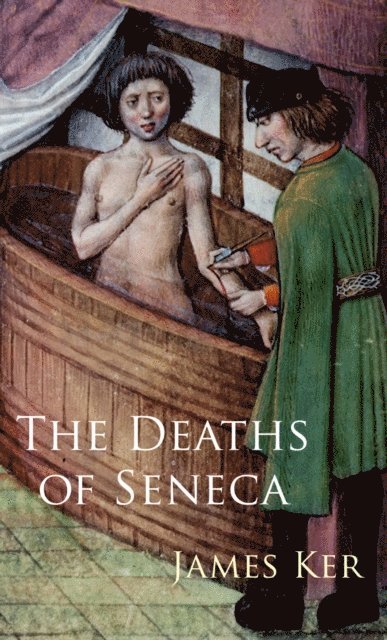
The forced suicide of Seneca, former adviser to Nero, is one of the most tortured--and most revisited--death scenes from classical antiquity. After fruitlessly opening his veins and drinking hemlock, Seneca finally succumbed to death in a stifling steam bath, while his wife Paulina, who had attempted suicide as well, was bandaged up and revived by Nero's men. From the first century to the present day, writers and artists have retold this scene in order to rehearse and revise Seneca's image and writings, and to scrutinize the event of human death. In The Deaths of Seneca, James Ker offers the first comprehensive cultural history of Seneca's death scene, situating it in the Roman imagination and tracing its many subsequent interpretations. Ker shows first how the earliest accounts of the death scene by Tacitus and others were shaped by conventions of Greco-Roman exitus-description and Julio-Claudian dynastic history. At the book's center is an exploration of Seneca's own prolific writings about death--whether anticipating death in his letters, dramatizing it in the tragedies, or offering therapy for loss in the form of consolations--which offered the primary lens through which Seneca's contemporaries would view the author's death. These ancient approaches set the stage for prolific receptions, and Ker traces how the death scene was retold in both literary and visual versions, from St. Jerome to Heiner Müller and from medieval illuminations to Peter Paul Rubens and Jacques-Louis David. Dozens of interpreters, engaging with prior versions and with Seneca's writings, forged new and sometimes controversial views on Seneca's legacy and, more broadly, on mortality and suicide. The Deaths of Seneca presents a new, historically inclusive, approach to reading this major Roman author.
533 kr
Skickas inom 5-8 vardagar
749 kr
Skickas inom 5-8 vardagar
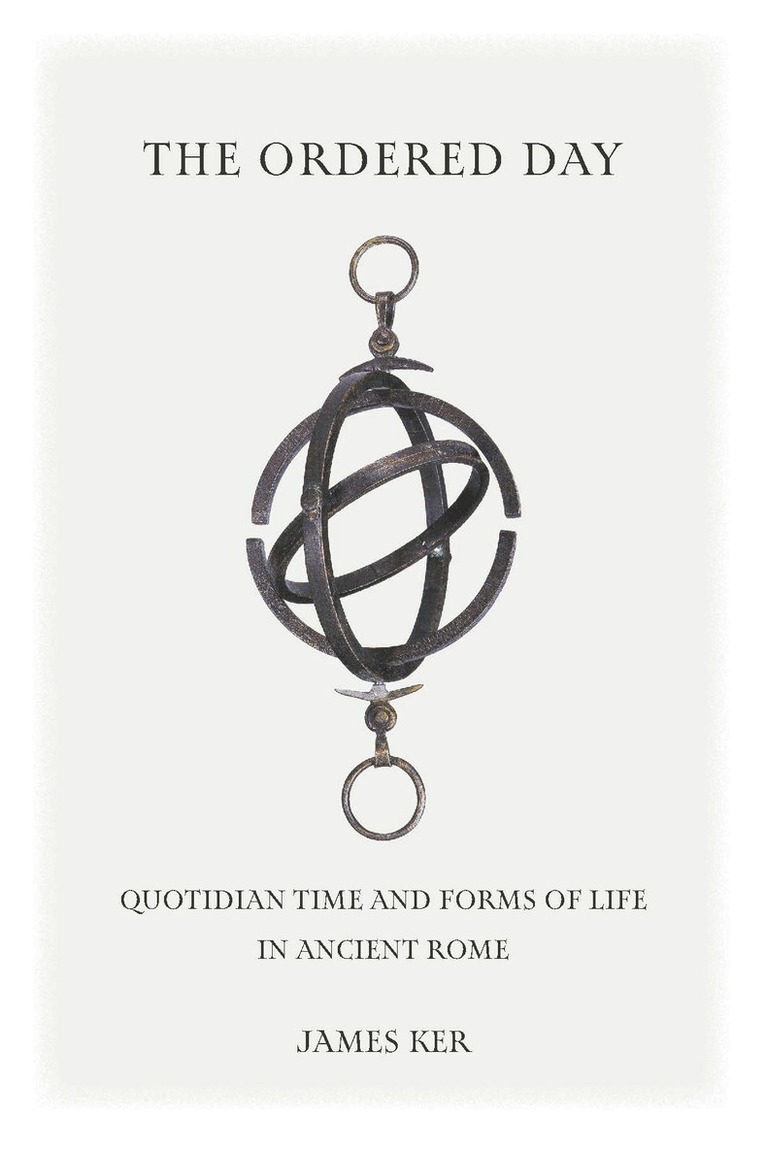
Traces how the day has served as a key organizing concept in Roman culture—and beyond.Recipient of the Charles J. Goodwin Award of Merit from the Society for Classical StudiesHow did ancient Romans keep track of time? What constituted a day in ancient Rome was not the same twenty-four hours we know today. In The Ordered Day, James Ker traces how the day served as a key organizing concept, both in antiquity and in modern receptions of ancient Rome. Romans used the story of how the day emerged as a unit of sociocultural time to give order to their own civic and imperial history. Ancient literary descriptions of people's daily routines articulated distinctive forms of life within the social order. And in the imperial period and beyond, outsiders—such as early Christians in their monastic rules and modern antiquarians in books on daily life—ordered their knowledge of Roman life through reworking the day as a heuristic framework.Scholarly interest in Roman time has recently moved from the larger unit of the year and calendar to smaller units of time, especially in the study of sundials and other timekeeping technologies of the ancient Mediterranean. Through extensive analysis of ancient literary texts and material culture as well as modern daily life handbooks, Ker demonstrates the privileged role that "small time" played, and continues to play, in Roman literary and cultural history. Ker argues that the ordering of the day provided the basis for the organizing of history, society, and modern knowledge about ancient Rome. For readers curious about daily life in ancient Rome as well as for students and scholars of Roman history and Latin literature, The Ordered Day provides an accessible and fascinating account of the makings of the Roman day and its relationship to modern time structures.
1 121 kr
Skickas inom 5-8 vardagar
Del 369 - Mnemosyne, Supplements
Valuing the Past in the Greco-Roman World
Proceedings from the Penn-Leiden Colloquia on Ancient Values VII
Inbunden, Engelska, 2014
3 178 kr
Skickas inom 5-8 vardagar
The ‘classical tradition’ is no invention of modernity. Already in ancient Greece and Rome, the privileging of the ancient played a role in social and cultural discourses of every period. A collaboration between scholars in diverse areas of classical studies, this volume addresses literary and material evidence for ancient notions of valuing (or disvaluing) the deep past from approximately the fifth century BCE until the second century CE. It examines how specific communities used notions of antiquity to define themselves or others, which models from the past proved most desirable, what literary or exegetic modes they employed, and how temporal systems for ascribing value intersected with the organization of space, the production of narrative, or the application of aesthetic criteria.
Del 434 - Mnemosyne, Supplements
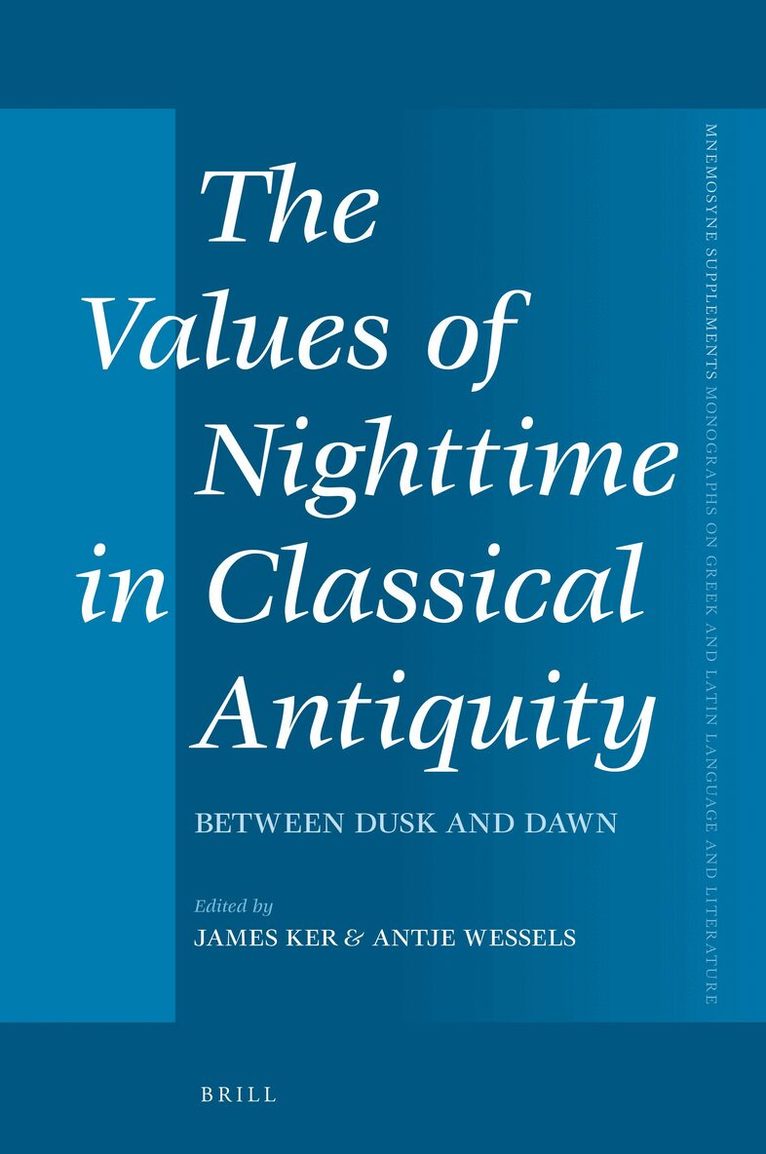
Values of Nighttime in Classical Antiquity
Between Dusk and Dawn
Inbunden, Engelska, 2020
2 100 kr
Skickas inom 5-8 vardagar
In ancient Greece and Rome, nighttime encompassed a distinctive array of cultural values that went far beyond the inversion of daytime. Night was a mythological figure, a locus of specialized knowledge, a socially significant semantic space in various literary genres, and a setting for unique experiences. These facets of night are explored here through fifteen case-studies, that range from Hesiod to imperial Roman painting and cultural history. The contributors took part in a conference on this theme at the University of Pennsylvania in 2018, where they pursued a common goal: to consider how nighttime was employed in the ascription of specific values—in determining what values a thing or a person might have, or lack, in a nocturnal context.