James L. Shulman - Böcker
Visar alla böcker från författaren James L. Shulman. Handla med fri frakt och snabb leverans.
3 produkter
3 produkter
488 kr
Skickas inom 7-10 vardagar
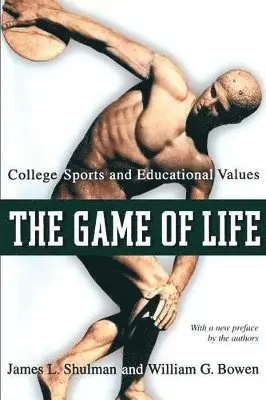
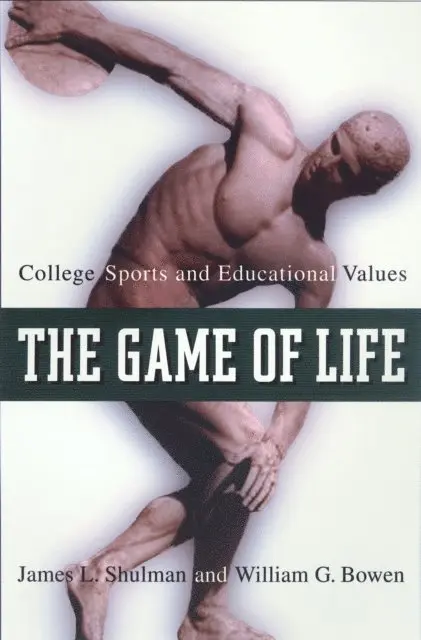
The President of Williams College faces a firestorm for not allowing the women's lacrosse team to postpone exams to attend the playoffs. The University of Michigan loses $2.8 million on athletics despite averaging 110,000 fans at each home football game. Schools across the country struggle with the tradeoffs involved with recruiting athletes and updating facilities for dozens of varsity sports. Does increasing intensification of college sports support or detract from higher education's core mission? James Shulman and William Bowen introduce facts into a terrain overrun by emotions and enduring myths. Using the same database that informed The Shape of the River, the authors analyze data on 90,000 students who attended thirty selective colleges and universities in the 1950s, 1970s, and 1990s. Drawing also on historical research and new information on giving and spending, the authors demonstrate how athletics influence the class composition and campus ethos of selective schools, as well as the messages that these institutions send to prospective students, their parents, and society at large.Shulman and Bowen show that athletic programs raise even more difficult questions of educational policy for small private colleges and highly selective universities than they do for big-time scholarship-granting schools. They discover that today's athletes, more so than their predecessors, enter college less academically well-prepared and with different goals and values than their classmates--differences that lead to different lives. They reveal that gender equity efforts have wrought large, sometimes unanticipated changes. And they show that the alumni appetite for winning teams is not--as schools often assume--insatiable. If a culprit emerges, it is the unquestioned spread of a changed athletic culture through the emulation of highly publicized teams by low-profile sports, of men's programs by women's, and of athletic powerhouses by small colleges. Shulman and Bowen celebrate the benefits of collegiate sports, while identifying the subtle ways in which athletic intensification can pull even prestigious institutions from their missions.By examining how athletes and other graduates view The Game of Life--and how colleges shape society's view of what its rules should be--Bowen and Shulman go far beyond sports. They tell us about higher education today: the ways in which colleges set policies, reinforce or neglect their core mission, and send signals about what matters.
Synthetic University
How Higher Education Can Benefit from Shared Solutions and Save Itself
Inbunden, Engelska, 2023
274 kr
Skickas inom 7-10 vardagar
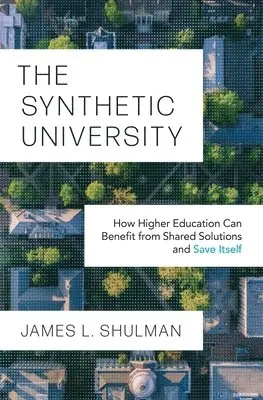
A bold, collaborative vision for combatting the ever-rising cost of collegeUS colleges and universities have long been the envy of the world. Institutional autonomy has fostered creativity among faculty, students, and staff. But this autonomy means that colleges tend to create their own solutions for every need. As a result, higher education suffers from costly redundancies that drive tuitions ever upward, putting higher education, essential to the fabric of the country, at risk. Instead of wishful thinking about collaboration or miraculous subsidies, The Synthetic University describes intermediary organizations that can provide innovative, cost-effective solutions.Offering answers to challenges jointly faced by thousands of institutions, James Shulman lays out a compelling new vision of how to reduce spending while enabling schools to maintain their particular contributions. He explains why colleges are so resistant to change and presents illuminating case studies of mission-driven and market-supported entrepreneurial organizations—such as the student tracking infrastructure of the National Student Clearinghouse or the ambitious effort of classics professors to create a shared transinstitutional department. Mixing theory with lessons drawn from his own experience, he demonstrates how to finance and implement the organizations that can synthesize much-needed solutions.A road map for sustained institutional change, The Synthetic University shows how to overcome colleges’ do-it-yourself impulses, avoid the threat of disruption, and preserve the institutions that we need to conduct basic research, foster innovation, and prepare diverse students to lead meaningful and productive lives.
Synthetic University
How Higher Education Can Benefit from Shared Solutions and Save Itself
Häftad, Engelska, 2026
220 kr
Skickas inom 7-10 vardagar
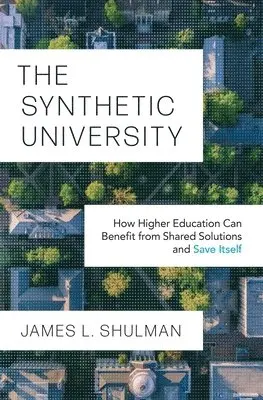
A bold, collaborative vision for combatting the ever-rising cost of collegeUS colleges and universities have long been the envy of the world. Institutional autonomy has fostered creativity among faculty, students, and staff. But this autonomy means that colleges tend to create their own solutions for every need. As a result, higher education suffers from costly redundancies that drive tuitions ever upward, putting higher education, essential to the fabric of the country, at risk. Instead of wishful thinking about collaboration or miraculous subsidies, The Synthetic University describes intermediary organizations that can provide innovative, cost-effective solutions.Offering answers to challenges jointly faced by thousands of institutions, James Shulman lays out a compelling new vision of how to reduce spending while enabling schools to maintain their particular contributions. He explains why colleges are so resistant to change and presents illuminating case studies of mission-driven and market-supported entrepreneurial organizations—such as the student tracking infrastructure of the National Student Clearinghouse or the ambitious effort of classics professors to create a shared transinstitutional department. Mixing theory with lessons drawn from his own experience, he demonstrates how to finance and implement the organizations that can synthesize much-needed solutions.A road map for sustained institutional change, The Synthetic University shows how to overcome colleges’ do-it-yourself impulses, avoid the threat of disruption, and preserve the institutions that we need to conduct basic research, foster innovation, and prepare diverse students to lead meaningful and productive lives.