James M. May - Böcker
Visar alla böcker från författaren James M. May. Handla med fri frakt och snabb leverans.
3 produkter
3 produkter
213 kr
Skickas inom 7-10 vardagar
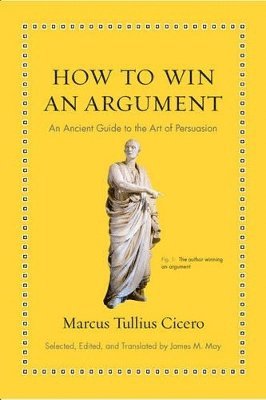
All of us are faced countless times with the challenge of persuading others, whether we're trying to win a trivial argument with a friend or convince our coworkers about an important decision. Instead of relying on untrained instinct--and often floundering or failing as a result--we'd win more arguments if we learned the timeless art of verbal persuasion, rhetoric. How to Win an Argument gathers the rhetorical wisdom of Cicero, ancient Rome's greatest orator, from across his works and combines it with passages from his legal and political speeches to show his powerful techniques in action. The result is an enlightening and entertaining practical introduction to the secrets of persuasive speaking and writing--including strategies that are just as effective in today's offices, schools, courts, and political debates as they were in the Roman forum. How to Win an Argument addresses proof based on rational argumentation, character, and emotion; the parts of a speech; the plain, middle, and grand styles; how to persuade no matter what audience or circumstances you face; and more.Cicero's words are presented in lively translations, with illuminating introductions; the book also features a brief biography of Cicero, a glossary, suggestions for further reading, and an appendix of the original Latin texts. Astonishingly relevant, this unique anthology of Cicero's rhetorical and oratorical wisdom will be enjoyed by anyone who ever needs to win arguments and influence people--in other words, all of us.
513 kr
Skickas inom 10-15 vardagar
By its very nature, the art of oratory involves character. Verbal persuasion entails the presentation of a persona by the speaker that affects an audience for good or ill. In this book, James May explores the role and extent of Cicero's use of ethos and demonstrates its persuasive effect. May discusses the importance of ethos, not just in classical rhetorical theory but also in the social, political, and judicial milieu of ancient Rome, and then applies his insights to the oratory of Cicero.Ciceronian ethos was a complex blend of Roman tradition, Cicero's own personality, and selected features of Greek and Roman oratory. More than any other ancient literary genre, oratory dealt with constantly changing circumstances, with a wide variety of rhetorical challenges. An orator's success or failure, as well as the artistic quality of his orations, was largely the direct result of his responses to these circumstances and challenges. Acutely aware of his audience and its cultural heritage and steeped in the rhetorical traditions of his predecessors, Cicero employed rhetorical ethos with uncanny success.May analyzes individual speeches from four different periods of Cicero's career, tracing changes in the way Cicero depicted character, both his own and others', as a source of persuasion -- changes intimately connected with the vicissitudes of Cicero's career and personal life. He shows that ethos played a major role in almost every Ciceronian speech, that Cicero's audiences were conditioned by common beliefs about character, and finally, that Cicero's rhetorical ethos became a major source for persuasion in his oratory.
292 kr
Skickas