James M. Ortega – författare
Visar alla böcker från författaren James M. Ortega. Handla med fri frakt och snabb leverans.
15 produkter
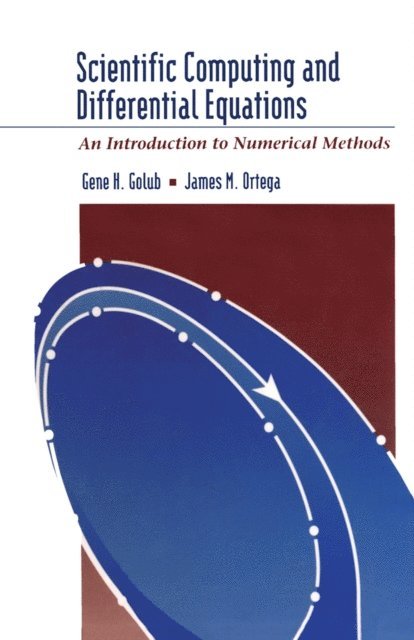
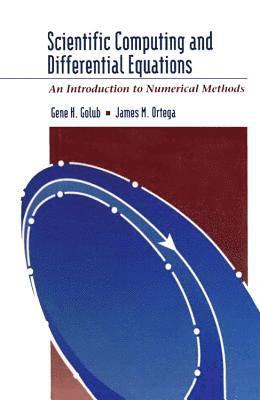
Scientific Computing and Differential Equations
An Introduction to Numerical Methods
Av James M. Ortega, Gene H. Golub
E-bok, 2014
807 kr
Lägg i varukorg
Scientific Computing and Differential Equations: An Introduction to Numerical Methods, is an excellent complement to Introduction to Numerical Methods by Ortega and Poole. The book emphasizes the importance of solving differential equations on a computer, which comprises a large part of what has …
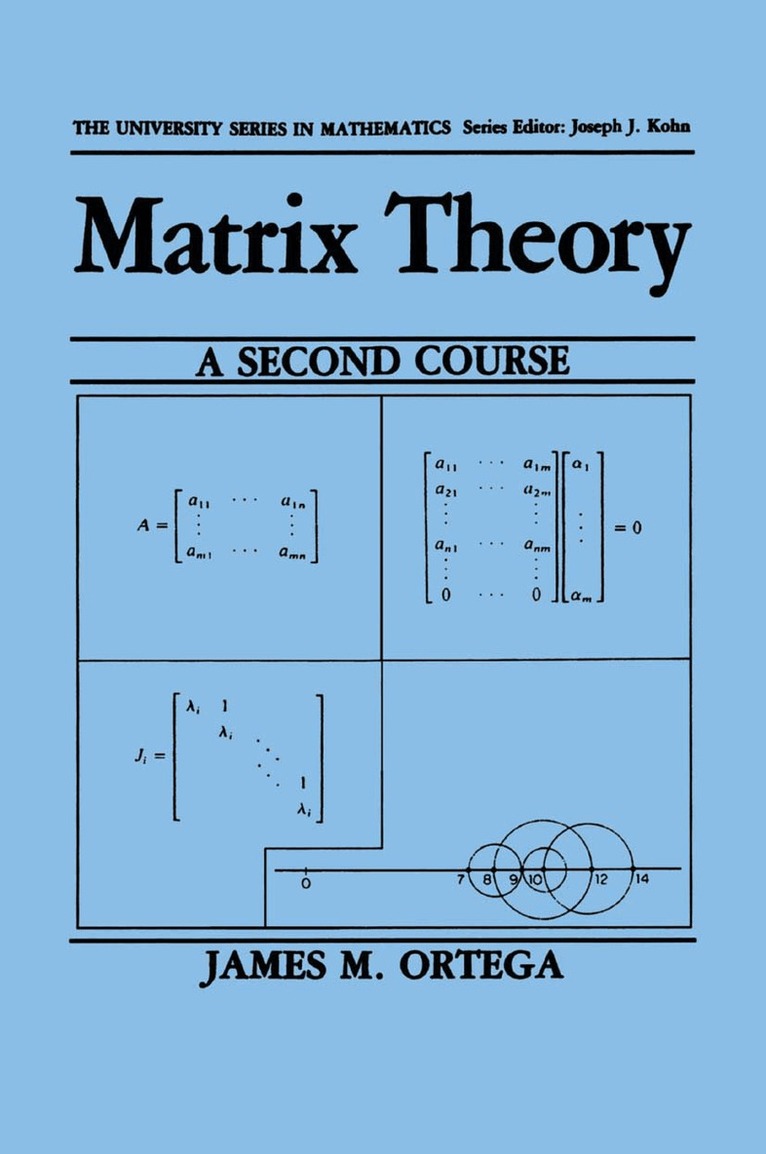
Matrix Theory: A Second Course
Häftad, 1987
1098 kr
Lägg i varukorg
Linear algebra and matrix theory are essentially synonymous terms for an area of mathematics that has become one of the most useful and pervasive tools in a wide range of disciplines. It is also a subject of great mathematical beauty. In consequence of both of these facts, linear algebra has …
Introduction to Parallel and Vector Solution of Linear Systems
Inbunden, 1988
1692 kr
Lägg i varukorg
Although the origins of parallel computing go back to the last century, it was only in the 1970s that parallel and vector computers became available to the scientific community. The first of these machines-the 64 processor llliac IV and the vector computers built by Texas Instruments, Control Data …
Solution of Partial Differential Equations on Vector and Parallel Computers
Av James M. Ortega, Robert G. Voigt
Häftad, 1985
626 kr
Lägg i varukorg
This volume reviews, in the context of partial differential equations, algorithm development that has been specifically aimed at computers that exhibit some form of parallelism. Emphasis is on the solution of PDEs because these are typically the problems that generate high computational demands. …
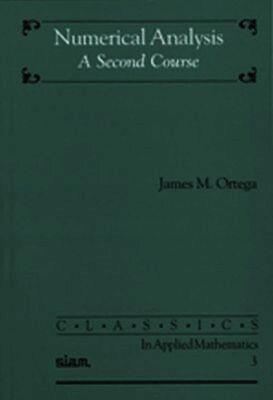
Numerical Analysis
A Second Course
Häftad, 1990
879 kr
Lägg i varukorg
This republication addresses some of the basic questions in numerical analysis: convergence theorems for iterative methods for both linear and nonlinear equations; discretization error, especially for ordinary differential equations; rounding error analysis; sensitivity of eigenvalues; and …
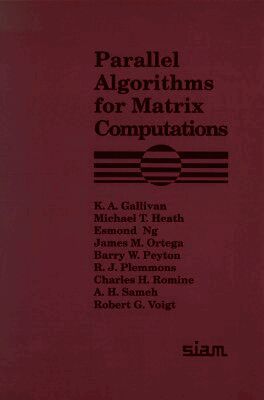
Parallel Algorithms for Matrix Computations
Av K.A. Gallivan, Michael T. Heath m. fl.
Häftad, 1990
612 kr
Lägg i varukorg
Describes a selection of important parallel algorithms for matrix computations. Reviews the current status and provides an overall perspective of parallel algorithms for solving problems arising in the major areas of numerical linear algebra, including (1) direct solution of dense, structured, or …
Numerical Analysis
A Second Course
Av James M. Ortega, Werner Rheinboldt
E-bok, 2014
807 kr
Lägg i varukorg
Computer Science and Applied Mathematics: Numerical Analysis: A Second Course presents some of the basic theoretical results pertaining to the three major problem areas of numerical analysis—rounding error, discretization error, and convergence error. This book is organized into four main topics: …
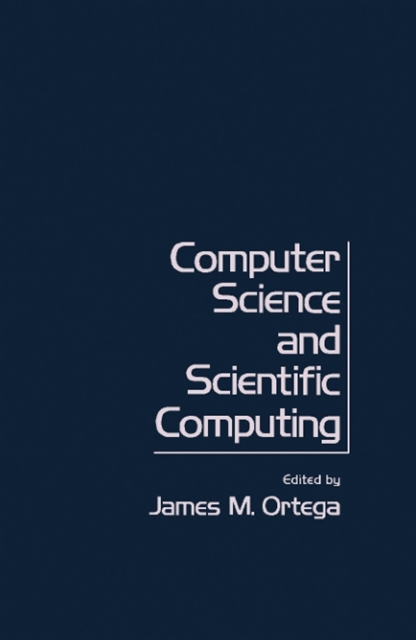
Computer Science and Scientific Computing
Proceedings of the Third ICASE Conference on Scientific Computing, Williamsburg, Virginia, April 1 and 2, 1976
E-bok, 2014
807 kr
Lägg i varukorg
Computer Science and Scientific Computing contains the proceedings of the Third ICASE Conference on Scientific Computing held in Williamsburg, Virginia, on April l and 2, 1976, under the auspices of the Institute for Computer Applications in Systems Engineering at the NASA Langley Research Center. …
Scientific Computing
An Introduction with Parallel Computing
Av James M. Ortega, Gene H. Golub
E-bok, 2014
642 kr
Lägg i varukorg
This book introduces the basic concepts of parallel and vector computing in the context of an introduction to numerical methods. It contains chapters on parallel and vector matrix multiplication and solution of linear systems by direct and iterative methods. It is suitable for advanced …
Matrix Theory: A Second Course
E-bok, 2013
1459 kr
Lägg i varukorg
Linear algebra and matrix theory are essentially synonymous terms for an area of mathematics that has become one of the most useful and pervasive tools in a wide range of disciplines. It is also a subject of great mathematical beauty. In consequence of both of these facts, linear algebra has …
Introduction to Parallel and Vector Solution of Linear Systems
E-bok, 2013
2174 kr
Lägg i varukorg
Although the origins of parallel computing go back to the last century, it was only in the 1970s that parallel and vector computers became available to the scientific community. The first of these machines-the 64 processor llliac IV and the vector computers built by Texas Instruments, Control Data …
Introduction to Parallel and Vector Solution of Linear Systems
Häftad, 2013
1692 kr
Lägg i varukorg
Although the origins of parallel computing go back to the last century, it was only in the 1970s that parallel and vector computers became available to the scientific community. The first of these machines-the 64 processor llliac IV and the vector computers built by Texas Instruments, Control Data …
Scientific Computing and Differential Equations: An Introduction to Numerical Methods
Av Gene H. Golub, James M. Ortega
Häftad, 1991
571 kr
Lägg i varukorg
Scientific Computing
Eine Einführung in das wissenschaftliche Rechnen und Parallele Numerik
E-bok, 2013
447 kr
Lägg i varukorg
Scientific Computing
Eine Einführung in das wissenschaftliche Rechnen und Parallele Numerik
Häftad, 1996
466 kr
Lägg i varukorg