James McKinnon - Böcker
Visar alla böcker från författaren James McKinnon. Handla med fri frakt och snabb leverans.
4 produkter
4 produkter
366 kr
Skickas inom 10-15 vardagar
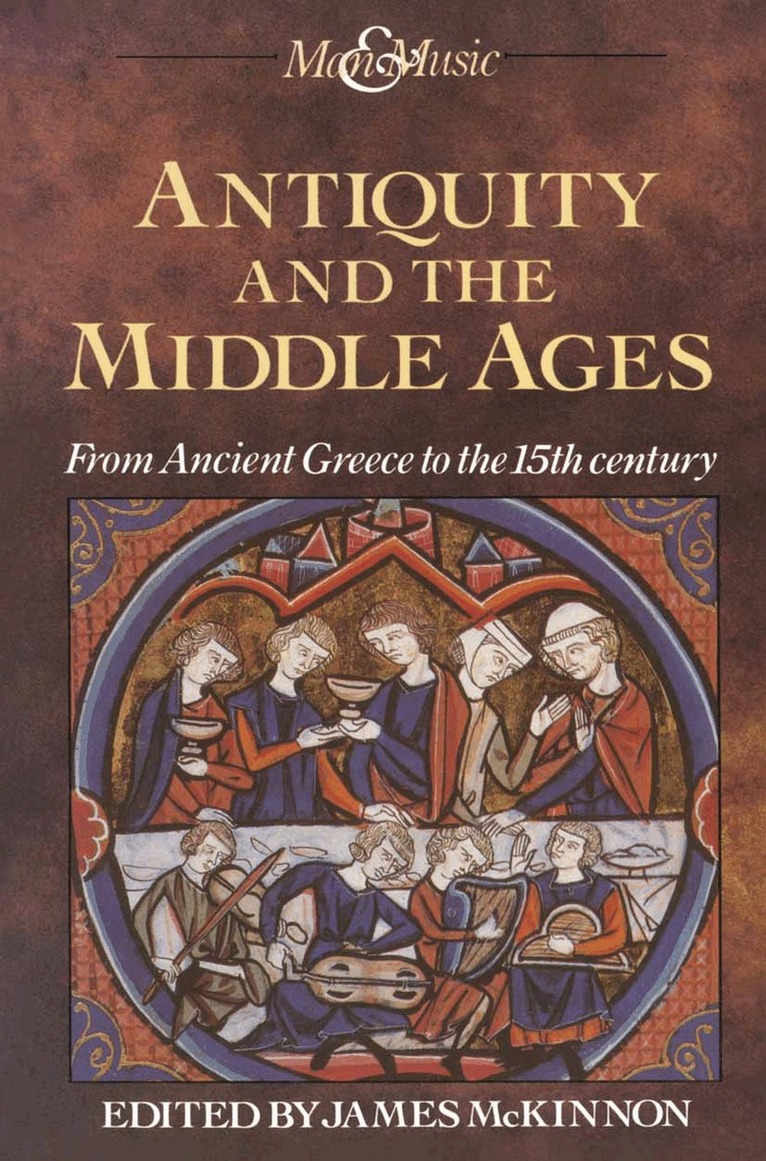
Antiquity and the Middle Ages deals with the beginning of the Western Musical tradition. It discusses, amongst other topics, the music of classical antiquity, of Christian antiquity and the early Middle Ages; the place of music in the courts of the Middle Ages and in the main repertories of the Middle Ages according to the cultures in which they arose.
547 kr
Skickas inom 10-15 vardagar
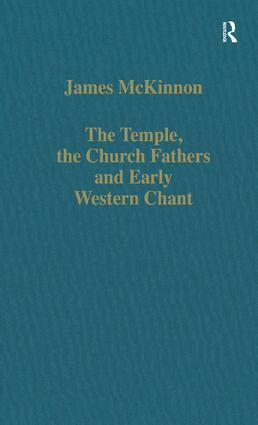
The articles here deal with liturgical music. Two topics receive special attention: the curiously negative role that musical instruments play in ancient cult music and the development of ecclesiastical song in early Christianity. The first series of articles treats classical Greek ethical notions of instruments, the status of instruments in Temple and Synagogue, and the absence of instruments from early Christian and medieval church music. The next parts trace the psalmody and hymnody of the Christian tradition, from its roots in Judaism to the origins of Gregorian chant in 7th-century Rome. Throughout, the writings of the Christian Church fathers such as Augustine, Ambrose, Basil and John Chrysostom underpin the author’s analysis and presentation.
573 kr
Skickas inom 5-8 vardagar
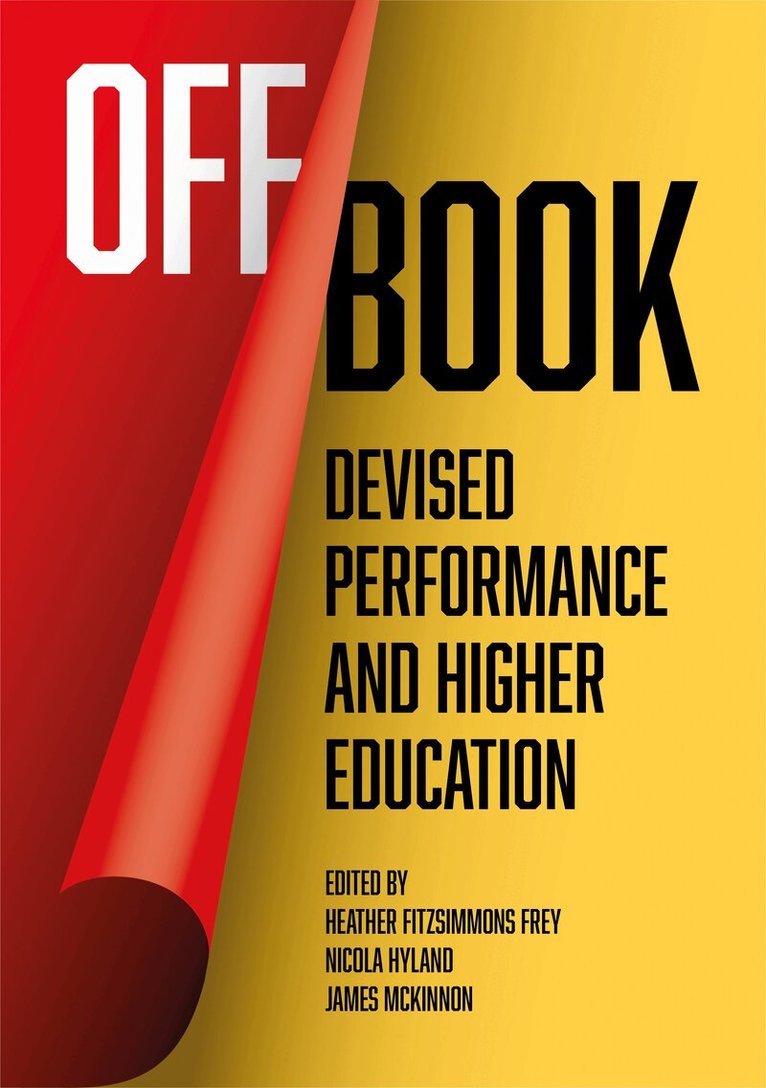
In the theatre world, ‘off book’ signifies a deadline in the creative process: the date by which performers are to have memorised their lines and will no longer be allowed to carry their play script – the ‘book’ – on stage. As such, Off Book makes a strangely appropriate title for a book about devised performance in higher education. In its usual context, ‘off book’ captures the tension between ephemeral, live performance and durable, author-ized literature: in one sense, the book – the written play – is the essential core, the seed that gives the performance life and meaning. Yet the opposite could be equally true: an ‘on book’ performance would not really be a play at all, and an actor reciting lines out of a script in hand is not really acting. A play is only realised in, or through, a performance. We cannot really learn, or play, our part until we can put the book down and enter the stage without it. Devised performance might be described as ‘theatre without the book.’ Yet devisors also often use books – books like this one, practical guidebooks and how-to manuals, as well as a myriad of literature outside the discipline mined for inspiration. This is particularly manifest when devising in the context of higher education - a milieu, like theatre, wherein books traditionally signify authority, status, and meaning. So, to the extent that theatres and campuses are places where one expects everything to be done ‘by the book,’ devising on campuses is rebellious, even sacrilegious. But on the other hand, both the theatre and the university are expected to challenge tradition, defy expectations, and conduct experiments.The book is presented in four sections reflecting the range of roles devising plays in higher education. The first section, Devising Pedagogy: Teaching Transferable Tools, examines how and why practitioners, educators, and programs conceptualise and plan for devising with adult learners in a range of higher education contexts. The second, Devising Friction: Ensembles, Individuals, and the Institution, shifts the discussion to the classroom, where abstract, pedagogical rubber meets the road of concrete reality. The third, Devising (by) Degrees, Practice-led postgraduate devising projects features contributions by emerging scholar-practitioners who engage with devising as both an object and method of creative scholarship. Finally, the chapters in Devising Bridges: University-Community Engagement explore how devising connects higher education institutions with the public they are intended to serve — particularly in populations and communities that are marginalised within, or even explicitly excluded from participating in, higher education, such as children and people with intellectual disabilities.A valuable and unique resource for drama educators in universities, university students in education, drama, and arts managements, graduate students conducting research, theatre historians, practicing devised theatre artists.
1 610 kr
Skickas inom 5-8 vardagar
In the theatre world, ‘off book’ signifies a deadline in the creative process: the date by which performers are to have memorised their lines and will no longer be allowed to carry their play script – the ‘book’ – on stage. As such, Off Book makes a strangely appropriate title for a book about devised performance in higher education. In its usual context, ‘off book’ captures the tension between ephemeral, live performance and durable, author-ized literature: in one sense, the book – the written play – is the essential core, the seed that gives the performance life and meaning. Yet the opposite could be equally true: an ‘on book’ performance would not really be a play at all, and an actor reciting lines out of a script in hand is not really acting. A play is only realised in, or through, a performance. We cannot really learn, or play, our part until we can put the book down and enter the stage without it. Devised performance might be described as ‘theatre without the book.’ Yet devisors also often use books – books like this one, practical guidebooks and how-to manuals, as well as a myriad of literature outside the discipline mined for inspiration. This is particularly manifest when devising in the context of higher education - a milieu, like theatre, wherein books traditionally signify authority, status, and meaning. So, to the extent that theatres and campuses are places where one expects everything to be done ‘by the book,’ devising on campuses is rebellious, even sacrilegious. But on the other hand, both the theatre and the university are expected to challenge tradition, defy expectations, and conduct experiments.The book is presented in four sections reflecting the range of roles devising plays in higher education. The first section, Devising Pedagogy: Teaching Transferable Tools, examines how and why practitioners, educators, and programs conceptualise and plan for devising with adult learners in a range of higher education contexts. The second, Devising Friction: Ensembles, Individuals, and the Institution, shifts the discussion to the classroom, where abstract, pedagogical rubber meets the road of concrete reality. The third, Devising (by) Degrees, Practice-led postgraduate devising projects features contributions by emerging scholar-practitioners who engage with devising as both an object and method of creative scholarship. Finally, the chapters in Devising Bridges: University-Community Engagement explore how devising connects higher education institutions with the public they are intended to serve — particularly in populations and communities that are marginalised within, or even explicitly excluded from participating in, higher education, such as children and people with intellectual disabilities.A valuable and unique resource for drama educators in universities, university students in education, drama, and arts managements, graduate students conducting research, theatre historians, practicing devised theatre artists.