James McLachlan - Böcker
Visar alla böcker från författaren James McLachlan. Handla med fri frakt och snabb leverans.
9 produkter
9 produkter
232 kr
Skickas inom 5-8 vardagar
284 kr
Skickas inom 5-8 vardagar
177 kr
Skickas inom 5-8 vardagar
137 kr
Skickas inom 5-8 vardagar
1 021 kr
Skickas inom 7-10 vardagar
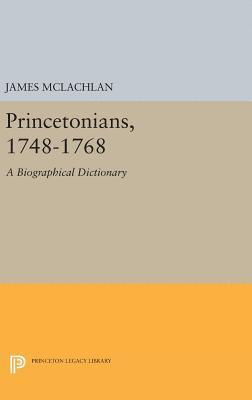
Benjamin Rush, William Paterson, David Ramsay, Oliver Ellsworth, Jonathan Edwards, Jr.--these are only a few of the remarkable men who attended the College of New Jersey (later Princeton University) in its first twenty-one classes. Alumni included five members of the Constitutional Convention of 1787, twenty two participants in the Continental Congress, four Senators, seven Congressmen, and two Justices of the Supreme Court. This volume describes the lives of the 338 men who graduated from the College between 1748 and 1768. Their biographies are arranged by year of graduation, and an introduction provides the early history of the College and its role in colonial culture. In sharp contrast to the graduates of other colleges at the time, Princeton's early students were either born or found their later careers in every one of the thirteen states as well as in Tennessee, Kentucky, the West Indies, and Ireland. After graduation most became clergymen, lawyers, doctors, businessmen, and soldiers. While some served as national leaders, others rose to prominence in state and local government, becoming governors, state legislators, and participants in the drafting of state constitutions.This record of their lives is a mine of information about America during the Colonial, Revolutionary, and Early National periods. Originally published in 1977. The Princeton Legacy Library uses the latest print-on-demand technology to again make available previously out-of-print books from the distinguished backlist of Princeton University Press. These editions preserve the original texts of these important books while presenting them in durable paperback and hardcover editions. The goal of the Princeton Legacy Library is to vastly increase access to the rich scholarly heritage found in the thousands of books published by Princeton University Press since its founding in 1905.
4 546 kr
Skickas inom 3-6 vardagar
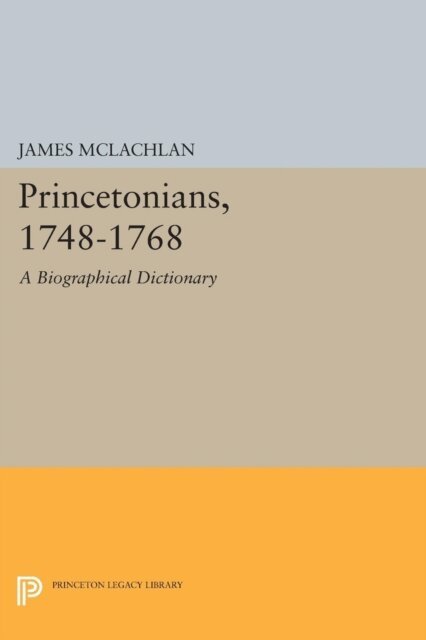
Benjamin Rush, William Paterson, David Ramsay, Oliver Ellsworth, Jonathan Edwards, Jr.--these are only a few of the remarkable men who attended the College of New Jersey (later Princeton University) in its first twenty-one classes. Alumni included five members of the Constitutional Convention of 1787, twenty two participants in the Continental Congress, four Senators, seven Congressmen, and two Justices of the Supreme Court. This volume describes the lives of the 338 men who graduated from the College between 1748 and 1768. Their biographies are arranged by year of graduation, and an introduction provides the early history of the College and its role in colonial culture. In sharp contrast to the graduates of other colleges at the time, Princeton's early students were either born or found their later careers in every one of the thirteen states as well as in Tennessee, Kentucky, the West Indies, and Ireland. After graduation most became clergymen, lawyers, doctors, businessmen, and soldiers. While some served as national leaders, others rose to prominence in state and local government, becoming governors, state legislators, and participants in the drafting of state constitutions.This record of their lives is a mine of information about America during the Colonial, Revolutionary, and Early National periods. Originally published in 1977. The Princeton Legacy Library uses the latest print-on-demand technology to again make available previously out-of-print books from the distinguished backlist of Princeton University Press. These editions preserve the original texts of these important books while presenting them in durable paperback and hardcover editions. The goal of the Princeton Legacy Library is to vastly increase access to the rich scholarly heritage found in the thousands of books published by Princeton University Press since its founding in 1905.
286 kr
Skickas inom 5-8 vardagar
480 kr
Skickas inom 5-8 vardagar
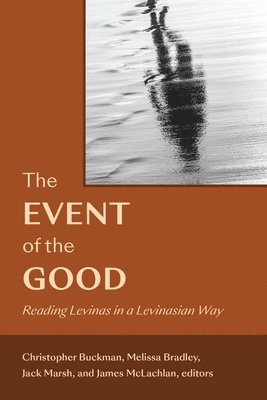
Centers on the ethics of Emmanuel Levinas, aiming to understand this important thinker on his own terms.To read Levinas in a Levinasian way means to understand this important thinker on his own terms, thinking "ethics as first philosophy," without reducing his role to that of a contributor to some other discourse, such as phenomenology, deconstruction, or religious traditions other than his own. This volume offers a variety of interventions into how the priority of the ethical-as formulated by Emmanuel Levinas and seconded by Richard A. Cohen, one of his preeminent interpreters-reorients philosophy to its own questioning-indeed, to its very sense of itself as meaningful. In the decades since Levinas first emerged as a profound and critical voice, many have used his thought to illuminate a broad range of philosophical questions. Often this has occurred in ways that have deemphasized or altered what is arguably Levinas's most radical gesture: reframing philosophy, indeed reframing the meaning of meaning, via an ethical turn. To this end, the essays in this volume, drawing especially on Cohen's reading of Levinas, offer insights into how appropriations and assessments of his philosophy might become more in line with the urgency and full meaning of his notion of the ethical. Whether discussing ethics, aesthetics, politics, or Jewish thought, when taken together, they enhance our comprehension of ethics and Levinas's philosophy of responsibility.
1 349 kr
Skickas
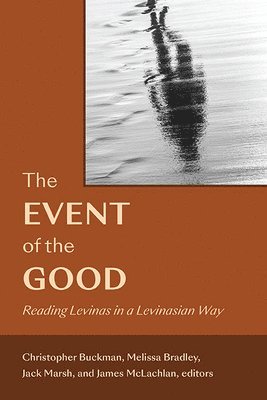
Centers on the ethics of Emmanuel Levinas, aiming to understand this important thinker on his own terms.To read Levinas in a Levinasian way means to understand this important thinker on his own terms, thinking "ethics as first philosophy," without reducing his role to that of a contributor to some other discourse, such as phenomenology, deconstruction, or religious traditions other than his own. This volume offers a variety of interventions into how the priority of the ethical-as formulated by Emmanuel Levinas and seconded by Richard A. Cohen, one of his preeminent interpreters-reorients philosophy to its own questioning-indeed, to its very sense of itself as meaningful. In the decades since Levinas first emerged as a profound and critical voice, many have used his thought to illuminate a broad range of philosophical questions. Often this has occurred in ways that have deemphasized or altered what is arguably Levinas's most radical gesture: reframing philosophy, indeed reframing the meaning of meaning, via an ethical turn. To this end, the essays in this volume, drawing especially on Cohen's reading of Levinas, offer insights into how appropriations and assessments of his philosophy might become more in line with the urgency and full meaning of his notion of the ethical. Whether discussing ethics, aesthetics, politics, or Jewish thought, when taken together, they enhance our comprehension of ethics and Levinas's philosophy of responsibility.