James P. Brennan - Böcker
Visar alla böcker från författaren James P. Brennan. Handla med fri frakt och snabb leverans.
4 produkter
4 produkter
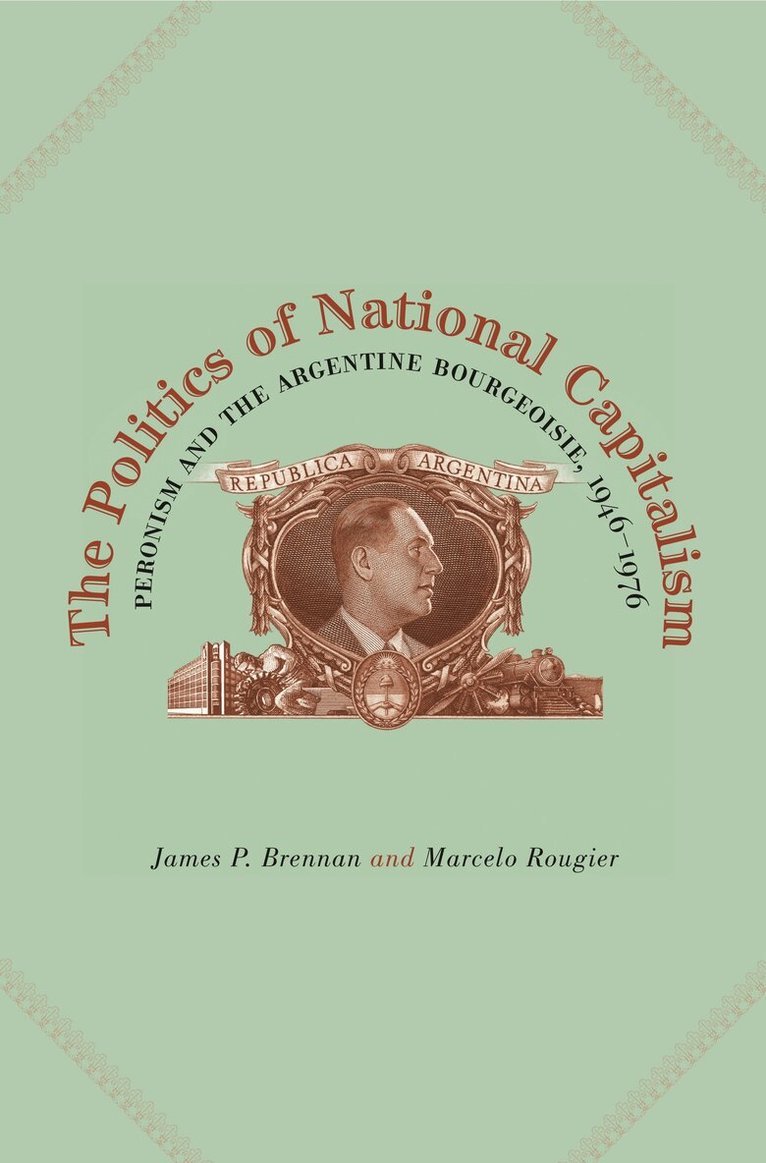
Politics of National Capitalism
Peronism and the Argentine Bourgeoisie, 1946–1976
Häftad, Engelska, 2012
589 kr
Skickas inom 5-8 vardagar
In mid-twentieth-century Latin America there was a strong consensus between Left and Right—Communists working under the directives of the Third International, nationalists within the military interested in fostering industrialization, and populists—about the need to break away from the colonial legacies of the past and to escape from the constraints of the international capitalist system. Even though they disagreed about the desired end state, Argentines of all political stripes could agree on the need for economic independence and national sovereignty, which would be brought about through the efforts of a national bourgeoisie. James Brennan and Marcelo Rougier aim to provide a political history of this national bourgeoisie in this book. Deploying an eclectic methodology combining aspects of the “new institutionalism,” the “new economic history,” Marxist political economy, and deep research in numerous, rarely consulted archives into what they dub the “new business history,” the authors offer the first thorough, empirically based history of the national bourgeoisie’s peak association, the Confederación General Económica (CGE), and of the Argentine bourgeoisie’s relationship with the state.They also investigate the relationship of the bourgeoisie to Perón and the Peronist movement by studying the history of one industrial sector, the metalworking industry, and two regional economies—one primarily industrial, Córdoba, and another mostly agrarian, Chaco—with some attention to a third, Tucumán, a cane-cultivating and sugar-refining region sharing some features of both. While spanning three decades, the book concentrates most on the years of Peronist government, 1946–55 and 1973–76.
Del 6 - Violence in Latin American History
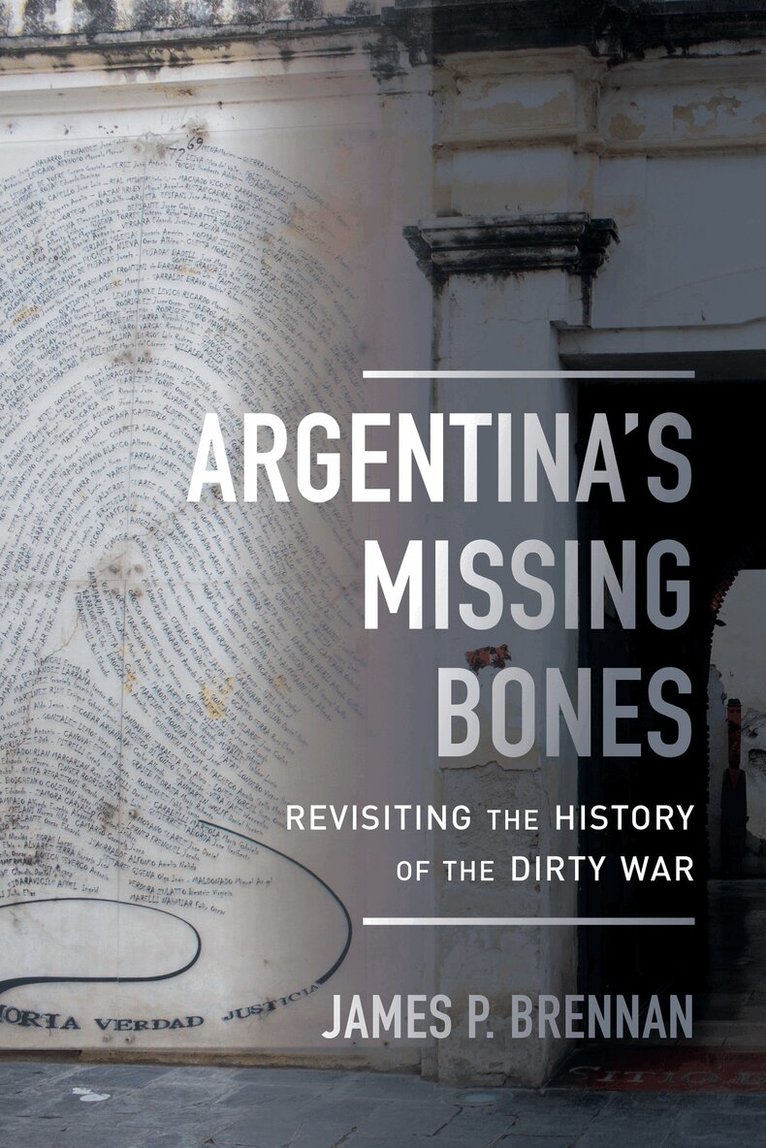
Argentina's Missing Bones
Revisiting the History of the Dirty War
Inbunden, Engelska, 2018
776 kr
Skickas inom 7-10 vardagar
Argentina’s Missing Bones is the first comprehensive English-language work of historical scholarship on the 1976–83 military dictatorship and Argentina’s notorious experience with state terrorism during the so-called dirty war. It examines this history in a single but crucial place: Córdoba, Argentina’s second largest city. A site of thunderous working-class and student protest prior to the dictatorship, it later became a place where state terrorism was particularly cruel. Considering the legacy of this violent period, James P. Brennan examines the role of the state in constructing a public memory of the violence and in holding those responsible accountable through the most extensive trials for crimes against humanity to take place anywhere in Latin America.
Del 6 - Violence in Latin American History
Argentina's Missing Bones
Revisiting the History of the Dirty War
Häftad, Engelska, 2018
290 kr
Skickas inom 7-10 vardagar
Argentina’s Missing Bones is the first comprehensive English-language work of historical scholarship on the 1976–83 military dictatorship and Argentina’s notorious experience with state terrorism during the so-called dirty war. It examines this history in a single but crucial place: Córdoba, Argentina’s second largest city. A site of thunderous working-class and student protest prior to the dictatorship, it later became a place where state terrorism was particularly cruel. Considering the legacy of this violent period, James P. Brennan examines the role of the state in constructing a public memory of the violence and in holding those responsible accountable through the most extensive trials for crimes against humanity to take place anywhere in Latin America.
Del 116 - Harvard Historical Studies
Labor Wars in Córdoba, 1955–1976
Ideology, Work, and Labor Politics in an Argentine Industrial City
Inbunden, Engelska, 1998
828 kr
Skickas inom 7-10 vardagar
Córdoba is Argentina’s second-largest city, a university town that became the center of its automobile industry. In the decade following the overthrow of Juan Perón’s government in 1955, the city experienced rapid industrial growth. The arrival of IKA-Renault and Fiat fostered a particular kind of industrial development and created a new industrial worker of predominantly rural origins. Former farm boys and small-town dwellers were thrust suddenly into the world of the modern factory and the multinational corporation.The domination of the local economy by a single industry and the prominent role played by the automobile workers’ unions brought about the greatest working-class protest in postwar Latin American history, the 1969 Cordobazo. Following the Cordobazo, the local labor movement was one characterized by intense militancy and determined opposition to both authoritarian military governments and the Peronist trade union bureaucracy. These labor wars have been mythologized as a Latin American equivalent to the French student strikes of May–June 1968 and the Italian “hot summer” of the same period. Analyzing these events in the context of recent debates on Latin American working-class politics, James Brennan demonstrates that the pronounced militancy and even political radicalism of the Cordoban working class were due not only to Argentina’s changing political culture but also to the dynamic relationship between the factory and society during those years.Brennan draws on corporate archives in Argentina, France, and Italy, as well as previously unknown union archives. Readers interested in Latin American studies, labor history, industrial relations, political science, industrial sociology, and international business will all find value in this important analysis of labor politics.