James Petitfils - Böcker
Visar alla böcker från författaren James Petitfils. Handla med fri frakt och snabb leverans.
3 produkter
3 produkter
Del 5 - Inventing Christianity
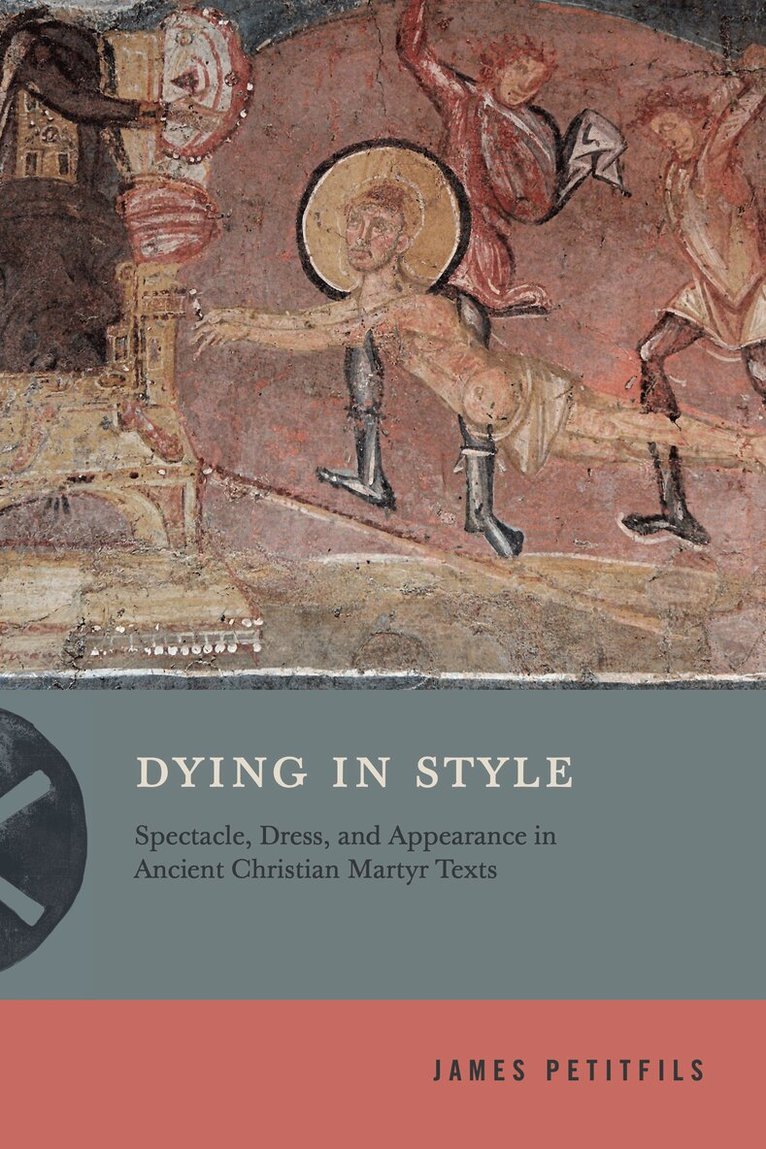
Dying in Style
Spectacle, Dress, and Appearance in Ancient Christian Martyr Texts
Inbunden, Engelska, 2026
1 689 kr
Kommande
In the second and third centuries, Christian martyr narratives were written to evoke spectacle. In Dying in Style, James Petitfils demonstrates how these accounts transform scenes of suffering into displays that assert the dignity and ethical distinction of Christians during a time of widespread belittlement and persecution.Attending to physicality, clothing, gestures, and facial expressions, Petitfils reads early Christian martyrdom accounts as performative literature crafted for largely illiterate audiences steeped in Roman spectacle culture. Through close readings of the Passion of Perpetua and Felicitas and other martyrdom narratives from the second and third centuries, Petitfils demonstrates how Christian viewers were invited to perceive martyrs not as low-status criminals but as aristocratic figures whose beauty and honor mirrored the imperial elite. Ultimately, Dying in Style reveals that Christian resistance to Roman power did not discard the empire’s visual hierarchies but rather appropriated them to subversive ends. By situating early Christian literature within the “visual turn” of socio-cultural studies, Dying in Style unpacks the profound influence of Roman spectacle on the martyr’s story. This book will be a vital resource for students and scholars of early Christianity, Roman social history, sensory history, and martyrdom studies.
Del 5 - Inventing Christianity
Dying in Style
Spectacle, Dress, and Appearance in Ancient Christian Martyr Texts
Häftad, Engelska, 2026
563 kr
Kommande
In the second and third centuries, Christian martyr narratives were written to evoke spectacle. In Dying in Style, James Petitfils demonstrates how these accounts transform scenes of suffering into displays that assert the dignity and ethical distinction of Christians during a time of widespread belittlement and persecution.Attending to physicality, clothing, gestures, and facial expressions, Petitfils reads early Christian martyrdom accounts as performative literature crafted for largely illiterate audiences steeped in Roman spectacle culture. Through close readings of the Passion of Perpetua and Felicitas and other martyrdom narratives from the second and third centuries, Petitfils demonstrates how Christian viewers were invited to perceive martyrs not as low-status criminals but as aristocratic figures whose beauty and honor mirrored the imperial elite. Ultimately, Dying in Style reveals that Christian resistance to Roman power did not discard the empire’s visual hierarchies but rather appropriated them to subversive ends. By situating early Christian literature within the “visual turn” of socio-cultural studies, Dying in Style unpacks the profound influence of Roman spectacle on the martyr’s story. This book will be a vital resource for students and scholars of early Christianity, Roman social history, sensory history, and martyrdom studies.
Del 99 - Studien und Texte zu Antike und Christentum / Studies and Texts in Antiquity and Christianity
Mos Christianorum
The Roman Discourse of Exemplarity and the Jewish and Christian Language of Leadership
Häftad, Engelska, 2016
1 636 kr
Skickas inom 5-8 vardagar
Die bevorzugten moralischen Bildungsinhalte einer römischen Erziehung strotzen vor beispielhaften Erzählungen über die Nationalhelden Roms. Um die Idee einer tugendhaften Herrschaft zu indoktrinieren, setzten sowohl Politiker als auch Bevölkerung exempla als rhetorisches Werkzeug des mos maiorum (Sitte der Vorfahren) ein. James Petitfils untersucht die jüdische und christliche Beteiligung an dieser weitverbreiteten pädagogischen Methode. Nachdem er den römischen Diskurs zu einem vorbildlichen Führungsstil begutachtet hat, zieht er verschiedene Texte zu Rate, die in besonders romanisierter Umgebung verfasst wurden und jüdische oder christliche Vorfahren als Herrscher zelebrieren (Josephus' Antiquitates 2-4, Philons Mosis 1-2, 1 Clem und Der Brief der Kirchen von Vienne und Lyons). Er hebt ihre jeweilige Aneignung, Anpassung und Neuverwendung des römischen moralischen Vokabulars der beispielhaften Herrschaft hervor, um die bewusst nicht-römischen e xempla der Vorfahren und die eigene Sprache der Herrschaft zu fördern.