James Reichert - Böcker
Visar alla böcker från författaren James Reichert. Handla med fri frakt och snabb leverans.
2 produkter
2 produkter
273 kr
Skickas inom 10-15 vardagar
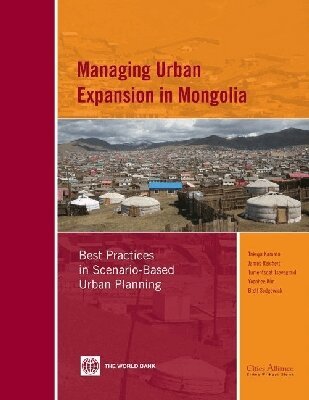
The sustainable development of ger areas in Ulaanbaatar, the capital of Mongolia, is one of the critical development issues facing the country. The ger areas host 60% of the population of Ulaanbaatar, and they have expanded 35 times larger than the original center of the city. Provision of basic services (e.g. heating and water supply) is very limited or non-existent in ger areas. The lack of basic public services resulted in air and water pollution as well as serious health risks to residents. The government tries to control expansion of the city, particularly ger areas, but its policy practices have been inconsistent. These inconsistent actions are, in part, a result of limited awareness and understanding by the general public, as well as by the policy makers, of the public costs of their actions. There is high susceptibility to ad-hoc behaviors that place premiums on short-term private gains over long-term value-creation in public goods. Many supporting mechanisms, including land valuation and taxation, have not yet been developed to create incentives for long-term value creation.Mongolia: Enhancing Policies and Practices for Ger Area Development in Ulaanbaatar aims at helping policy makers and citizens of Ulaanbaatar to improve their understanding of the consequences of their choices of policies and practices. Specifically, it intends to provide clear cost and benefit implications of three different development paths (central, mid-tier, and fringe gers) for seven sectors (land and housing, water supply, roads and public transport, heating, electricity, solid waste, and social services). The report is a best practice in urban planning exercise which provides useful information that can apply for other big cities.
913 kr
Skickas inom 7-10 vardagar
Literature for the Masses is the first English-language book on popular stories known in Japan alternatively as period fiction or mass literature. It highlights the important cultural and ideological work performed by this ubiquitous, yet overlooked, literary form. Focused on the years 1913 to 1941, which coincide exactly with the rise of industrial capitalism and mass culture in Japan, the book challenges the conventional wisdom that period-themed entertainment was an anachronistic holdover from the past. Through a close analysis of well-known examples of the genre, such as Nakazato Kaisan’s The Great Buddha Pass (1913–1921), Yoshikawa Eiji’s Miyamoto Musashi (1935–1939), and Mikami Otokichi’s The Transformation of Yukinojō (1934–1935), Reichert shows how these materials were thoroughly integrated into both the modern media ecosystem and the creative sphere of the written arts.The book further broadens its perspective by including other more experimental narratives not typically categorized as belonging to the genre: Shimazaki Tōson’s Before the Dawn (1929–1935), Tanizaki Jun’ichirō’s The Secret History of the Lord of Musashi (1931–1932, 1935), and Ōkubo Yasuo’s 1938 translation of Gone with the Wind. Although respectively seen as too elevated, too satirical, and too foreign to belong to the category of period fiction, the volume shows how all three texts actively mine the cultural associations of the genre. This more expansive lens emphasizes how Japanese period fiction constituted a capacious form of expression every bit as disruptive and pervasive as commercial newspapers and magazines and the new communication technologies of film and radio. Reichert thus argues that producers and consumers perceived the genre to be a literary revolution that could offer radically new avenues for feeling and experiencing the Japanese past.