James Rives – författare
Visar alla böcker från författaren James Rives. Handla med fri frakt och snabb leverans.
5 produkter
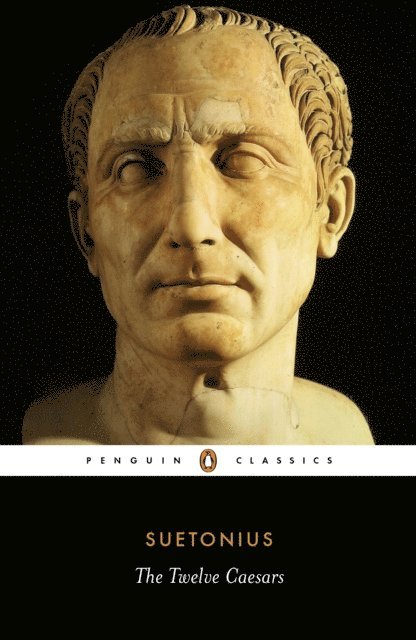
Twelve Caesars
Av Robert Graves, Suetonius m. fl.
Häftad, 2007
5,0 utav 5 stjärnor. Totalt antal röster: (1)
160 kr
Lägg i varukorg
'Suetonius, in holding up a mirror to those Caesars of diverting legend, reflects not only them but ourselves: half-tempted creatures, whose great moral task is to hold in balance the angel and the monster within' GORE VIDALAs private secretary to the Emperor Hadrian, the scholar Suetonius had …
Agricola and Germania
Av Tacitus, James Rives
Häftad, 2010
142 kr
Lägg i varukorg
The Agricola is both a portrait of Julius Agricola - the most famous governor of Roman Britain and Tacitus' well-loved and respected father-in-law - and the first detailed account of Britain that has come down to us. It offers fascinating descriptions of the geography, climate and peoples of the …
Twelve Caesars
Av Robert Graves, Suetonius m. fl.
E-bok, 2007
105 kr
Lägg i varukorg
'Suetonius, in holding up a mirror to those Caesars of diverting legend, reflects not only them but ourselves: half-tempted creatures, whose great moral task is to hold in balance the angel and the monster within' GORE VIDALAs private secretary to the Emperor Hadrian, the scholar Suetonius had …
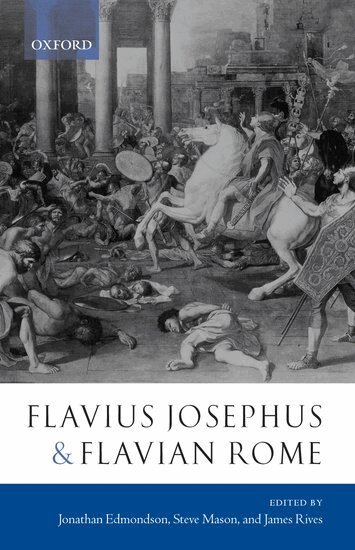
Flavius Josephus and Flavian Rome
Av James Rives, Steve Mason m. fl.
E-bok, 2005
3162 kr
Lägg i varukorg
Flavian Rome has most often been studied without serious attention to its most prolific extant author, Titus Flavius Josephus. Josephus, in turn, has usually been studied for what he is writing about (mainly, events in Judaea) rather than for the context in which he wrote: Flavian Rome. For the …
Flavius Josephus and Flavian Rome
Av EDMONDSON, Jonathan Edmondson m. fl.
Inbunden, 2005
5603 kr
Lägg i varukorg
Flavian Rome has most often been studied without serious attention to its most prolific extant author, Titus Flavius Josephus. Josephus, in turn, has usually been studied for what he is writing about (mainly, events in Judaea) rather than for the context in which he wrote: Flavian Rome. For the …