James S. Donnelly, Jr - Böcker
Visar alla böcker från författaren James S. Donnelly, Jr. Handla med fri frakt och snabb leverans.
5 produkter
5 produkter
268 kr
Skickas inom 10-15 vardagar
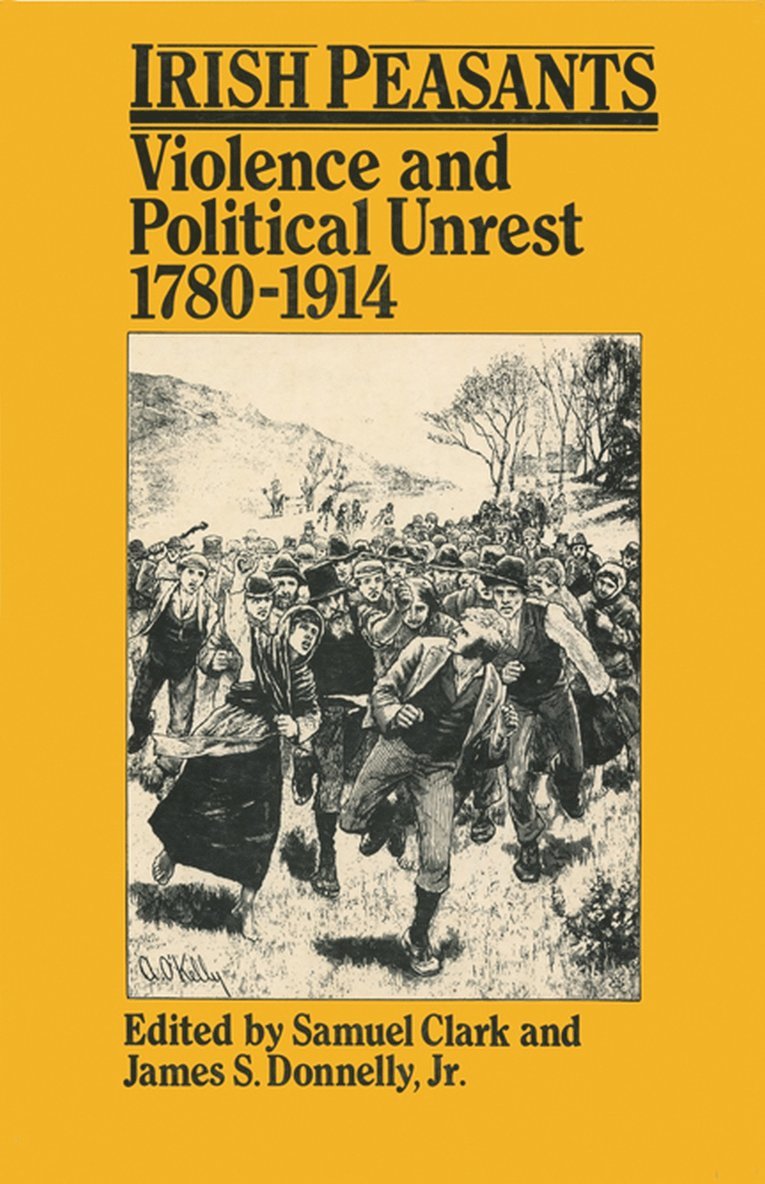
For the student of the Irish experience, agrarian movements, rural sectarianism, and popular political unrest in the period from the late eighteenth to the early twentieth centuries are subjects that deserve particular attention at the present time. This volume, which undertakes to pull together divergent strands of current research on these topics and to initiate the process of fitting them into larger conceptual frameworks, will, we hope, prove to be more than merely a convenient compendium of individual works. To some extent, such a collection of essays yields a varied picture of seemingly unconnected developments. In a broader sense, however, the very act of assembling a diverse set of works like these serves to aid in the identification of general questions and issues that should be of paramount concern in Irish studies.
377 kr
Skickas inom 10-15 vardagar
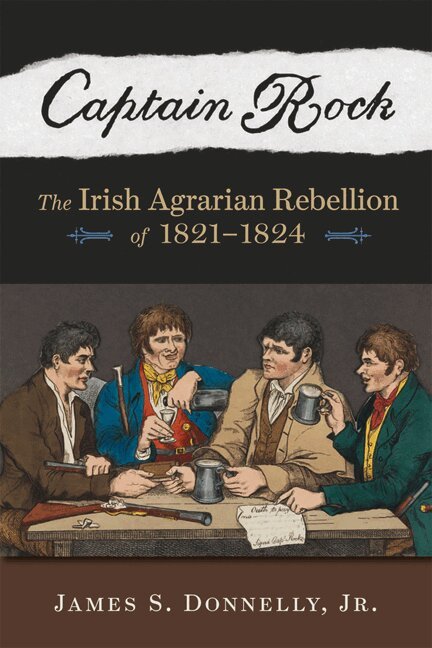
Named for its mythical leader “Captain Rock,” avenger of agrarian wrongs, the Rockite movement of 1821–24 in Ireland was notorious for its extraordinary violence. In Captain Rock, James S. Donnelly, Jr., offers both a fine-grained analysis of the conflict and a broad exploration of Irish rural society after the French revolutionary and Napoleonic wars.Originating in west Limerick, the Rockite movement spread quickly under the impact of a prolonged economic depression. Before long the insurgency embraced many of the better-off farmers. The intensity of the Rockites’ grievances, the frequency of their resort to sensational violence, and their appeal on such key issues as rents and tithes presented a nightmarish challenge to Dublin Castle—prompting in turn a major reorganization of the police, a purging of the local magistracy, the introduction of large military reinforcements, and a determined campaign of judicial repression. A great upsurge in sectarianism and millenarianism, Donnelly shows, added fuel to the conflagration. Inspired by prophecies of doom for the Anglo-Irish Protestants who ruled the country, the overwhelmingly Catholic Rockites strove to hasten the demise of the landed elite they viewed as oppressors.Drawing on a wealth of sources—including reports from policemen, military officers, magistrates, and landowners as well as from newspapers, pamphlets, parliamentary inquiries, depositions, rebel proclamations, and threatening missives sent by Rockites to their enemies—Captain Rock offers a detailed anatomy of a dangerous, widespread insurgency whose distinctive political contours will force historians to expand their notions of how agrarian militancy influenced Irish nationalism in the years before the Great Famine of 1845–51.
318 kr
Skickas
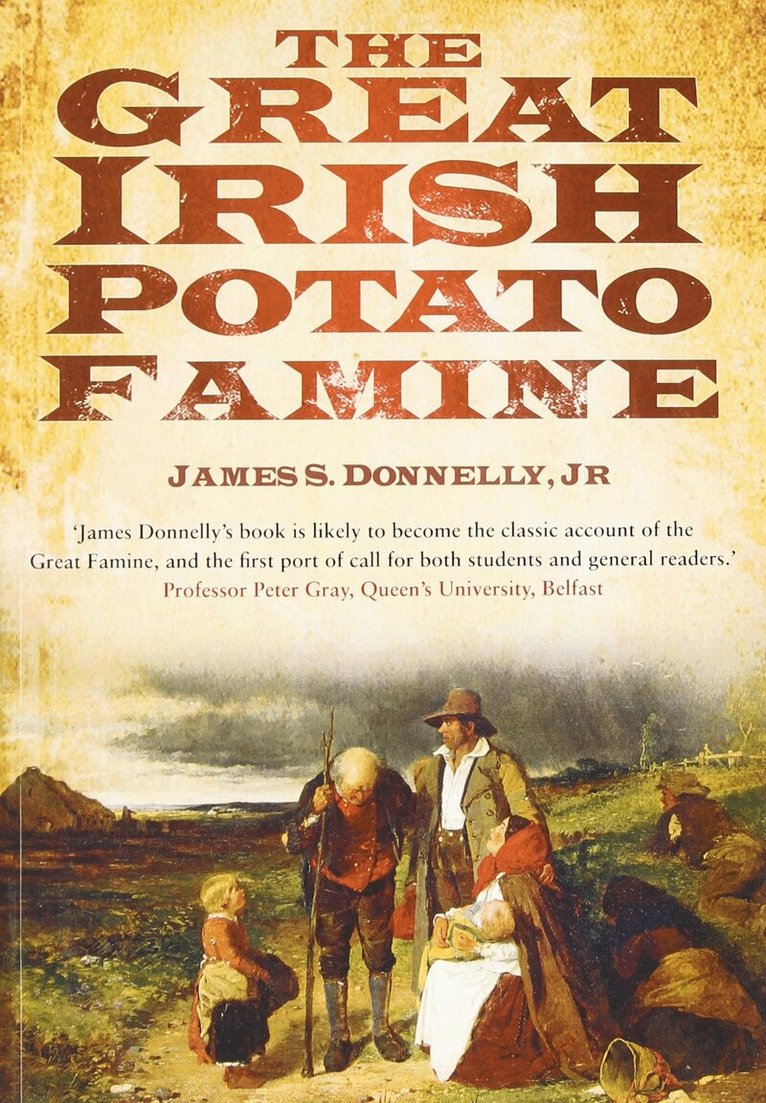
In the century before the great famine of the late 1840s, the Irish people, and the poor especially, became increasingly dependent on the potato for their food. So when potato blight struck, causing the tubers to rot in the ground, they suffered a grievous loss. Thus began a catastrophe in which approximately one million people lost their lives and many more left Ireland for North America, changing the country forever. During and after this terrible human crisis, the British government was bitterly accused of not averting the disaster or offering enough aid. Some even believed that the Whig government's policies were tantamount to genocide against the Irish population. James Donnelly's account looks closely at the political and social consequences of the great Irish potato famine and explores the way that natural disasters and government responses to them can alter the destiny of nations.
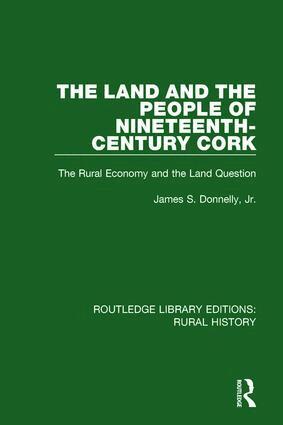
Land and the People of Nineteenth-Century Cork
The Rural Economy and the Land Question
Inbunden, Engelska, 2017
2 166 kr
Skickas inom 10-15 vardagar
First published in 1975. Using estate records, local newspapers and parliamentary papers, this book focuses upon two central and interrelated subjects – the rural economy and the land question – from the perspective of Cork, Ireland’s southernmost country. The author examines the chief responses of Cork landlords, tenant farmers and labourers to the enormous difficulties besetting them after 1815. He shows how the great famine of the late 1840s was in many ways an economic and social watershed because it rapidly accelerated certain previous trends and reversed the direction of others. He also rejects the conventional view of the land war of the 1880s, arguing that in Cork it was essentially a ‘revolution of rising expectations’, in which tenant farmers struggled to preserve their substantial material gains since 1850 by using the weapons of ‘agrarian trade unionism’, civil disobedience and unprecedented violence. This title will be of interest to students of rural history and historical geography.
Land and the People of Nineteenth-Century Cork
The Rural Economy and the Land Question
Häftad, Engelska, 2019
745 kr
Skickas inom 10-15 vardagar
First published in 1975. Using estate records, local newspapers and parliamentary papers, this book focuses upon two central and interrelated subjects – the rural economy and the land question – from the perspective of Cork, Ireland’s southernmost country. The author examines the chief responses of Cork landlords, tenant farmers and labourers to the enormous difficulties besetting them after 1815. He shows how the great famine of the late 1840s was in many ways an economic and social watershed because it rapidly accelerated certain previous trends and reversed the direction of others. He also rejects the conventional view of the land war of the 1880s, arguing that in Cork it was essentially a ‘revolution of rising expectations’, in which tenant farmers struggled to preserve their substantial material gains since 1850 by using the weapons of ‘agrarian trade unionism’, civil disobedience and unprecedented violence. This title will be of interest to students of rural history and historical geography.