James Secord – författare
Visar alla böcker från författaren James Secord. Handla med fri frakt och snabb leverans.
12 produkter
Principles of Geology
Av Charles Lyell, James Secord
Häftad, 1997
190 kr
Lägg i varukorg
One of the key works in the nineteenth-century battle between science and Scripture, Charles Lyell's Principles of Geology (1830-33) sought to explain the geological state of the modern Earth by considering the long-term effects of observable natural phenomena. Written with clarity and a dazzling …
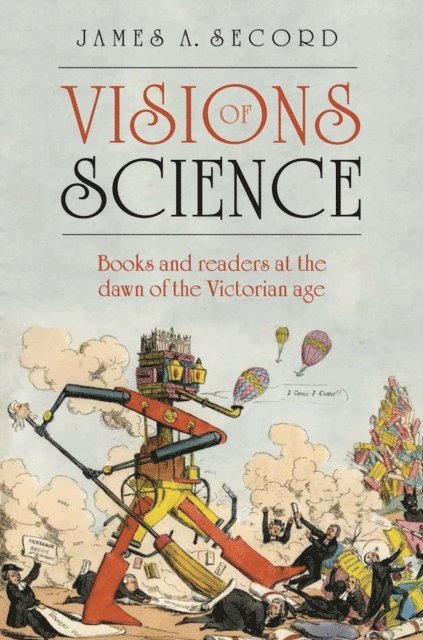
Visions of Science
Books and readers at the dawn of the Victorian age
Av James Secord
E-bok, 2014
223 kr
Lägg i varukorg
The early 1830s witnessed an extraordinary transformation in British political, literary, and intellectual life. New scientific disciplines begin to take shape, while new concepts of the natural world were hotly debated. James Secord, Director of the Darwin Correspondence Project, captures this …
Visions of Science
Books and readers at the dawn of the Victorian age
Av James Secord
E-bok, 2014
223 kr
Lägg i varukorg
The early 1830s witnessed an extraordinary transformation in British political, literary, and intellectual life. New scientific disciplines begin to take shape, while new concepts of the natural world were hotly debated. James Secord, Director of the Darwin Correspondence Project, captures this …
Visions of Science
Books and readers at the dawn of the Victorian age
Av James Secord
Inbunden, 2014
294 kr
Lägg i varukorg
The early 1830s witnessed an extraordinary transformation in British political, literary, and intellectual life. New scientific disciplines begin to take shape, while new concepts of the natural world were hotly debated. James Secord, Director of the Darwin Correspondence Project, captures this …
The Correspondence of Charles Darwin: Volume 17, 1869
Av Charles Darwin, Frederick Burkhardt m. fl.
Inbunden, 2009
2508 kr
Lägg i varukorg
'I have always maintained that, excepting fools, men did not differ much in intellect, only in zeal & hard work; and I still think there is an eminently important difference'. Throughout 1869, Darwin continued to collect data for his two most significant books after Origin: The Descent of Man and …
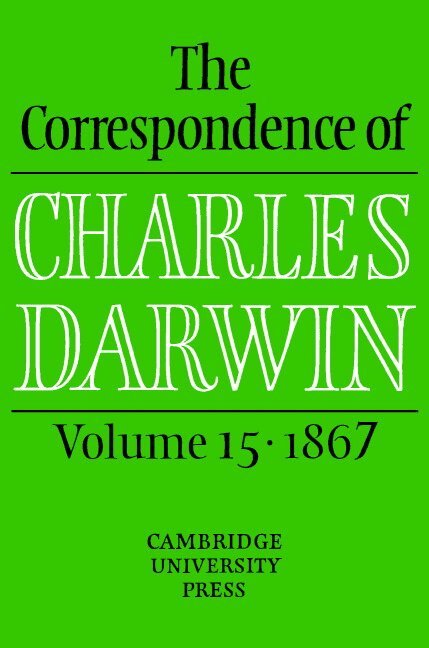
The Correspondence of Charles Darwin: Volume 15, 1867
Av Charles Darwin, Frederick Burkhardt m. fl.
Inbunden, 2006
1810 kr
Lägg i varukorg
During 1867 Darwin intensified lines of research that were to result in two important publications, Descent of Man and Selection in Relation to Sex and Expression of the Emotions in Man and Animals. Darwin circulated a questionnaire on human expression, asking his established contacts to pass it on …
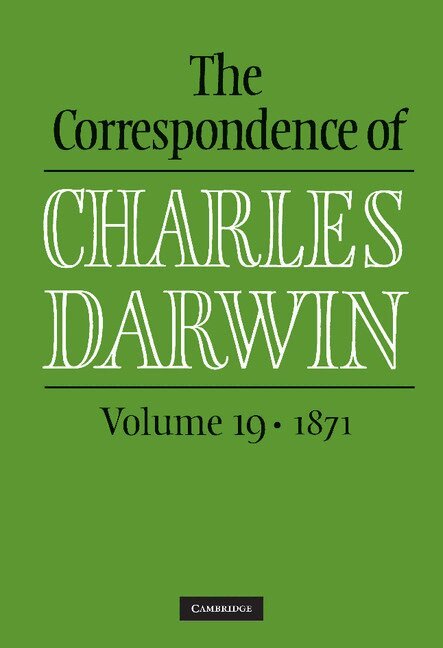
The Correspondence of Charles Darwin: Volume 19, 1871
Av Charles Darwin, The Editors of the Darwin Correspondence Project m. fl.
Inbunden, 2012
2247 kr
Lägg i varukorg
This pivotal volume in the definitive edition of Charles Darwin's letters covers the year 1871, the year in which Descent of Man, Darwin's first public statement on human evolution, was published. The large number of letters in this year - more than 800 - reflects the excitement this caused. Darwin …
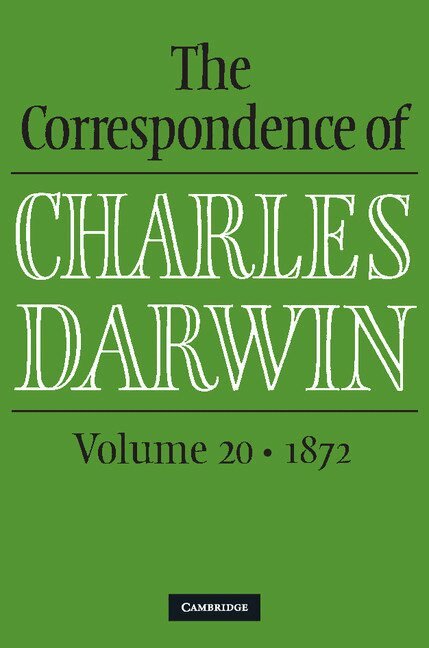
The Correspondence of Charles Darwin: Volume 20, 1872
Av Charles Darwin, Frederick Burkhardt m. fl.
Inbunden, 2013
2118 kr
Lägg i varukorg
This volume is part of the definitive edition of letters written by and to Charles Darwin, the most celebrated naturalist of the nineteenth century. Notes and appendixes put these fascinating and wide-ranging letters in context, making the letters accessible to both scholars and general readers. …
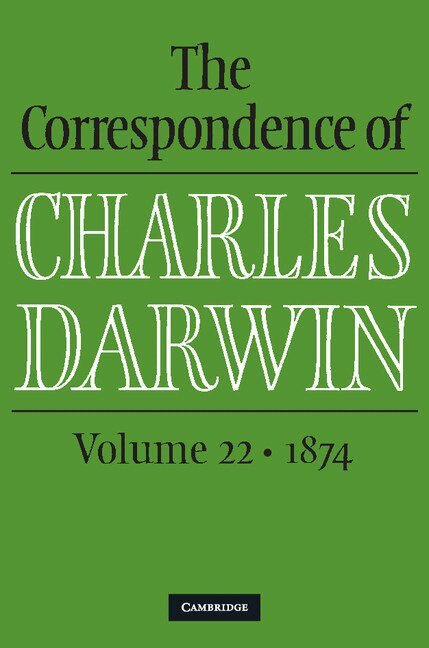
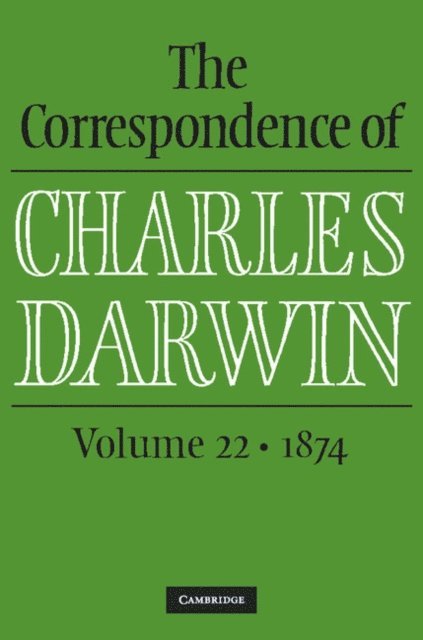
The Correspondence of Charles Darwin: Volume 22, 1874
Av Charles Darwin, Frederick Burkhardt m. fl.
Inbunden, 2015
2230 kr
Lägg i varukorg
This volume is part of the definitive edition of letters written by and to Charles Darwin, the most celebrated naturalist of the nineteenth century. Notes and appendixes put these fascinating and wide-ranging letters in context, making the letters accessible to both scholars and general readers. …
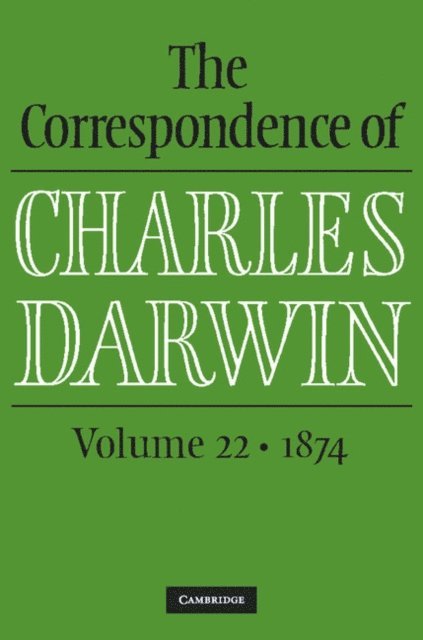
Correspondence of Charles Darwin: Volume 22, 1874
Av Charles Darwin, The Editors of the Darwin Correspondence Project m. fl.
E-bok, 2015
2086 kr
Lägg i varukorg
This volume is part of the definitive edition of letters written by and to Charles Darwin, the most celebrated naturalist of the nineteenth century. Notes and appendixes put these fascinating and wide-ranging letters in context, making the letters accessible to both scholars and general readers. …
Correspondence of Charles Darwin: Volume 22, 1874
Av Charles Darwin, The Editors of the Darwin Correspondence Project m. fl.
E-bok, 2015
2086 kr
Lägg i varukorg
This volume is part of the definitive edition of letters written by and to Charles Darwin, the most celebrated naturalist of the nineteenth century. Notes and appendixes put these fascinating and wide-ranging letters in context, making the letters accessible to both scholars and general readers. …
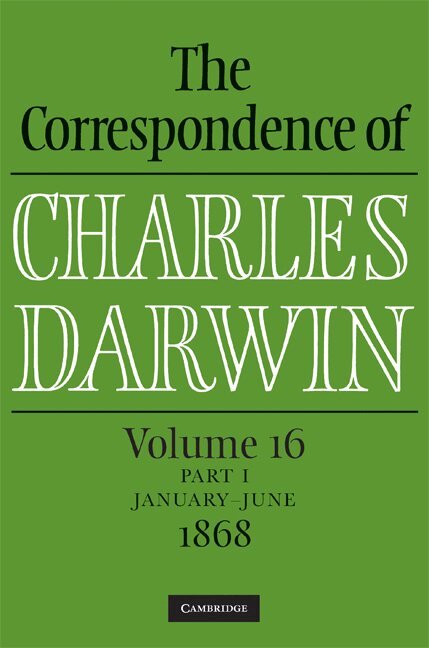
The Correspondence of Charles Darwin Parts 1 and 2 Hardback: Volume 16, 1868: Parts 1 and 2
Av Charles Darwin, Frederick Burkhardt m. fl.
2008
6345 kr
Tillfälligt slut
Charles Darwin depended on correspondence to collect data from all over the world, and to discuss his emerging ideas with scientific colleagues, many of whom he never met in person. In January of 1868, Darwin's Variation Under Domestication was published. The first printing of 1500 copies rapidly …