James Skibo - Böcker
Visar alla böcker från författaren James Skibo. Handla med fri frakt och snabb leverans.
3 produkter
3 produkter
261 kr
Skickas inom 11-20 vardagar
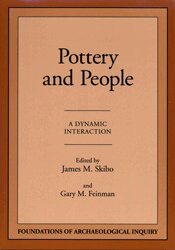
This volume emphasizes the complex interactions between ceramic containers and people in past and present contexts. Pottery, once it appears in the archaeological record, is one of the most routinely recovered artifacts. It is made frequently, broken often, and comes in endless varieties according to economic and social requirements. Moreover, even in shreds ceramics can last almost forever, providing important clues about past human behavior. The contributors to this volume, all leaders in ceramic research, probe the relationship between humans and ceramics. Here they offer new discoveries obtained through traditional lines of inquiry, demonstrate methodological breakthroughs, and expose innovative new areas for research. Among the topics covered in this volume are the age at which children begin learning pottery making; the origins of pottery in the Southwest U.S., Mesoamerica, and Greece; vessel production and standardization; vessel size and food consumption patterns; the relationship between pottery style and meaning; and the role pottery and other material culture plays in communication. Pottery and People provides a cross-section of the state of the art, emphasizing the complete interactions between ceramic containers and people in past and present contexts. This is a milestone volume useful to anyone interested in the connections between pots and people.
176 kr
Skickas inom 11-20 vardagar
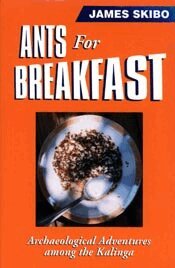
A view from the remote Philippine highlands where the author's time in the kalinga homeland was packed with the elements of a thriller novel: mystery, danger, sex, violence, death - and research too! Ants for Breakfast is about the adventure of modern archaeology. Seeking insight into prehistoric pottery manufacture and use, archaeologist James Skibo traveled to the remote Phillippine highlands to live with the Kalinga people, once headhunters, and one of the few groups in the world who still use ceramics for cooking. Even as he looked for clues to the past in the practices of the present, the author's time in the Kalinga homeland was packed with excitment: mystery, danger, sex, violence, and death. It was also an opportunity to taste a world both subtly and vastly different, while adding a new perspective to his own. In the course of his narrative, Skibo seizes every opportunity to link his experiences to the development of modern archaeology, and to such topics as human evolution, the peopling of the world, animal domestication, cultural logic, food taboos, basketball, Indiana Jones, and even Imelda Marcos.
357 kr
Skickas inom 11-20 vardagar
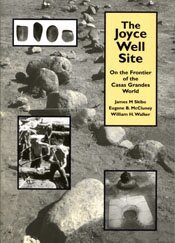
The Joyce Well site is in the remote boot heel of New Mexico, within the Gray Ranch, a huge spread whose owners continue to exercise careful control over its archaeological and natural resources. The site consists of a single-story pueblo of about 200 rooms that appears to have been associated with the Casas Grandes culture (Paquime) farther south in Chihuahua. Habitation peaked between AD 1200 and 1400. One of the questions researchers have sought to answer is the nature of the interaction between Paquime and sites such as Joyce Well. In 1963 Eugene McCluney excavated a portion of the pueblo and wrote a preliminary report. Since then, other researchers have conducted less ambitious projects there until Skibo and Walker excavated the ball court and conducted a large-scale investigation of the site and surrounding region in 1999 and 2000. This volume contains the 1963 report, plus all subsequent work. Analysis topics include plant remains, human skeletal material, ball courts and ritual performance, archaeomagnetic dating, and Animas Phase and Paquime comparisons. This publication makes the Joyce Well site accessible to all archaeologists for the first time.