James W. Cannon - Böcker
Visar alla böcker från författaren James W. Cannon. Handla med fri frakt och snabb leverans.
4 produkter
4 produkter
679 kr
Skickas inom 7-10 vardagar
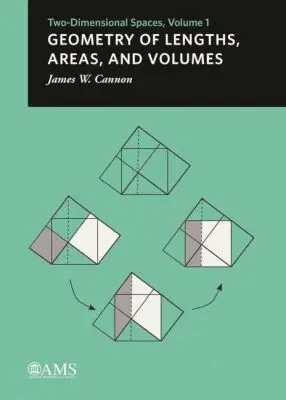
This is the first of a three volume collection devoted to the geometry, topology, and curvature of 2-dimensional spaces. The collection provides a guided tour through a wide range of topics by one of the twentieth century's masters of geometric topology. The books are accessible to college and graduate students and provide perspective and insight to mathematicians at all levels who are interested in geometry and topology.The first volume begins with length measurement as dominated by the Pythagorean Theorem (three proofs) with application to number theory; areas measured by slicing and scaling, where Archimedes uses the physical weights and balances to calculate spherical volume and is led to the invention of calculus; areas by cut and paste, leading to the Bolyai-Gerwien theorem on squaring polygons; areas by counting, leading to the theory of continued fractions, the efficient rational approximation of real numbers, and Minkowski's theorem on convex bodies; straight-edge and compass constructions, giving complete proofs, including the transcendence of $e$ and $\pi$, of the impossibility of squaring the circle, duplicating the cube, and trisecting the angle; and finally to a construction of the Hausdorff-Banach-Tarski paradox that shows some spherical sets are too complicated and cloudy to admit a well-defined notion of area.
748 kr
Skickas
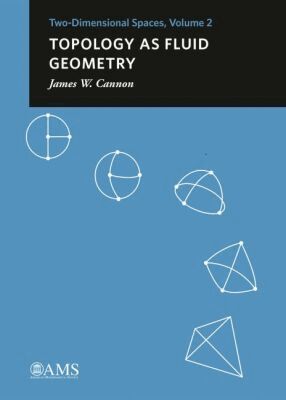
This is the second of a three volume collection devoted to the geometry, topology, and curvature of 2-dimensional spaces. The collection provides a guided tour through a wide range of topics by one of the twentieth century's masters of geometric topology. The books are accessible to college and graduate students and provide perspective and insight to mathematicians at all levels who are interested in geometry and topology.The second volume deals with the topology of 2-dimensional spaces. The attempts encountered in Volume 1 to understand length and area in the plane lead to examples most easily described by the methods of topology (fluid geometry): finite curves of infinite length, 1-dimensional curves of positive area, space-filling curves (Peano curves), 0-dimensional subsets of the plane through which no straight path can pass (Cantor sets), etc. Volume 2 describes such sets. All of the standard topological results about 2-dimensional spaces are then proved, such as the Fundamental Theorem of Algebra (two proofs), the No Retraction Theorem, the Brouwer Fixed Point Theorem, the Jordan Curve Theorem, the Open Mapping Theorem, the Riemann-Hurwitz Theorem, and the Classification Theorem for Compact 2-manifolds. Volume 2 also includes a number of theorems usually assumed without proof since their proofs are not readily available, for example, the Zippin Characterization Theorem for 2-dimensional spaces that are locally Euclidean, the Schoenflies Theorem characterizing the disk, the Triangulation Theorem for 2-manifolds, and the R. L. Moore's Decomposition Theorem so useful in understanding fractal sets.
679 kr
Skickas inom 7-10 vardagar
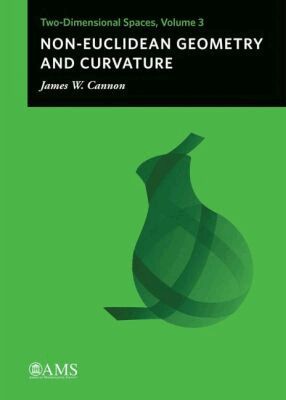
This is the final volume of a three volume collection devoted to the geometry, topology, and curvature of 2-dimensional spaces. The collection provides a guided tour through a wide range of topics by one of the twentieth century's masters of geometric topology. The books are accessible to college and graduate students and provide perspective and insight to mathematicians at all levels who are interested in geometry and topology.Einstein showed how to interpret gravity as the dynamic response to the curvature of space-time. Bill Thurston showed us that non-Euclidean geometries and curvature are essential to the understanding of low-dimensional spaces. This third and final volume aims to give the reader a firm intuitive understanding of these concepts in dimension 2. The volume first demonstrates a number of the most important properties of non-Euclidean geometry by means of simple infinite graphs that approximate that geometry. This is followed by a long chapter taken from lectures the author gave at MSRI, which explains a more classical view of hyperbolic non-Euclidean geometry in all dimensions. Finally, the author explains a natural intrinsic obstruction to flattening a triangulated polyhedral surface into the plane without distorting the constituent triangles. That obstruction extends intrinsically to smooth surfaces by approximation and is called curvature. Gauss's original definition of curvature is extrinsic rather than intrinsic. The final two chapters show that the book's intrinsic definition is equivalent to Gauss's extrinsic definition (Gauss's "Theorema Egregium" ("Great Theorem")).
1 457 kr
Skickas inom 7-10 vardagar
This three-volume collection is devoted to the geometry, topology, and curvature of 2-dimensional spaces. The collection provides a guided tour through a wide range of topics by one of the twentieth century's masters of geometric topology. The books are accessible to college and graduate students and provide perspective and insight to mathematicians at all levels who are interested in geometry and topology.