James W. Muller - Böcker
Visar alla böcker från författaren James W. Muller. Handla med fri frakt och snabb leverans.
8 produkter
8 produkter
720 kr
Skickas inom 7-10 vardagar
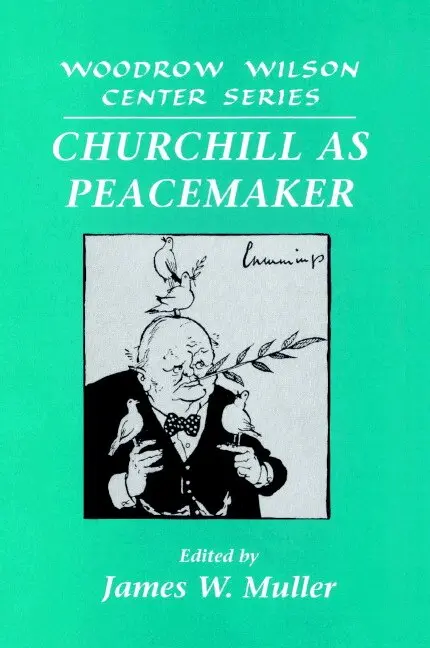
Winston Churchill had an acute appreciation of what belongs to war and what belongs to peace. We tend to remember his resistance to Nazi tyranny during the Second World War and his actions as a man of war. In this book, scholars from the United States, Great Britain, and South Africa examine his other actions and comments, those that reflect the primary focus of Churchill's long career: his attempts to keep and restore peace throughout the world, from Queen Victoria's little wars to the Cold War.
1 084 kr
Skickas inom 7-10 vardagar
Winston Churchill had an acute appreciation of what belongs to war and what belongs to peace. We tend to remember his resistance to Nazi tyranny during the Second World War and his actions as a man of war. In this book, scholars from the United States, Great Britain, and South Africa examine his other actions and comments, those that reflect the primary focus of Churchill's long career: his attempts to keep and restore peace throughout the world, from Queen Victoria's little wars to the Cold War.
Great Contemporaries
Churchill Reflects on FDR, Hitler, Kipling, Chaplin, Balfour, and Other Giants of His Age
Häftad, Engelska, 2024
355 kr
Skickas inom 3-6 vardagar
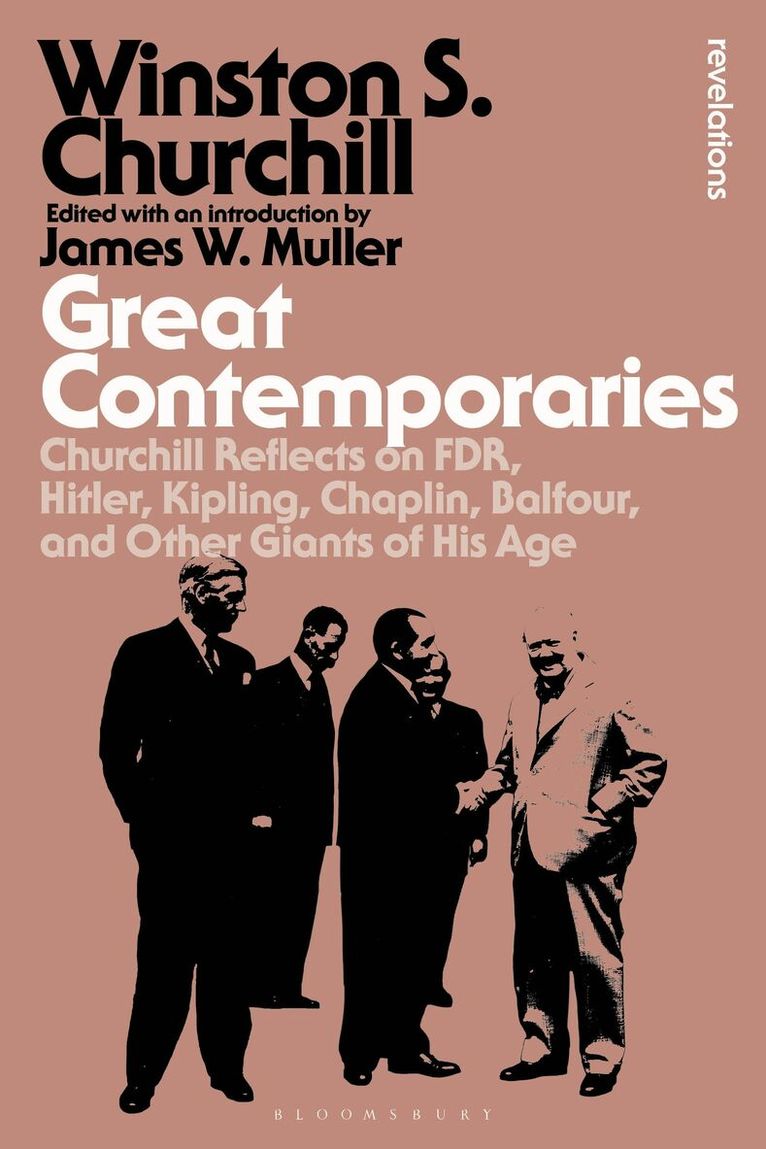
Winston S. Churchill won the Nobel Prize for Literature for “his mastery of historical and biographical description.” Nowhere is that mastery more evident than in Great Contemporaries, first published in 1937.Written in the decade before Churchill became prime minister, these portraits of notable figures of his age offer wisdom for our own. With keen observations and telling anecdotes, Churchill points out what he learned from them about greatness and also their limitations. His subjects range from Franklin Roosevelt, Adolf Hitler, Lawrence of Arabia, and Leon Trotsky to Charlie Chaplin, H. G. Wells, Rudyard Kipling, and George Bernard Shaw.Published in the Bloomsbury Revelations series to commemorate the 150th anniversary of Churchill's birth, this is the most complete edition, including five additional essays, more than thirty photographs, with a new foreword and annotations by Churchill scholar James W. Muller. This volume revives Churchill’s unmatched insights and unforgettable prose for a new generation of readers.
Great Contemporaries
Churchill Reflects on FDR, Hitler, Kipling, Chaplin, Balfour, and Other Giants of His Age
Inbunden, Engelska, 2024
1 039 kr
Skickas inom 10-15 vardagar
Winston S. Churchill won the Nobel Prize for Literature for “his mastery of historical and biographical description.” Nowhere is that mastery more evident than in Great Contemporaries, first published in 1937.Written in the decade before Churchill became prime minister, these portraits of notable figures of his age offer wisdom for our own. With keen observations and telling anecdotes, Churchill points out what he learned from them about greatness and also their limitations. His subjects range from Franklin Roosevelt, Adolf Hitler, Lawrence of Arabia, and Leon Trotsky to Charlie Chaplin, H. G. Wells, Rudyard Kipling, and George Bernard Shaw.Published in the Bloomsbury Revelations series to commemorate the 150th anniversary of Churchill's birth, this is the most complete edition, including five additional essays, more than thirty photographs, with a new foreword and annotations by Churchill scholar James W. Muller. This volume revives Churchill’s unmatched insights and unforgettable prose for a new generation of readers.
Thoughts and Adventures
Churchill Reflects on Spies, Cartoons, Flying and the Future
Häftad, Engelska, 2024
358 kr
Skickas inom 7-10 vardagar
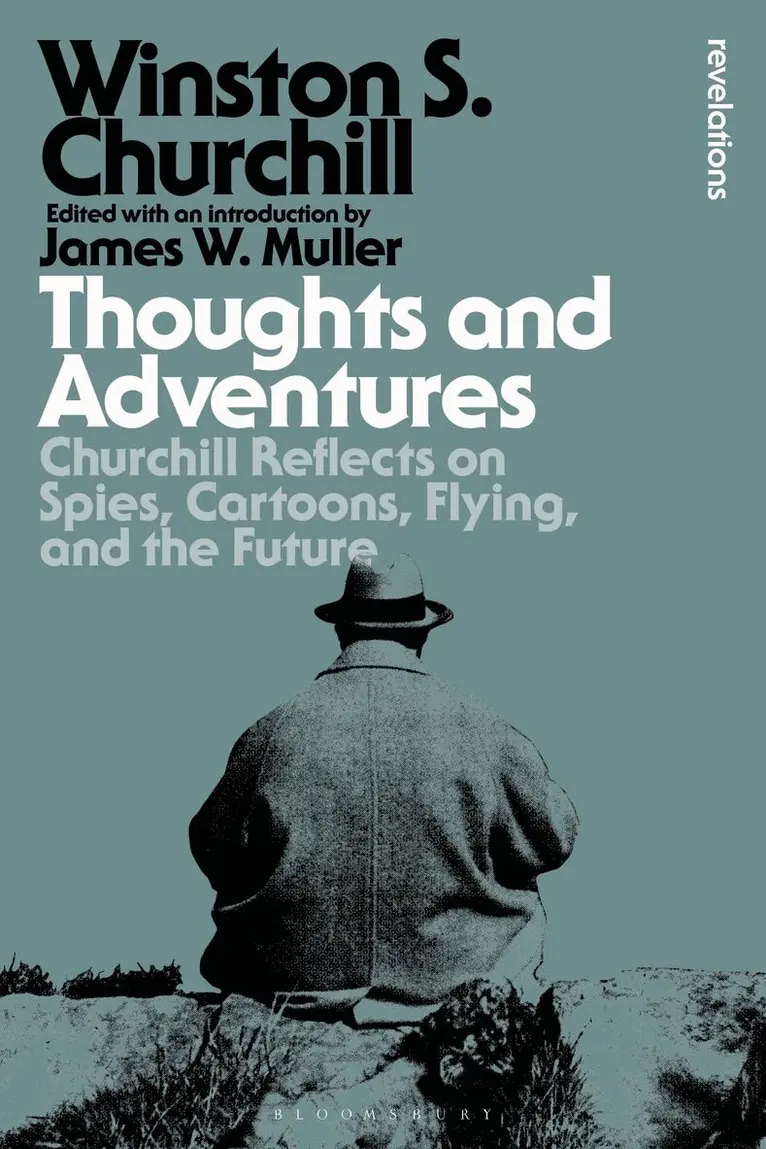
First published in 1932, Thoughts and Adventures is Churchill’s most philosophical book. It conveys the extraordinary variety and depth of the statesman’s mature thoughts on questions facing modern men and women. Written in what biographers have called Churchill’s “wilderness years,” this wide-ranging volume of essays touches on cartoons, hobbies, spies, flying, elections, economics, and modern science. Reading it is like being invited to dinner at his country seat at Chartwell, where the soup was limpid, Pol Roger Champagne flowed, the pudding had a theme, and Churchill entertained lucky visitors with vivid conversation.Published in the Bloomsbury Revelations series to commemorate the 150th anniversary of Churchill’s birth, with a new foreword and illuminating annotations by James W. Muller, this collection of 23 articles, most of them originally published in magazines and newspapers, revives Churchill’s unforgettable prose and unmatched insights for a new generation of readers.
Thoughts and Adventures
Churchill Reflects on Spies, Cartoons, Flying and the Future
Inbunden, Engelska, 2024
1 039 kr
Skickas inom 10-15 vardagar
First published in 1932, Thoughts and Adventures is Churchill’s most philosophical book. It conveys the extraordinary variety and depth of the statesman’s mature thoughts on questions facing modern men and women. Written in what biographers have called Churchill’s “wilderness years,” this wide-ranging volume of essays touches on cartoons, hobbies, spies, flying, elections, economics, and modern science. Reading it is like being invited to dinner at his country seat at Chartwell, where the soup was limpid, Pol Roger Champagne flowed, the pudding had a theme, and Churchill entertained lucky visitors with vivid conversation.Published in the Bloomsbury Revelations series to commemorate the 150th anniversary of Churchill’s birth, with a new foreword and illuminating annotations by James W. Muller, this collection of 23 articles, most of them originally published in magazines and newspapers, revives Churchill’s unforgettable prose and unmatched insights for a new generation of readers.
556 kr
Skickas inom 7-10 vardagar
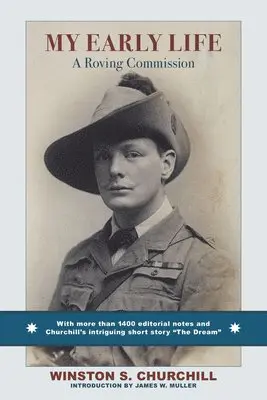
In My Early Life, Churchill describes his education and his experience in four wars on three continents as a young officer and newspaper correspondent, including his cavalry charge against the Dervishes at Omdurman in the Sudan and his capture and escape from a Boer prisoner of war camp in South Africa. He explains how he wrote his first five books and launched his political career before taking his seat in the House of Commons at twenty-six. By the time he wrote this book, the First World War had ushered in many changes, not all of them good, and Churchill perceived a low spirit in his countrymen. He thinks a time may come when young Britons will need more love of “adventure, and adventure for adventure’s sake,” which his early life exemplifies, and he offers “the new generation” his own “story of youthful endeavour” to encourage and rekindle the spirited part of their souls. Giving an account of his own life is a summons to young people who are drifting in an eddy of mass effects to surmount their fear of death, aiming to stir up unselfish endeavor in them. Lest anyone mistake his intention in writing the book, he dedicates it “TO A NEW GENERATION.”This edition of My Early Life includes “The Dream.” This short story was first mooted at a family meal at Churchill’s country house at Chartwell in late November 1947, in the company of Winston and Clementine Churchill’s children, Diana and Randolph. Diana asked her father, if he could conjure up anyone, who would fill an empty chair in the dining room. He replied that he would choose to dine with his own father, Lord Randolph Churchill, who had died more than fifty years earlier. He went on to describe a story he meant to write, based on a dream in which Lord Randolph returned to his son’s painting studio to inquire what had occurred in the intervening half-century. Encouraged by his family’s enthusiasm, Churchill wrote the story soon afterwards but, after revising it, set it aside to be published later. This “Private Article,” as he styled it, first appeared a year after his death in the Sunday Telegraph, January 30, 1966, which described it as “his last story—locked away in a box for years—now published for the first time.” By permission of Churchill College, it is reprinted, with explanatory editorial notes, as a fitting epilogue to Churchill’s autobiography.
1 221 kr
Skickas inom 7-10 vardagar
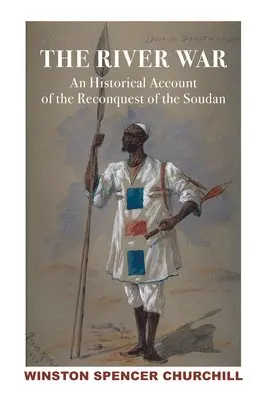
Winston Churchill wrote five books before he was elected to Parliament at the age of twenty-five. The most impressive of these books, The River War tells the story of Britain’s arduous and risky campaign to reconquer the Sudan at the end of the nineteenth century. More than half a century of subjection to Egypt had ended a decade earlier when Sudanese Dervishes rebelled against foreign rule and killed Britain’s envoy Charles Gordon at his palace in Khartoum in 1885. Political Islam collided with European imperialism. Herbert Kitchener’s Anglo-Egyptian army, advancing hundreds of miles south along the Nile through the Sahara Desert, defeated the Dervish army at the battle of Omdurman on September 2, 1898. Churchill, an ambitious young cavalry officer serving with his regiment in India, had already published newspaper columns and a book about fighting on the Afghan frontier. He yearned to join Kitchener’s campaign. But the general, afraid of what he would write about it, refused to have him. Churchill returned to London. With help from his mother and the prime minister, he managed to get himself attached to an English cavalry regiment sent to strengthen Kitchener’s army. Hurriedly travelling to Egypt, Churchill rushed upriver to Khartoum, catching up with Kitchener’s army just in time to take part in the climactic battle. That day he charged with the 21st Lancers in the most dangerous fighting against the Dervish host. He wrote fifteen dispatches for the Morning Post in London. As Kitchener had expected, Churchill’s dispatches and his subsequent book were highly controversial. The precocious officer, having earlier seen war on two other continents, showed a cool independence of his commanding officer. He even resigned from the army to be free to write the book as he pleased. He gave Kitchener credit for his victory but found much to criticize in his character and campaign. Churchill’s book, far from being just a military history, told the whole story of the Egyptian conquest of the Sudan and the Dervishes’ rebellion against imperial rule. The young author was remarkably even-handed, showing sympathy for the founder of the rebellion, Muhammad Ahmed, and for his successor the Khalifa Abdullahi, whom Kitchener had defeated. He considered how the war in northeast Africa affected British politics at home, fit into the geopolitical rivalry between Britain and France, and abruptly thrust the vast Sudan, with the largest territory in Africa, into an uncertain future in Britain’s orbit. In November 1899, The River War was published in “two massive volumes, my magnum opus (up to date), upon which I had lavished a whole year of my life,” as Churchill recalled later in his autobiography. The book had twenty-six chapters, five appendices, dozens of illustrations, and colored maps. Three years later, in 1902, it was shortened to fit into one volume. Seven whole chapters, and parts of every other chapter, disappeared in the abridgment. Many maps and most illustrations were also dropped. Since then the abridged edition has been reprinted regularly, and eventually it was even abridged further. But the full two-volume book, which is rare and expensive, was never published again—until now. St. Augustine’s Press, in collaboration with the International Churchill Society, brings back to print in two handsome volumes The River War: An Historical Account of the Reconquest of the Soudan unabridged, for the first time since 1902. Every chapter and appendix from the first edition has been restored. All the maps are in it, in their original colors, with all the illustrations by Churchill’s brother officer Angus McNeill. More than thirty years in the making, under the editorship of James W. Muller, this new edition of The River War will be the definitive one for all time. The whole book is printed in two colors, in black and red type, to show what Churchill originally wrote and how it was abridged or altered later. For the first time, a new appendix reproduces Churchill’s Sudan dispatches as he wrote them, before they were edited by the Morning Post. Other new appendices reprint Churchill’s subsequent writings on the Sudan. Thousands of new footnotes have been added to the book by the editor, identifying Churchill’s references to people, places, writings, and events unfamiliar to readers today. Professor Muller’s new introduction explains how the book fits into Churchill’s career as a writer and an aspiring politician. He examines the statesman’s early thoughts about war, race, religion, and imperialism, which are still our political challenges in the twenty-first century. Half a century after The River War appeared, this book was one of a handful of his works singled out by the Swedish Academy when it awarded Churchill the Nobel Prize for Literature in 1953. Now, once again, its reader can follow Churchill back to the war he fought on the Nile, beginning with the words of his youngest daughter. Before she died, Mary Soames wrote a new foreword, published here, which concludes that “In this splendid new edition…we have, in effect, the whole history of The River War as Winston Churchill wrote it—and it makes memorable reading.”