James William Sobaskie - Böcker
Visar alla böcker från författaren James William Sobaskie. Handla med fri frakt och snabb leverans.
2 produkter
2 produkter
1 462 kr
Skickas inom 10-15 vardagar
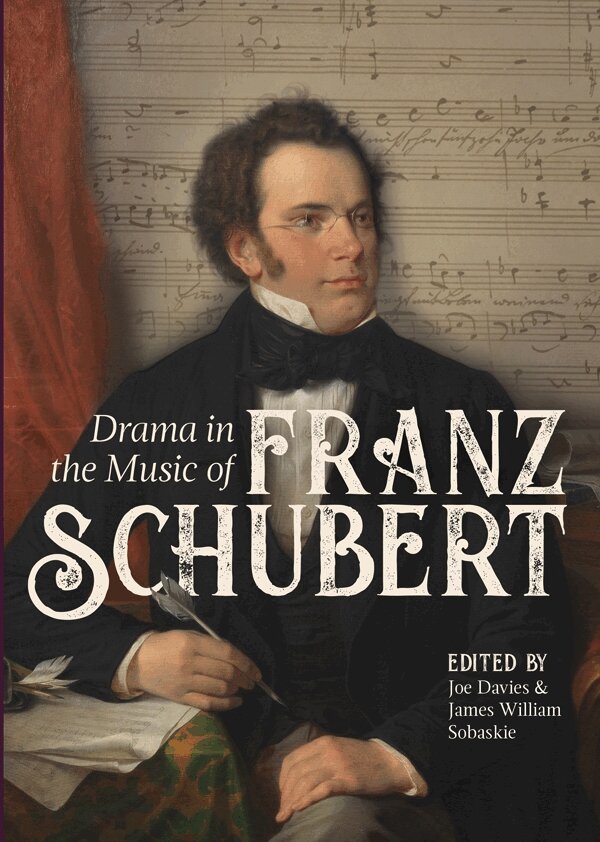
This book challenges the assumption that Franz Schubert (1797-1828), best known for the lyricism of his songs, symphonies and chamber music, lacked comparable talent for drama.It is commonly assumed that Franz Schubert (1797-1828), best known for the lyricism of his songs, symphonies, and chamber music, lacked comparable talent for drama. Challenging this view, Drama in the Music of Franz Schubert provides a timely re-evaluation of Schubert's operatic works, while demonstrating previously unsuspected locations of dramatic innovation in his vocal and instrumental music. The volume draws on a range of critical approaches and techniques, including semiotics, topic theory, literary criticism, narratology, and Schenkerian analysis, to situate Schubertian drama within its musical and cultural-historical context. In so doing, the study broadens the boundaries of what might be considered 'dramatic' within the composer's music and offers new perspectives for its analysis and interpretation. Drama in the Music of Franz Schubert will be of interest to musicologists, music theorists, composers, and performers, as well as scholars working in cultural studies, theatre, and aesthetics.JOE DAVIES is College Lecturer in Music at Lady Margaret Hall, University of Oxford.JAMES WILLIAM SOBASKIE is Associate Professor of Music at Mississippi State University.Contributors: Brian Black, Lorraine Byrne Bodley, Joe Davies, Xavier Hascher, Marjorie Hirsch, Anne Hyland, Christine Martin, Clive McClelland, James William Sobaskie, Lauri Suurpää, Laura Tunbridge, Susan Wollenberg, Susan Youens
1 629 kr
Skickas inom 7-10 vardagar
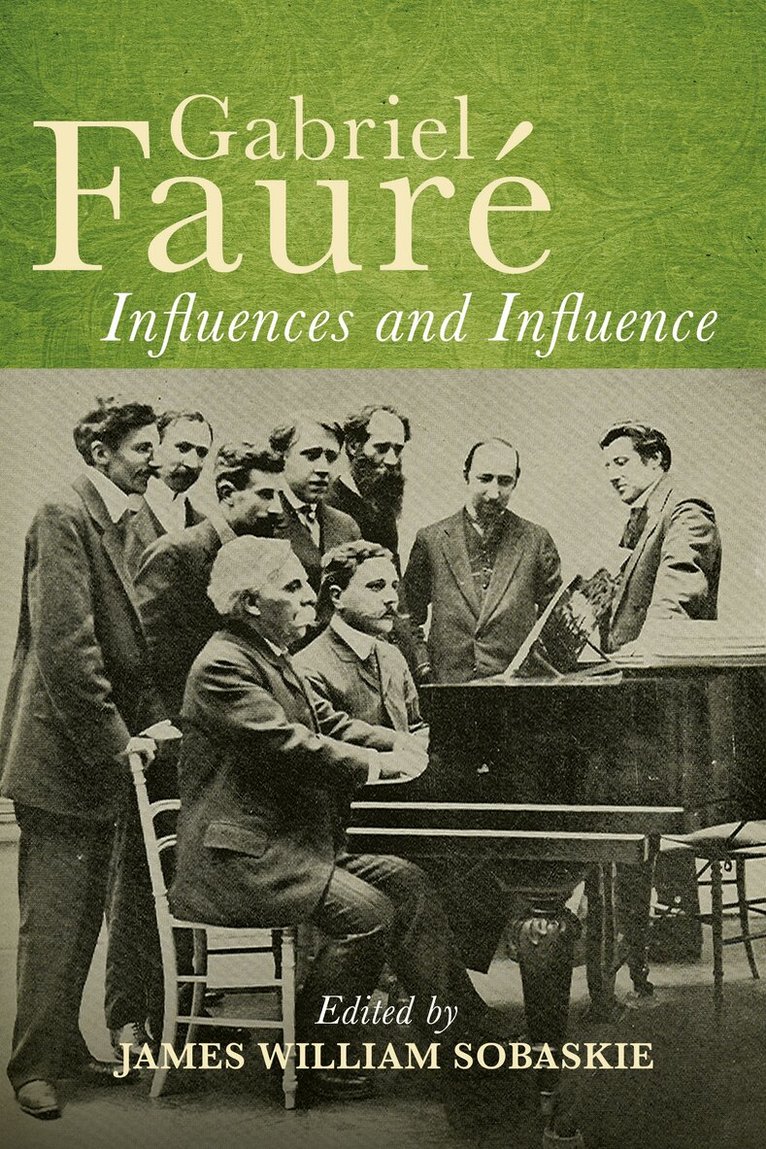
Presents Fauré not as a solitary figure, but part of a vibrant continuum of nineteenth- and twentieth-century composers and the first member of a French musical 'trinity', with Debussy and Ravel.A composition professor at the Paris Conservatoire since 1896, and its director from 1906 to 1920, Gabriel Fauré (1845-1924) was said to have created no school as Cesar Franck had before him, encouraging originality among his students rather than emulation. This collection portrays Fauré, influenced by Wolfgang Mozart, Fryderyk Chopin, and Felix Mendelssohn, plus the poetry of Charles Baudelaire and Paul Verlaine, as an early Modernist who provided a reference point for Claude Debussy, Maurice Ravel, and Francis Poulenc. Casting a wide net, it explores Fauré's influence on his younger contemporaries Lili Boulanger and Frederick Delius, as well as on the later twentieth-century American composers Aaron Copland, Walter Arlen, Robert Helps, and Ned Rorem. Fauré no longer appears as a solitary figure, but part of a vibrant continuum of nineteenth- and twentieth-century composers, and the first member of a French musical 'trinity' that included Debussy and Ravel.