Jan Bazant - Böcker
Visar alla böcker från författaren Jan Bazant. Handla med fri frakt och snabb leverans.
5 produkter
5 produkter
Del 11 - Cambridge Latin American Studies
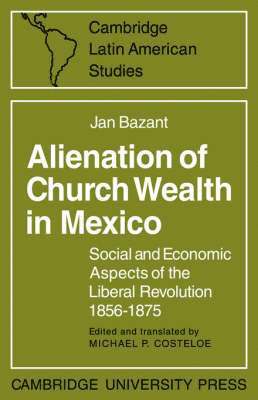
Alienation of Church Wealth in Mexico
Social and Economic Aspects of the Liberal Revolution 1856-1875
Häftad, Engelska, 2008
523 kr
Skickas inom 7-10 vardagar
Conflict between the Roman Catholic Church and the State in Mexico became prominent soon after independence in 1821, and during the next three decades national and state governments made various attempts to reduce ecclesiastical influence in the social, economic and political life of the nation. Few of such efforts met with much success, and it was not until 1856 that a major reform was initiated. Legislation was issued which affected all spheres of clerical activity but the most vital and controversial aspect of the reform involved the measures adopted to dispossess the Church of its wealth. The extensive ecclesiastical holdings of urban and rural real estate and capital were nationalized and redistributed. Professor Bazant examines earlier attempts at nationalization, and describes in detail the implementations of the 1856 Lerdo Law and subsequent decrees. Using selected areas of the country, he traces the precise effects of the redistribution of Church property and capital, describing the terms of sale or transfer, the number of sales, the buyers, their nationality and occupation, and the total value of the amounts involved.
441 kr
Skickas inom 7-10 vardagar
Jan Bazant has woven into a coherent whole the chaotic series of political and social upheavals that characterised Mexican history from the start of the struggle for independence through the completion of basic social reforms in 1940. The colonial reaction to the forced loans exacted by the Spanish government in 1805 to finance its war against Great Britain was, in Professor Bazant's view, the starting point of the Mexican independence movement. She argues that a new phase of Mexican history began when the liberals abolished the power and wealth of the Catholic Church. Mexico's rapid economic growth in the last quarter of the nineteenth century was largely the result of the stable political climate created by the dictatorship of Porfirio Diaz. Under Diaz however, most rural areas remained backward and it was precisely the contradiction between the urban, industrial economy and the traditional structure of the countryside that led to the Mexican civil war between 1910 and 1920. The agrarian reform finally transformed the rigid social system and created Mexico as we see it today.
1 510 kr
Skickas inom 7-10 vardagar
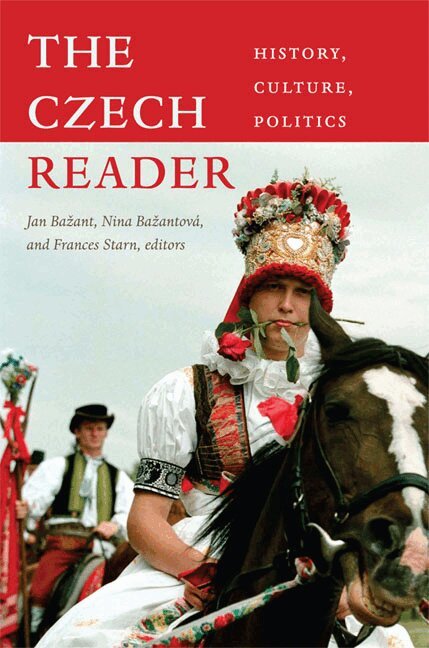
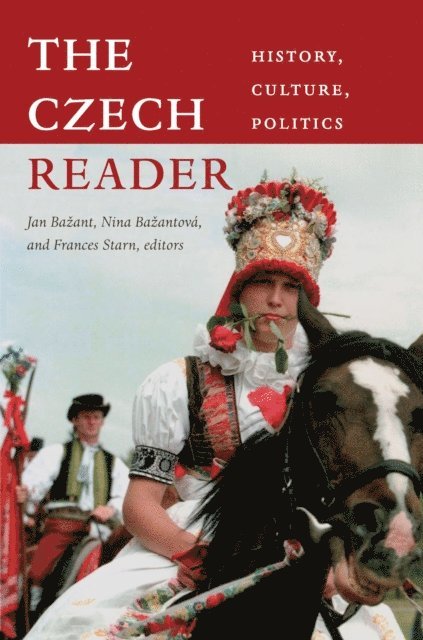
The Czech Reader brings together more than 150 primary texts and illustrations to convey the dramatic history of the Czechs, from the emergence of the Czech state in the tenth century, through the creation of Czechoslovakia in 1918 and the Czech Republic in 1993, into the twenty-first century. The Czechs have preserved their language, traditions, and customs, despite their incorporation into the Holy Roman Empire, the Habsburg Empire, the Austro-Hungarian Empire, the Third Reich, and the Eastern Bloc. Organized chronologically, the selections in The Czech Reader include the letter to the Czech people written by the religious reformer and national hero Jan Hus in 1415, and Charter 77, the fundamental document of an influential anticommunist initiative launched in 1977 in reaction to the arrest of the Plastic People of the Universe, an underground rock band. There is a speech given in 1941 by Reinhard Heydrich, a senior Nazi official and Deputy Reich Protector of Bohemia and Moravia, as well as one written by VÁclav Havel in 1984 for an occasion abroad, but read by the Czech-born British dramatist Tom Stoppard, since Havel, the dissident playwright and future national leader, was not allowed to leave Czechoslovakia. Among the songs, poems, folklore, fiction, plays, paintings, and photographs of monuments and architectural landmarks are “Let Us Rejoice,” the most famous chorus from Bedřich Smetana’s comic opera The Bartered Bride; a letter the composer AntonÍn DvořÁk sent from New York, where he directed the National Conservatory of Music in the 1890s; a story by Franz Kafka; and an excerpt from Milan Kundera’s The Joke. Intended for travelers, students, and scholars alike, The Czech Reader is a rich introduction to the turbulent history and resilient culture of the Czech people.
476 kr
Skickas inom 3-6 vardagar
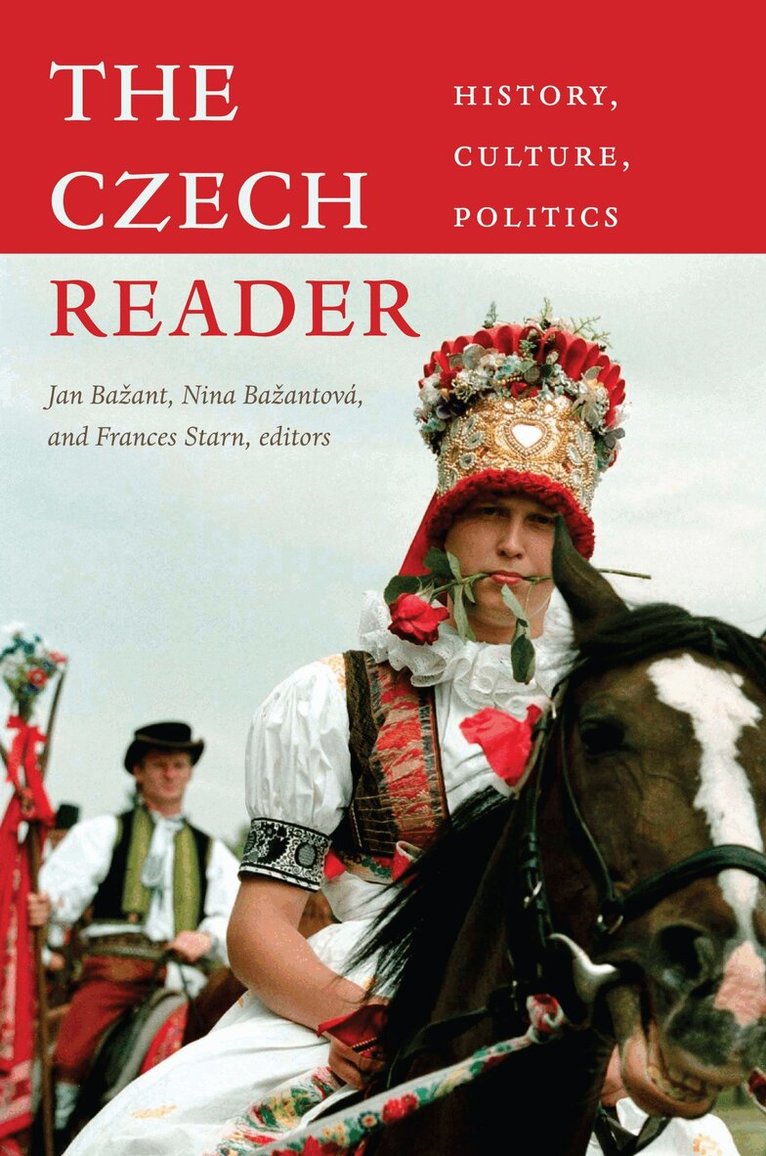
The Czech Reader brings together more than 150 primary texts and illustrations to convey the dramatic history of the Czechs, from the emergence of the Czech state in the tenth century, through the creation of Czechoslovakia in 1918 and the Czech Republic in 1993, into the twenty-first century. The Czechs have preserved their language, traditions, and customs, despite their incorporation into the Holy Roman Empire, the Habsburg Empire, the Austro-Hungarian Empire, the Third Reich, and the Eastern Bloc. Organized chronologically, the selections in The Czech Reader include the letter to the Czech people written by the religious reformer and national hero Jan Hus in 1415, and Charter 77, the fundamental document of an influential anticommunist initiative launched in 1977 in reaction to the arrest of the Plastic People of the Universe, an underground rock band. There is a speech given in 1941 by Reinhard Heydrich, a senior Nazi official and Deputy Reich Protector of Bohemia and Moravia, as well as one written by VÁclav Havel in 1984 for an occasion abroad, but read by the Czech-born British dramatist Tom Stoppard, since Havel, the dissident playwright and future national leader, was not allowed to leave Czechoslovakia. Among the songs, poems, folklore, fiction, plays, paintings, and photographs of monuments and architectural landmarks are “Let Us Rejoice,” the most famous chorus from Bedřich Smetana’s comic opera The Bartered Bride; a letter the composer AntonÍn DvořÁk sent from New York, where he directed the National Conservatory of Music in the 1890s; a story by Franz Kafka; and an excerpt from Milan Kundera’s The Joke. Intended for travelers, students, and scholars alike, The Czech Reader is a rich introduction to the turbulent history and resilient culture of the Czech people.
Classical Tradition in Czech Medieval Art
Translated from the Czech by Gerard Turner and Torquil Carlisle
Häftad, Engelska, 2003
742 kr
Skickas inom 5-8 vardagar