Jan Ciglbauer - Böcker
Visar alla böcker från författaren Jan Ciglbauer. Handla med fri frakt och snabb leverans.
2 produkter
2 produkter
Del 206 - Eastman Studies in Music
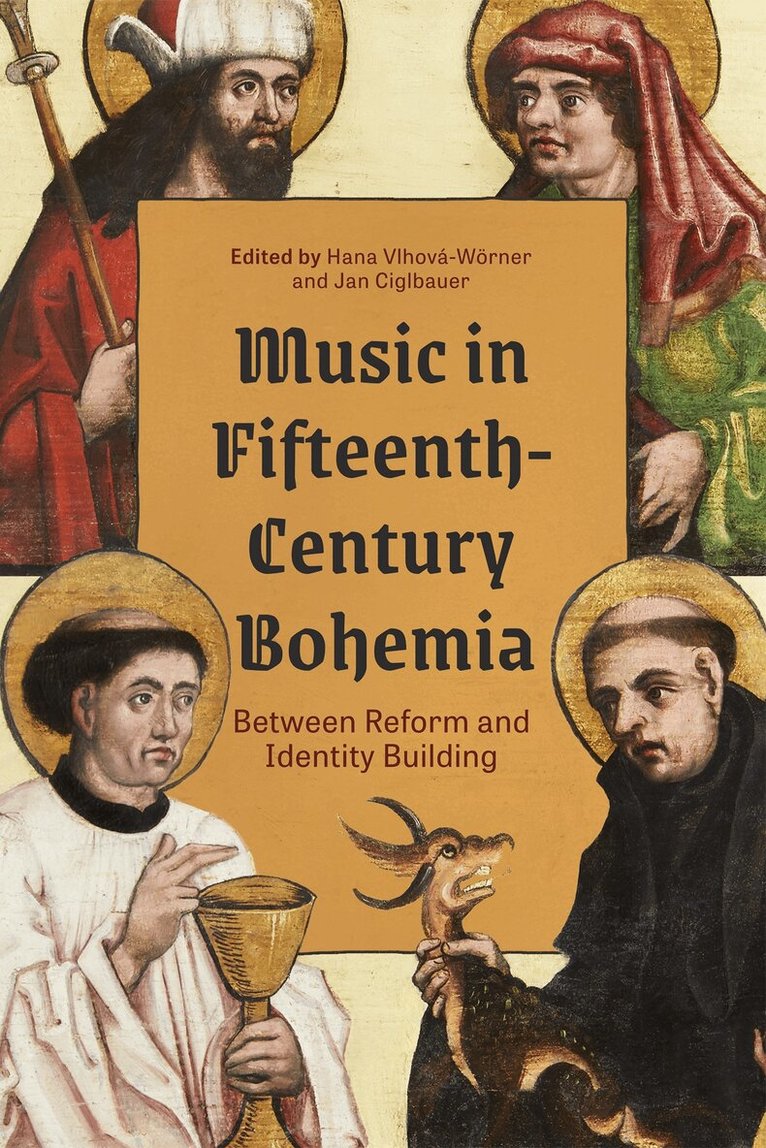
Music in Fifteenth-Century Bohemia
Between Reform and Identity Building
Inbunden, Engelska, 2025
1 158 kr
Skickas inom 7-10 vardagar
A long-needed reassessment of the musical culture of fifteenth-century Bohemia, liberating it from nineteenth- and twentieth-century nationalist agendas and reassessing its position in European music history.What was musical culture like in a country in fifteenth-century Central Europe where theologians tried to restore the values of the early church--including through musical practices--only to be branded "heretical"? Bohemian theologians tried to return to Christianity's "roots" by promoting frequent bread-and-wine communion for all (including children) and by encouraging lay participation in worship through translations into the vernacular. Unlike in many other European lands, monophonic chant and sacred songs were primarily used (though some advanced contemporary polyphonic settings circulated as well). These religious and musical developments formed part of the seedbed that would develop more fully during the European Reformation through the work of Martin Luther and others. Music in Fifteenth-Century Bohemia: Between Reform and Identity Building contains essays on liturgy, song, and the influence of the Hussite movement. The book resists both nationalistically tinged narratives and the marginalization that has long resulted from an emphasis on the disparities between Czech and Western European musical traditions. One chapter demonstrates how a fifteenth-century song was employed in the revival of Czech culture in the nineteenth century. Taken as a whole, the essays in this important collection illustrate the distinctive and often effective ways in which fifteenth-century Czech culture dealt with the dichotomy between religious reform and cultural identity.
486 kr
Kommande
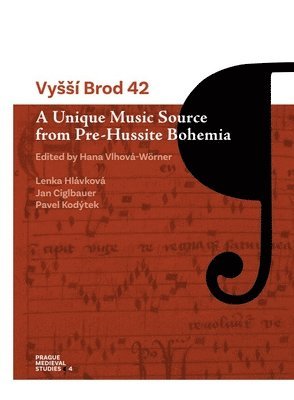
An in-depth study of a medieval manuscript of songs from the Cistercian monastery in Vyšší Brod.Manuscript 42 from the Cistercian monastery in Vyšší Brod (Hohenfurth), Czech Republic, compiled in 1410, today represents one of the most important music sources from medieval Bohemia, providing insight into the rich and varied liturgical and devotional repertory circulating in Central Europe just before the outbreak of the Hussite Wars in 1419. The manuscript’s collection of monophonic and polyphonic songs, one of the oldest ones in Europe, serves as a starting point for studies of the Latin mensural cantio, an important late medieval music form and cultural phenomenon.In Vyšší Brod 42, three extensive studies explore various aspects of the manuscript and its contents. In the first, Jan Ciglbauer examines its creation process and the involvement of various scribes in noting down new texts and melodies. In the second, Hana Vlhová-Wörner delves into the variety of late medieval chant compositions contained within it and the relationship of this truly novel repertory to the formalized Cistercian liturgy. The last chapter, co-authored by Lenka Hlávková and Pavel Kodýtek, scrutinizes the manuscript’s remarkable collection of spiritual songs and identifies their inscription as “snapshots” of a vivid oral tradition.Together, these three studies bring a new perspective on musical life in Cistercian monasteries in Central Europe in the late Middle Ages, a topic that has received very little exploration until now.