Jan Eckel - Böcker
Visar alla böcker från författaren Jan Eckel. Handla med fri frakt och snabb leverans.
3 produkter
3 produkter
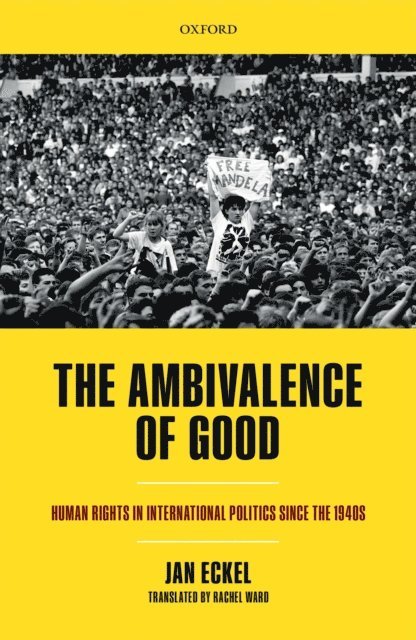
The Ambivalence of Good
Human Rights in International Politics since the 1940s
Inbunden, Engelska, 2019
1 433 kr
Skickas inom 5-8 vardagar
The Ambivalence of Good examines the genesis and evolution of international human rights politics since the 1940s. Focusing on key developments such as the shaping of the UN human rights system, decolonization, the rise of Amnesty International, the campaigns against the Pinochet dictatorship, the moral politics of Western governments, or dissidence in Eastern Europe, the book traces how human rights profoundly, if subtly, transformed global affairs. Moving beyond monocausal explanations and narratives prioritizing one particular decade, such as the 1940s or the 1970s, The Ambivalence of Good argues that we need a complex and nuanced interpretation if we want to understand the truly global reach of human rights, and account for the hopes, conflicts, and interventions to which this idea gave rise. Thus, it portrays the story of human rights as polycentric, demonstrating how actors in various locales imbued them with widely different meanings, arguing that the political field evolved in a fitful and discontinuous process. This process was shaped by consequential shifts that emerged from the search for a new world order during the Second World War, decolonization, the desire to introduce a new political morality into world affairs during the 1970s, and the visions of a peaceful international order after the end of the Cold War. Finally, the book stresses that the projects pursued in the name of human rights nonetheless proved highly ambivalent. Self-interest was as strong a driving force as was the desire to help people in need, and while international campaigns often improved the fate of the persecuted, they were equally likely to have counterproductive effects.The Ambivalence of Good provides the first research-based synopsis of the topic and one of the first synthetic studies of a transnational political field (such as population, health, or the environment) during the twentieth century. Based on archival research in six countries, it breaks new empirical ground concerning the history of human rights in the United Nations, of human rights NGOs, of far-flung mobilizations, and of the uses of human rights in state foreign policy.
338 kr
Skickas inom 10-15 vardagar
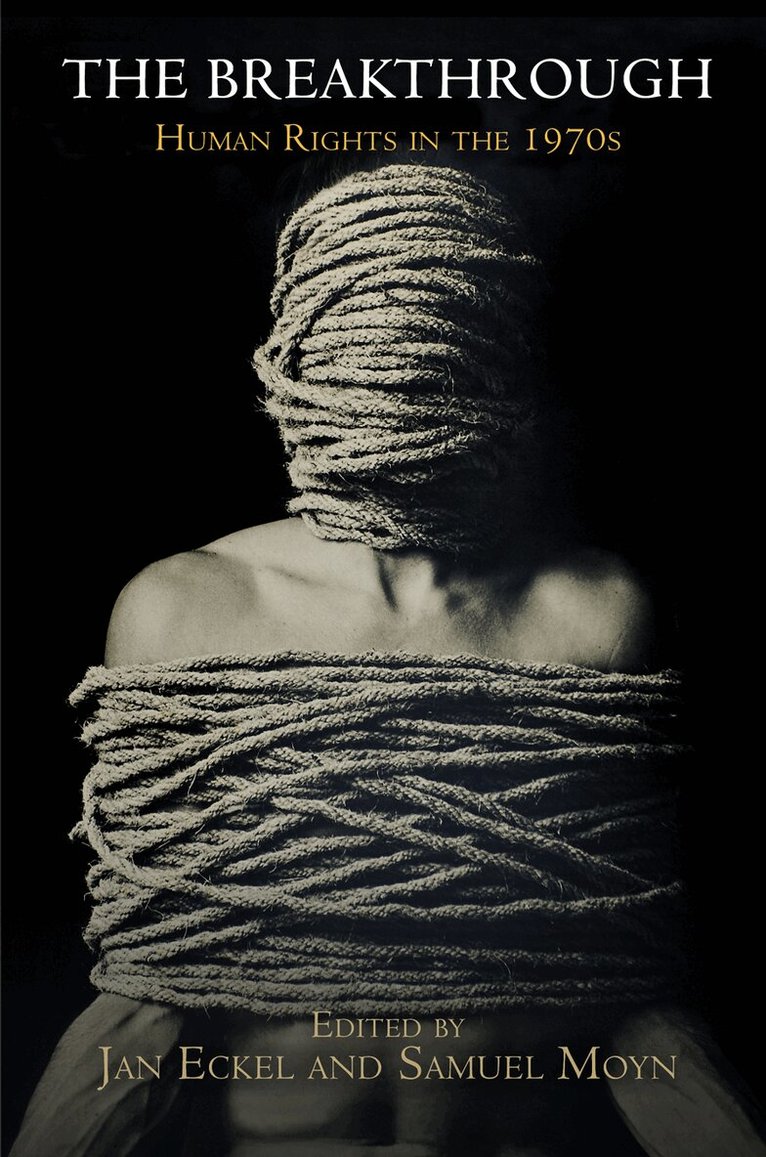
Between the 1960s and the 1980s, the human rights movement achieved unprecedented global prominence. Amnesty International attained striking visibility with its Campaign Against Torture; Soviet dissidents attracted a worldwide audience for their heroism in facing down a totalitarian state; the Helsinki Accords were signed, incorporating a "third basket" of human rights principles; and the Carter administration formally gave the United States a human rights policy.The Breakthrough is the first collection to examine this decisive era as a whole, tracing key developments in both Western and non-Western engagement with human rights and placing new emphasis on the role of human rights in the international history of the past century. Bringing together original essays from some of the field's leading scholars, this volume not only explores the transnational histories of international and nongovernmental human rights organizations but also analyzes the complex interplay between gender, sociology, and ideology in the making of human rights politics at the local level. Detailed case studies illuminate how a number of local movements-from the 1975 World Congress of Women in East Berlin, to antiapartheid activism in Britain, to protests in Latin America-affected international human rights discourse in the era as well as the ways these moments continue to influence current understanding of human rights history and advocacy. The global south-an area not usually treated as a scene of human rights politics-is also spotlighted in groundbreaking chapters on Biafran, South American, and Indonesian developments. In recovering the remarkable presence of global human rights talk and practice in the 1970s, The Breakthrough brings this pivotal decade to the forefront of contemporary scholarly debate.Contributors: Carl J. Bon Tempo, Gunter Dehnert, Celia Donert, Lasse Heerten, Patrick William Kelly, Benjamin Nathans, Ned Richardson-Little, Daniel Sargent, Brad Simpson, Lynsay Skiba, Simon Stevens.
512 kr
Tillfälligt slut
Der Band untersucht die Protestgeschichte des Jahres 1968 in ihrer längerfristigen gesellschaftlichen Genese, ihrer transnationalen Verflechtung und ihrer eruptiven Zuspitzung anhand mehrerer nationaler und lokaler Beispiele. Er legt dar, dass "1968" im globalen Panorama einen denkbar vielfältigen Ereigniskomplex des gesellschaftlichen Aufbegehrens und des politischen Umbruchs darstellte. Gleichzeitig wird deutlich, dass es sich um einen globalen Moment handelte, in dem sich ein dichter kommunikativer Zusammenhang über Landesgrenzen hinweg herausbildete. Vielerorts entstand die Wahrnehmung, es handele sich bei den zumeist jugendlichen Protesten um einen gleichgerichteten Akt der Befreiung von einengenden politischen und kulturellen Normen. Das verlieh dem Jahr 1968 seine besondere historische Signatur.