Jan Machielsen - Böcker
Visar alla böcker från författaren Jan Machielsen. Handla med fri frakt och snabb leverans.
11 produkter
11 produkter
325 kr
Skickas inom 5-8 vardagar
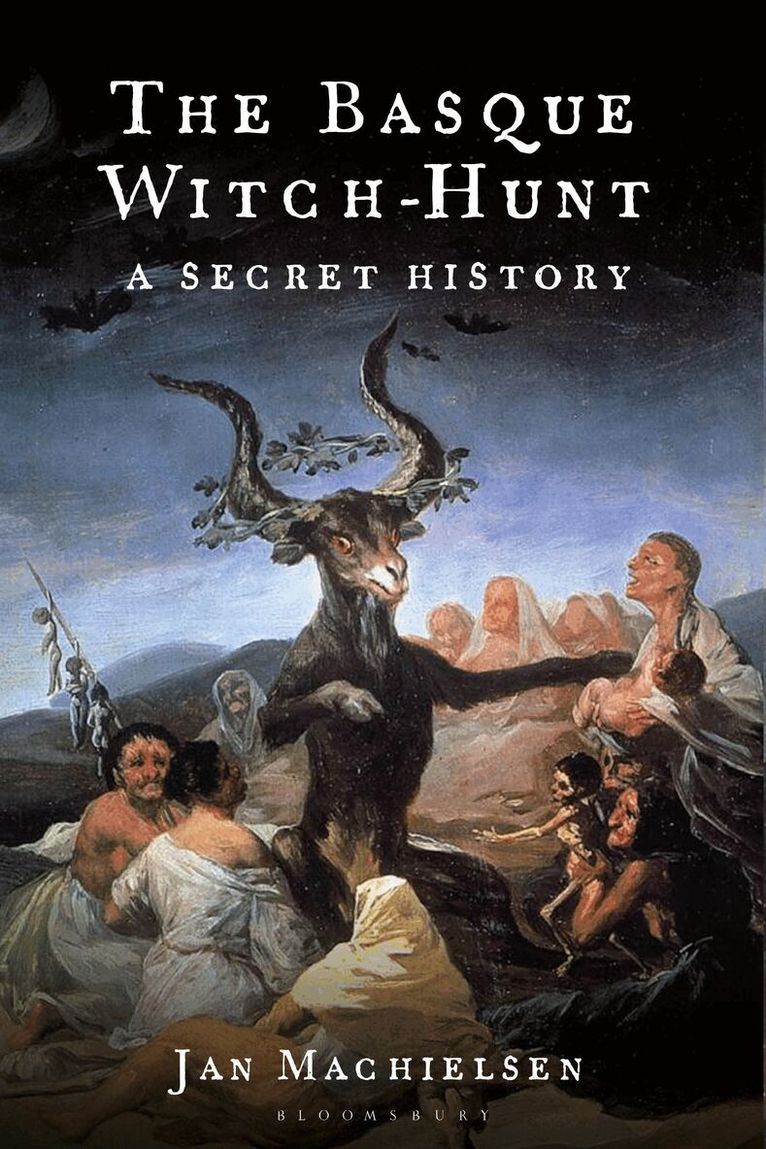
2025 AMERICAN ASSOCIATION OF PUBLISHERS PROSE AWARDS WINNER: EUROPEAN HISTORYIn June 1609, two judges left Bordeaux for a territory at the very edge of their jurisdiction, a Basque-speaking province on the Atlantic coast called the Pays de Labourd. In four months, they executed up to 80 women and men for the crime of witchcraft, causing a wave of suspects to flee into Spain and sparking terror there. Witnesses, many of them children, described lurid tales of cannibalism, vampirism, and demonic sex. One of the judges, Pierre de Lancre, published a sensationalist account of this diabolical netherworld. With other accounts seemingly destroyed, this witch-hunt – France's largest – has always been seen through de Lancre’s eyes. The narrative, re-told over the centuries, is that of a witch-hunt caused by a bigoted outsider. Newly discovered evidence paints a very different, still darker picture, revealing a secret history underneath de Lancre’s well-known tale. Far from an outside imposition, witchcraft was a home-grown problem. Panic had been building up over a number of years and the region was fractured by factionalism and a struggle over scarce resources. The Basque Witch-Hunt reveals that de Lancre was no outsider; he was a local partisan, married into the Basque nobility. Living at the Franco-Spanish border, the Basques were victims of geography. Geo-politics caused a local conflict which made the witch-hunt inevitable. The same forces eventually sent thousands of religious refugees from Spain to France where they, in turn, became new objects of popular fear and anger.The Basque witch-hunt is justly infamous. This book shows that almost everything historians thought they knew about it is wrong.
1 541 kr
Skickas inom 7-10 vardagar
If the Jesuit Martin Delrio (1551-1608) is remembered at all today, it is for his Disquisitiones magicae (1599-1600), a voluminous tome on witchcraft and superstition which was reprinted numerous times until 1755. The present volume recovers the lost world of Delrio's wider scholarship. Delrio emerges here as a figure of considerable interest not only to historians of witchcraft but to the broader fields of early modern cultural, religious and intellectual history as well. As the editor of classical texts, notably Senecan tragedy, Delrio had a number of important philological achievements to his name. A friend of the Flemish philosopher Justus Lipsius (1547-1606) and an enemy of the Huguenot scholar Joseph Scaliger (1540-1609), he played an important part in the Republic of Letters and the confessional polemics of his day. Delrio's publications after his admission to the Society of Jesus (the Disquisitiones included) marked a significant contribution to the intellectual culture of the Counter-Reformation. Catholic contemporaries accordingly rated him highly, but later generations proved less kind.As attitudes towards witchcraft changed, the context in which the Disquisitiones first emerged disappeared from view and its author became a byword for credulity and cruelty. Recovering this background throws important new light on a period in history when the worlds of humanism and Catholic Reform collided. In an important chapter, the book demonstrates that demonology, in Delrio's hands, was a textual science, an insight that sheds new light on the way witchcraft was believed in. At the same time, the book also develops a wider argument about the significance of Delrio's writings, arguing that the Counter-Reformation can also be seen as a textual project and Delrio's contribution to it as the product of a mindset forged in its fragile borderlands.
360 kr
Skickas inom 7-10 vardagar
This groundbreaking Companion explores how Counter-Reformation sanctity reshaped religious identities, sacred traditions, and devotional practices that transformed Catholicism into the first global religion. Offering a fresh perspective on early modern Catholicism, it moves beyond traditional debates about Reformation and Reform and presents sanctity as the defining lens through which to view the period's transformative changes. By examining the lives, representations, and global impact of saints, the Companion demonstrates how sanctity countered the Protestant challenge and also transformed the very fabric of Catholicism between 1500 and 1750. Organized into four thematic sections - models of sanctity, the creation and contestation of sanctity, the representation of saints, and everyday interactions with saints - the volume also provides insight into the role of holiness during this pivotal period in Church history. Connecting history, theology, art history, and material culture, this interdisciplinary Companion serves as an indispensable resource for scholars and students seeking a comprehensive understanding of early modern Catholicism's influence on European and global history.
1 258 kr
Skickas inom 7-10 vardagar
This groundbreaking Companion explores how Counter-Reformation sanctity reshaped religious identities, sacred traditions, and devotional practices that transformed Catholicism into the first global religion. Offering a fresh perspective on early modern Catholicism, it moves beyond traditional debates about Reformation and Reform and presents sanctity as the defining lens through which to view the period's transformative changes. By examining the lives, representations, and global impact of saints, the Companion demonstrates how sanctity countered the Protestant challenge and also transformed the very fabric of Catholicism between 1500 and 1750. Organized into four thematic sections - models of sanctity, the creation and contestation of sanctity, the representation of saints, and everyday interactions with saints - the volume also provides insight into the role of holiness during this pivotal period in Church history. Connecting history, theology, art history, and material culture, this interdisciplinary Companion serves as an indispensable resource for scholars and students seeking a comprehensive understanding of early modern Catholicism's influence on European and global history.
Del 2 - Transactions of the Royal Historical Society Seventh Series
Transactions of the Royal Historical Society: Volume 2
Häftad, Engelska, 2025
427 kr
Tillfälligt slut
Transactions of the Royal Historical Society is an annual collection of articles based on papers given to the Society by distinguished invited speakers and winners of RHS prizes. Volume 2 of the Seventh Series includes research articles on Europeans in fourteenth-century China; English social and political history; collecting and connoisseurship in China during the eighteenth century; the 1848 revolutions; Indian anti-colonialism; old age and rural life in late Imperial Russia; the photography of Lejaren ... Hiller; cricket and literary culture in early twentieth-century Britain; the professionalization of the UK's museum sector; and transnational activism. The volume also includes The Common Room section, containing shorter articles on slavery, history teaching and censorship, and a series of review articles on subjects including the challenges facing independent scholars, the digitisation of historical sources, and the work of early-career researchers on Black British histories.
2 258 kr
Kommande
Witches, ghosts, fairies. Late medieval and early modern Europe was seemingly filled with these and other threatening and disturbing figures. For many contemporary authors, the devil appeared to lurk behind them all. Were his powers real or mere trickery? What limits did God place on them? Could reports from this hidden demonic netherworld be trusted? Physicians, lawyers, and theologians, writing at different times and places, gave very different answers and often disagreed bitterly.This updated and enlarged second edition examines individual authors from across Europe and its colonies to reveal the many purposes to which the devil could be put – in the late medieval fight against heresy, the age of Reformations, and beyond. It follows the devil’s trajectory from his emergence in the 1300s and 1400s as a bodily figure who made pacts with humans, through the comprehensive surveys that coincided with the witch-hunts’ most deadly phase, to the end of the seventeenth century, when the science of demons met new challenges in both Old World and New.This book is essential reading for students, researchers, and anyone interested in the history of the supernatural, in medieval and early modern Europe, as well as those exploring the intersections of theology, science, and society during this transformative period.
617 kr
Kommande
Witches, ghosts, fairies. Late medieval and early modern Europe was seemingly filled with these and other threatening and disturbing figures. For many contemporary authors, the devil appeared to lurk behind them all. Were his powers real or mere trickery? What limits did God place on them? Could reports from this hidden demonic netherworld be trusted? Physicians, lawyers, and theologians, writing at different times and places, gave very different answers and often disagreed bitterly.This updated and enlarged second edition examines individual authors from across Europe and its colonies to reveal the many purposes to which the devil could be put – in the late medieval fight against heresy, the age of Reformations, and beyond. It follows the devil’s trajectory from his emergence in the 1300s and 1400s as a bodily figure who made pacts with humans, through the comprehensive surveys that coincided with the witch-hunts’ most deadly phase, to the end of the seventeenth century, when the science of demons met new challenges in both Old World and New.This book is essential reading for students, researchers, and anyone interested in the history of the supernatural, in medieval and early modern Europe, as well as those exploring the intersections of theology, science, and society during this transformative period.
The War on Witchcraft
Andrew Dickson White, George Lincoln Burr, and the Origins of Witchcraft Historiography
Häftad, Engelska, 2021
234 kr
Skickas inom 7-10 vardagar
Historians of the early modern witch-hunt often begin histories of their field with the theories propounded by Margaret Murray and Montague Summers in the 1920s. They overlook the lasting impact of nineteenth-century scholarship, in particular the contributions by two American historians, Andrew Dickson White (1832-1918) and George Lincoln Burr (1857-1938). Study of their work and scholarly personae contributes to our understanding of the deeply embedded popular understanding of the witch-hunt as representing an irrational past in opposition to an enlightened present. Yet the men's relationship with each other, and with witchcraft sceptics - the heroes of their studies - also demonstrates how their writings were part of a larger war against 'unreason'. This Element thus lays bare the ways scholarly masculinity helped shape witchcraft historiography, a field of study often seen as dominated by feminist scholarship. Such meditation on past practice may foster reflection on contemporary models of history writing.
1 765 kr
Skickas inom 10-15 vardagar
Witches, ghosts, fairies. Premodern Europe was filled with strange creatures, with the devil lurking behind them all. But were his powers real? Did his powers have limits? Or were tales of the demonic all one grand illusion? Physicians, lawyers, and theologians at different times and places answered these questions differently and disagreed bitterly.The demonic took many forms in medieval and early modern Europe. By examining individual authors from across the continent, this book reveals the many purposes to which the devil could be put, both during the late medieval fight against heresy and during the age of Reformations. It explores what it was like to live with demons, and how careers and identities were constructed out of battles against them – or against those who granted them too much power. Together, contributors chart the history of the devil from his emergence during the 1300s as a threatening figure – who made pacts with human allies and appeared bodily – through to the comprehensive but controversial demonologies of the turn of the seventeenth century, when European witch-hunting entered its deadliest phase.This book is essential reading for all students and researchers of the history of the supernatural in medieval and early modern Europe.
467 kr
Skickas inom 10-15 vardagar
Witches, ghosts, fairies. Premodern Europe was filled with strange creatures, with the devil lurking behind them all. But were his powers real? Did his powers have limits? Or were tales of the demonic all one grand illusion? Physicians, lawyers, and theologians at different times and places answered these questions differently and disagreed bitterly.The demonic took many forms in medieval and early modern Europe. By examining individual authors from across the continent, this book reveals the many purposes to which the devil could be put, both during the late medieval fight against heresy and during the age of Reformations. It explores what it was like to live with demons, and how careers and identities were constructed out of battles against them – or against those who granted them too much power. Together, contributors chart the history of the devil from his emergence during the 1300s as a threatening figure – who made pacts with human allies and appeared bodily – through to the comprehensive but controversial demonologies of the turn of the seventeenth century, when European witch-hunting entered its deadliest phase.This book is essential reading for all students and researchers of the history of the supernatural in medieval and early modern Europe.
196 kr
Kommande
2025 AMERICAN ASSOCIATION OF PUBLISHERS PROSE AWARDS WINNER: EUROPEAN HISTORYIn June 1609, two judges left Bordeaux for a territory at the very edge of their jurisdiction, a Basque-speaking province on the Atlantic coast called the Pays de Labourd. In four months, they executed up to 80 women and men for the crime of witchcraft, causing a wave of suspects to flee into Spain and sparking terror there. Witnesses, many of them children, described lurid tales of cannibalism, vampirism, and demonic sex. One of the judges, Pierre de Lancre, published a sensationalist account of this diabolical netherworld. With other accounts seemingly destroyed, this witch-hunt – France's largest – has always been seen through de Lancre’s eyes. The narrative, re-told over the centuries, is that of a witch-hunt caused by a bigoted outsider. Newly discovered evidence paints a very different, still darker picture, revealing a secret history underneath de Lancre’s well-known tale. Far from an outside imposition, witchcraft was a home-grown problem. Panic had been building up over a number of years and the region was fractured by factionalism and a struggle over scarce resources. The Basque Witch-Hunt reveals that de Lancre was no outsider; he was a local partisan, married into the Basque nobility. Living at the Franco-Spanish border, the Basques were victims of geography. Geo-politics caused a local conflict which made the witch-hunt inevitable. The same forces eventually sent thousands of religious refugees from Spain to France where they, in turn, became new objects of popular fear and anger.The Basque witch-hunt is justly infamous. This book shows that almost everything historians thought they knew about it is wrong.