Jan Thornhill - Böcker
Visar alla böcker från författaren Jan Thornhill. Handla med fri frakt och snabb leverans.
4 produkter
4 produkter
182 kr
Tillfälligt slut
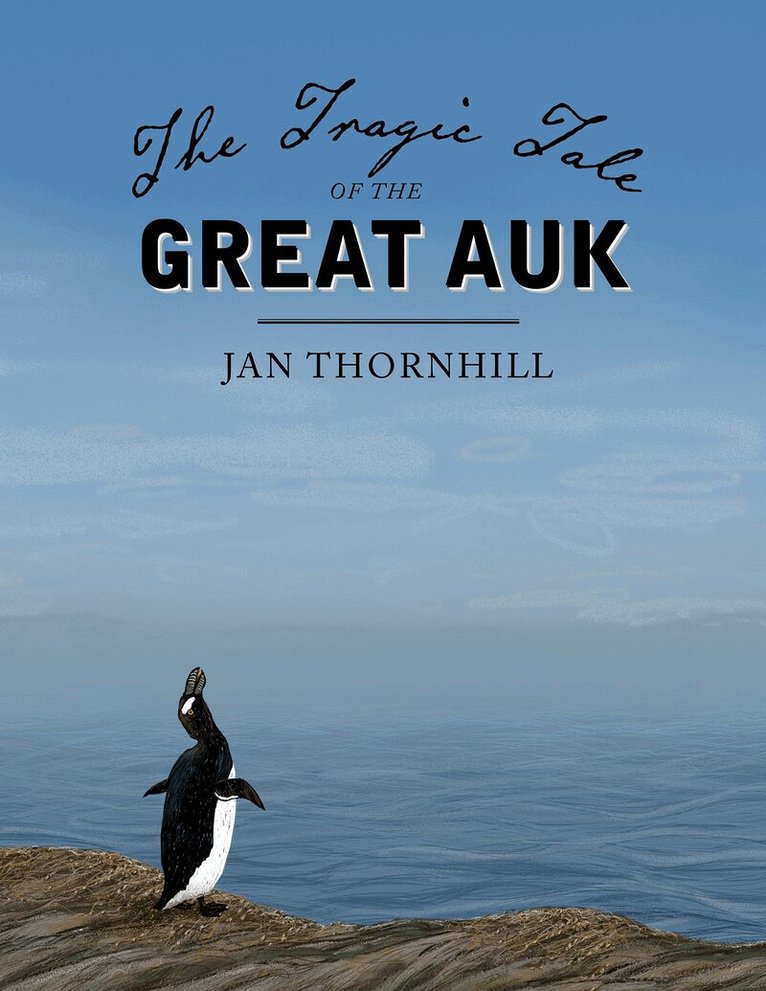
For hundreds of thousands of years, Great Auks thrived. And then they were gone …For hundreds of thousands of years Great Auks thrived in the icy seas of the North Atlantic, bobbing on the waves, diving for fish and struggling up onto rocky shores to mate and hatch their fluffy chicks. But by 1844, not a single one of these magnificent birds was alive.In this stunningly illustrated non-fiction picture book, award-winning author and illustrator Jan Thornhill tells the tragic story of these birds that “weighed as much as a sack of potatoes and stood as tall as a preteen’s waist.” Their demise came about in part because of their anatomy. They could swim swiftly underwater, but their small wings meant they couldn’t fly and their feet were so far back on their bodies, they couldn’t walk very well. Still the birds managed to escape their predators much of the time … until humans became seafarers.Great Auks were pursued first by Vikings, then by Inuit, Beothuk and finally European hunters. Their numbers rapidly dwindled. They became collectors’ items — their skins were stuffed for museums, to be displayed along with their beautiful eggs. (There are some amazing stories about these stuffed auks — one was stolen from a German museum during WWII by Russian soldiers; another was flown to Iceland and given a red-carpet welcome at the airport.)Although undeniably tragic, the final demise of the Great Auk led to the birth of the conservation movement. Laws were eventually passed to prevent the killing of birds during the nesting season, and similar laws were later extended to other wildlife species.Correlates to the Common Core State Standards in English Language Arts:CCSS.ELA-LITERACY.RI.4.3Explain events, procedures, ideas, or concepts in a historical, scientific, or technical text, including what happened and why, based on specific information in the text.CCSS.ELA-LITERACY.RI.4.4Determine the meaning of general academic and domain-specific words or phrases in a text relevant to a grade 4 topic or subject area.
188 kr
Skickas inom 3-6 vardagar
183 kr
Skickas inom 3-6 vardagar
182 kr
Tillfälligt slut
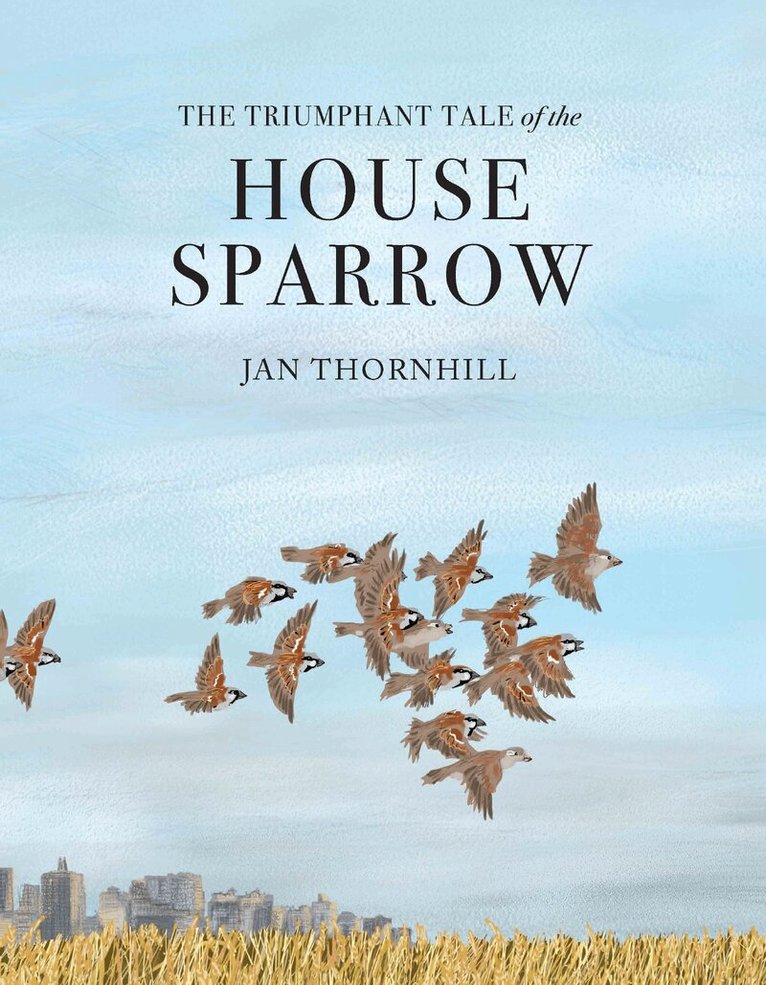
“The content encourages us to reflect upon and evaluate the relationship between human beings and animals. This book leaves us with admiration for this feisty bird and hope for our world.” — Friends Journal Behold the most despised bird in human history!So begins Jan Thornhill’s riveting, beautifully illustrated story of the House Sparrow. She traces the history of this perky little bird, one of the most adaptable creatures on Earth, from its beginnings in the Middle East to its spread with the growth of agriculture into India, North Africa and Europe. Everywhere the House Sparrow went, it competed with humans for grain, becoming such a pest that in some places “sparrow catcher” became an actual job and bounties were paid to those who got rid of it.But not everyone hated the House Sparrow, and in 1852, fifty pairs were released in New York City. In no time at all, the bird had spread from coast to coast. Then suddenly, at the turn of the century, as cars took over from horses and there was less grain to be found, its numbers began to decline. As our homes, gardens, cities and farmland have changed, providing fewer nesting and feeding opportunities, the House Sparrow’s numbers have begun to decline again — though in England and Holland this decline appears to be slowing. Perhaps this clever little bird is simply adapting once more.This fascinating book includes the life history of the House Sparrow and descriptions of how the Ancient Egyptians fed it to the animals they later mummified, how it traveled to Great Britain as a stowaway on ships carrying Roman soldiers, and how its cousin, the Eurasian Tree Sparrow, was almost eradicated in China when Mao declared war on it. A wealth of back matter material is also supplied.Key Text Featuresmapglossaryreferencesresourcesfurther informationCorrelates to the Common Core State Standards in English Language Arts:CCSS.ELA-LITERACY.RI.3.3Describe the relationship between a series of historical events, scientific ideas or concepts, or steps in technical procedures in a text, using language that pertains to time, sequence, and cause/effect.CCSS.ELA-LITERACY.RI.3.7Use information gained from illustrations (e.g., maps, photographs) and the words in a text to demonstrate understanding of the text (e.g., where, when, why, and how key events occur).CCSS.ELA-LITERACY.RI.4.3Explain events, procedures, ideas, or concepts in a historical, scientific, or technical text, including what happened and why, based on specific information in the text.CCSS.ELA-LITERACY.RI.5.3Explain the relationships or interactions between two or more individuals, events, ideas, or concepts in a historical, scientific, or technical text based on specific information in the text.CCSS.ELA-LITERACY.RI.6.2Determine a central idea of a text and how it is conveyed through particular details; provide a summary of the text distinct from personal opinions or judgments.