Jan Vang – författare
Visar alla böcker från författaren Jan Vang. Handla med fri frakt och snabb leverans.
4 produkter
4 produkter
2 764 kr
Skickas inom 7-10 vardagar
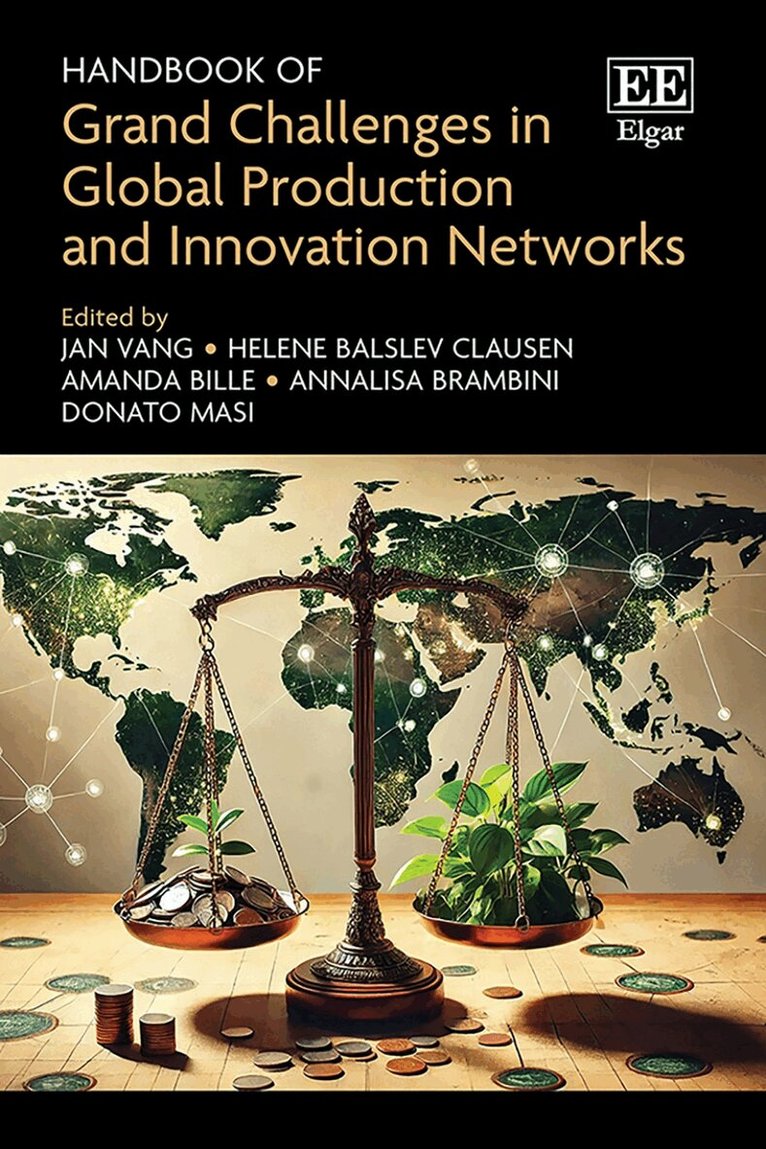
This timely Handbook brings together a range of international experts to discuss sustainability, proposing a new framework for cross-disciplinary research. It provides a comprehensive overview of theoretical and empirical approaches to the economics and management of regenerative production, evaluating sustainability in relation to global production and innovation networks.Renowned authors address pressing challenges, such as climate change, deforestation, desertification, technological advancement and rising social inequality. The Handbook highlights the importance of supply chain management and critical approaches to sustainability, including ethnographic drone interventions in the Global South. It also presents forward-thinking suggestions for future academic research, illustrating the need for scholars to think beyond established disciplinary boundaries to leverage synergies between fields.The Handbook of Grand Challenges in Global Production and Innovation Networks will greatly benefit students and academics in international business, economics and development studies. Its valuable insights into the Sustainable Development Goals make it an essential tool for practitioners in sustainability, supply chain management and entrepreneurship.
2 179 kr
Skickas inom 7-10 vardagar
This comprehensive book captures the transition of Asian national innovation systems in the era of the global learning economy.The success of Asian economies (first Japan, then Taiwan, South Korea, Singapore, Hong Kong and, more recently, China and India) has made it tempting to look for 'an Asian model of development'. However, the strength of Asian development lies less in strategies that reproduce successful national systems of innovation and more in the capacity for institutional change to open up new development trajectories with greater emphasis on knowledge and learning. The select group of contributors demonstrate that although there are important differences among Asian countries in terms of institutional set-ups supporting innovation, government policies and industrial structures, they share common transitional processes to cope with the globalizing learning economy.With strong implications for policy makers, Asia's Innovation Systems in Transition will be of great interest to academics and postgraduate students as well as national and international policy organizations.
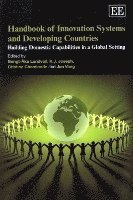
Handbook of Innovation Systems and Developing Countries
Building Domestic Capabilities in a Global Setting
Inbunden, Engelska, 2009
3 024 kr
Skickas inom 7-10 vardagar
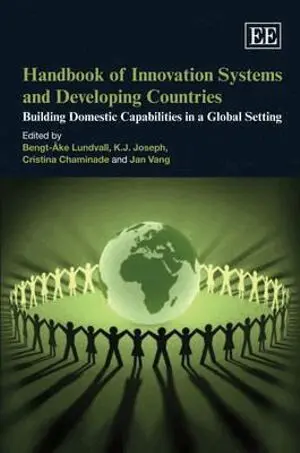
The innovation systems (IS) approach emerged as a theoretical framework in the industrialized world in the mid-1990s to explain innovation and growth in the developed world. This Handbook is the first attempt to adapt the IS approach to developing countries from a theoretical and empirical viewpoint. The Handbook brings eminent scholars in economics, innovation and development studies together with promising young researchers to review the literature and push theoretical boundaries. They critically review the IS approach and its adequacy for developing countries, discuss the relationship between IS and development, and address the question of how it should be adapted to the realities of developing nations.Spanning national, sectoral and regional innovation systems across Asia, Latin America and Africa, and written by the world's leading scholars within the field, this comprehensive Handbook will strongly appeal to academics, researchers and students with an interest in innovation and technology in developing countries.
Handbook of Innovation Systems and Developing Countries
Building Domestic Capabilities in a Global Setting
Häftad, Engelska, 2011
787 kr
Skickas inom 7-10 vardagar
The innovation systems (IS) approach emerged as a theoretical framework in the industrialized world in the mid-1990s to explain innovation and growth in the developed world. This Handbook is the first attempt to adapt the IS approach to developing countries from a theoretical and empirical viewpoint. The Handbook brings eminent scholars in economics, innovation and development studies together with promising young researchers to review the literature and push theoretical boundaries. They critically review the IS approach and its adequacy for developing countries, discuss the relationship between IS and development, and address the question of how it should be adapted to the realities of developing nations.Spanning national, sectoral and regional innovation systems across Asia, Latin America and Africa, and written by the world's leading scholars within the field, this comprehensive Handbook will strongly appeal to academics, researchers and students with an interest in innovation and technology in developing countries.