Bengt-Åke Lundvall – författare
Visar alla böcker från författaren Bengt-Åke Lundvall. Handla med fri frakt och snabb leverans.
15 produkter
15 produkter
Inbunden, Engelska, 2006
1 012 kr
Skickas inom 3-6 vardagar
When seeking to bench mark the performance of European economies, commentators often look to compare them to the economies of Japan and the United States. How Europe's Economies Learn shows how this is seriously misleading, and how any such comparison needs to be complemented with an understanding of the fundamental differences between Europe's economies.The contributors provide an up-to-date description and analysis of the way differences in state systems and institutional contexts, such as labour markets, education and training systems, and financial systems, shape learning processes and innovation performance across the member nations of the European Union. In doing so, it draws important conclusion for how policy strategies should be designed at the national and European levels in order to further promote the goals of the Lisbon process.
Häftad, Engelska, 2002
908 kr
Skickas inom 5-8 vardagar
This volume analyses some of the major current trends and policy challenges in the 'new economy' from the point of view of technical innovation and competence building. It brings together the leading European expertise on different topics in this field. Together the authors give a picture of the most dramatic new challenges in a world where competition is becoming increasingly knowledge-based and global. Why has the US economy been able to realise a so-called new economy based on the effective exploitation of information technology while Europe still suffers from chronic high rates of unemployment? How is it that contemporary economic systems have become more knowledge-intensive but social inequality, both within and across countries, is increasing?The contributors to this volume share the belief that knowledge is a fundamental component of economic growth and welfare. However, the ways in which knowledge is transmitted and distributed among economic agents requires shaping by public policies. The individual chapters report on the most significant policies adopted and assess them in the light of the European experience in comparison with the United States and Japan.
Inbunden, Engelska, 2016
1 352 kr
Skickas inom 5-8 vardagar
‘The Learning Economy and the Economics of Hope’ brings together the most important contributions by an expert on policies, management and economics of innovation and knowledge. It offers original insights in processes of innovation and learning and it draws implications for economic theory and public policy. It introduces the reader to important concepts such as innovation systems and the learning economy. It throws a new light on economic development and opens up for a new kind of economics – the economics of hope. It offers a fresh perspective on many of the most important global challenges of today showing how full attention to the characteristics of the learning economy needs to be combined with innovation in global governance. The analysis demonstrates that new technology is developed in an interaction between individuals and organizations and that innovation would not thrive in an economy similar to textbook models of pure markets and perfect competition. It also shows that innovation requires that scientific knowledge is combined with experience based learning and that the performance of innovation systems therefore reflects the combination of research efforts and organizational learning. Growing inequality in income and in access to knowledge and learning is presented as a threat to social cohesion and global well-being. In the concluding part of the book the conceptual framework is used to study how China’s innovation system and policy, Europe’s crisis and underdevelopment in Africa interact is shaping an imbalanced and crisis ridden world system. A new kind of economics, policy learning and new regimes of global governance are presented as elements of hope for the future.
Häftad, Engelska, 2019
566 kr
Skickas inom 5-8 vardagar
‘The Learning Economy and the Economics of Hope’ brings together the most important contributions by an expert on policies, management and economics of innovation and knowledge. It offers original insights in processes of innovation and learning and it draws implications for economic theory and public policy. It introduces the reader to important concepts such as innovation systems and the learning economy. It throws a new light on economic development and opens up for a new kind of economics – the economics of hope. It offers a fresh perspective on many of the most important global challenges of today showing how full attention to the characteristics of the learning economy needs to be combined with innovation in global governance. The analysis demonstrates that new technology is developed in an interaction between individuals and organizations and that innovation would not thrive in an economy similar to textbook models of pure markets and perfect competition. It also shows that innovation requires that scientific knowledge is combined with experience based learning and that the performance of innovation systems therefore reflects the combination of research efforts and organizational learning. Growing inequality in income and in access to knowledge and learning is presented as a threat to social cohesion and global well-being. In the concluding part of the book the conceptual framework is used to study how China’s innovation system and policy, Europe’s crisis and underdevelopment in Africa interact is shaping an imbalanced and crisis ridden world system. A new kind of economics, policy learning and new regimes of global governance are presented as elements of hope for the future.
Inbunden, Engelska, 2018
1 630 kr
Skickas inom 5-8 vardagar
Innovation studies is an evolving interdisciplinary field that has moved away from the weaknesses of neoclassical thinking and embraced evolutionary theory. In this timely book, the authors offer a precise introduction to the nature of national innovation systems (NIS), examining the history of the concept and its use in today's world.This book uses language appropriate for both social science and engineering scholars to offer an accurate synopsis of the emergence of the concept, its theoretical core and its evolution. It analyses both developed and developing countries in terms of their NIS and its application to current societal challenges, such as economic growth, inclusive development and environmental sustainability, in an increasingly globalized and interconnected world. Key features include:•three authors from three different generations and countries offer an overview of NIS from around the worldextensive use of examples from the Global North and Global Southrecommended in-depth reading after each topical chapteroverview of future research challengesup-to-date review of the literature and engagement in current debates.Erudite and accessible, this unique book on NIS can easily be used for undergraduate and graduate teaching. It is a valuable, and much-needed resource for teachers, students and researchers at all levels.
Häftad, Engelska, 2018
317 kr
Skickas inom 5-8 vardagar
Innovation studies is an evolving interdisciplinary field that has moved away from the weaknesses of neoclassical thinking and embraced evolutionary theory. In this timely book, the authors offer a precise introduction to the nature of national innovation systems (NIS), examining the history of the concept and its use in today's world.This book uses language appropriate for both social science and engineering scholars to offer an accurate synopsis of the emergence of the concept, its theoretical core and its evolution. It analyses both developed and developing countries in terms of their NIS and its application to current societal challenges, such as economic growth, inclusive development and environmental sustainability, in an increasingly globalized and interconnected world. Key features include:•three authors from three different generations and countries offer an overview of NIS from around the worldextensive use of examples from the Global North and Global Southrecommended in-depth reading after each topical chapteroverview of future research challengesup-to-date review of the literature and engagement in current debates.Erudite and accessible, this unique book on NIS can easily be used for undergraduate and graduate teaching. It is a valuable, and much-needed resource for teachers, students and researchers at all levels.
Inbunden, Engelska, 2002
1 758 kr
Skickas inom 5-8 vardagar
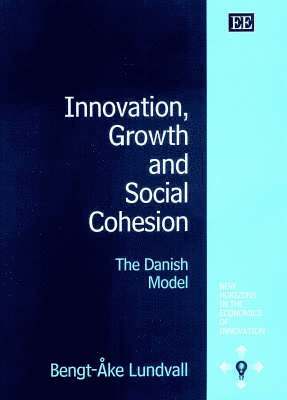
Written by the scholar who, together with Chris Freeman, first introduced the concept of the innovation system, this book brings the literature an important step forward. Based upon extraordinarily rich empirical material, it shows how and why competence building and innovation are crucial for economic growth and competitiveness in the current era. It also provides a case study of a small, very successful European economy combining wealth creation with social cohesion. The author's comparative analysis of innovation systems demonstrates that the 'new economy' can thrive and grow not only in the US-type of economy but also in European economies which exhibit a high degree of social cohesion. He warns against the polarisation that may result from a development path where the success of individuals, organisations and national economies reflects their capability to adopt new competencies and skills. He argues that if this kind of learning economy is left unattended, it will eventually undermine the social cohesion that is essential for interactive learning processes. As such, he emphasises the need to develop coherent policy strategies at the regional, national and EU level in order to cope with the new challenges of the globalising learning economy.Innovation, Growth and Social Cohesion is a highly readable, non-technical book which illustrates the basic concepts with plentiful examples and a wide variety of empirical material. Students and scholars in the field of industrial dynamics and innovation research will find this an invaluable resource. It will also be of significant interest to policymakers looking for growth models compatible with social cohesion and those interested in understanding the dynamics of the new learning economy.
Inbunden, Engelska, 2003
2 237 kr
Skickas inom 5-8 vardagar
It is almost universally accepted that we are moving increasingly towards an information society, where knowledge and learning are the new currency of power. This book seeks to challenge this axiom by looking in more detail at the subtle relationships between knowledge and social development. The editors are at pains to differentiate the process of knowledge creation from the simple accumulation of knowledge.The original contributions within this book are aimed at capturing new socio-economic trends and finding policy strategies promoting the learning society in Europe through joint efforts and integrated actions on innovation, competence building and social cohesion.Innovation, Competence Building and Social Cohesion in Europe will be of special interest to researchers and scholars of science and innovation and technical change. Its policy recommendations will ensure that the book will also appeal to social scientists of education policy.
Del 1 - Anthem Frontiers of Global Political Economy and Development
National Systems of Innovation
Toward a Theory of Innovation and Interactive Learning
Häftad, Engelska, 2010
408 kr
Skickas inom 5-8 vardagar
‘National Systems of Innovation’ presents a new perspective on the dynamics of the national and the global economy. Its starting point is that the international competitiveness of nations is founded on innovation. This book is an invaluable reference document for all those working in economics.
Del 2 - Anthem Other Canon Economics
National Systems of Innovation
Toward a Theory of Innovation and Interactive Learning
Inbunden, Engelska, 2010
1 116 kr
Skickas inom 5-8 vardagar
‘National Systems of Innovation’ presents a new perspective on the dynamics of the national and the global economy. Its starting point is that the international competitiveness of nations is founded on innovation. This book is an invaluable reference document for all those working in economics.
Häftad, Engelska, 2004
766 kr
Skickas inom 5-8 vardagar
Written by the scholar who, together with Chris Freeman, first introduced the concept of the innovation system, this book brings the literature an important step forward. Based upon extraordinarily rich empirical material, it shows how and why competence building and innovation are crucial for economic growth and competitiveness in the current era. It also provides a case study of a small, very successful European economy combining wealth creation with social cohesion. The author's comparative analysis of innovation systems demonstrates that the 'new economy' can thrive and grow not only in the US-type of economy but also in European economies which exhibit a high degree of social cohesion. He warns against the polarisation that may result from a development path where the success of individuals, organisations and national economies reflects their capability to adopt new competencies and skills. He argues that if this kind of learning economy is left unattended, it will eventually undermine the social cohesion that is essential for interactive learning processes. As such, he emphasises the need to develop coherent policy strategies at the regional, national and EU level in order to cope with the new challenges of the globalising learning economy.Innovation, Growth and Social Cohesion is a highly readable, non-technical book which illustrates the basic concepts with plentiful examples and a wide variety of empirical material. Students and scholars in the field of industrial dynamics and innovation research will find this an invaluable resource. It will also be of significant interest to policymakers looking for growth models compatible with social cohesion and those interested in understanding the dynamics of the new learning economy.
Inbunden, Engelska, 2006
2 218 kr
Skickas inom 5-8 vardagar
This comprehensive book captures the transition of Asian national innovation systems in the era of the global learning economy.The success of Asian economies (first Japan, then Taiwan, South Korea, Singapore, Hong Kong and, more recently, China and India) has made it tempting to look for 'an Asian model of development'. However, the strength of Asian development lies less in strategies that reproduce successful national systems of innovation and more in the capacity for institutional change to open up new development trajectories with greater emphasis on knowledge and learning. The select group of contributors demonstrate that although there are important differences among Asian countries in terms of institutional set-ups supporting innovation, government policies and industrial structures, they share common transitional processes to cope with the globalizing learning economy.With strong implications for policy makers, Asia's Innovation Systems in Transition will be of great interest to academics and postgraduate students as well as national and international policy organizations.
Inbunden, Engelska, 2009
3 079 kr
Skickas inom 5-8 vardagar
The innovation systems (IS) approach emerged as a theoretical framework in the industrialized world in the mid-1990s to explain innovation and growth in the developed world. This Handbook is the first attempt to adapt the IS approach to developing countries from a theoretical and empirical viewpoint. The Handbook brings eminent scholars in economics, innovation and development studies together with promising young researchers to review the literature and push theoretical boundaries. They critically review the IS approach and its adequacy for developing countries, discuss the relationship between IS and development, and address the question of how it should be adapted to the realities of developing nations.Spanning national, sectoral and regional innovation systems across Asia, Latin America and Africa, and written by the world's leading scholars within the field, this comprehensive Handbook will strongly appeal to academics, researchers and students with an interest in innovation and technology in developing countries.
Häftad, Engelska, 2011
801 kr
Skickas inom 5-8 vardagar
The innovation systems (IS) approach emerged as a theoretical framework in the industrialized world in the mid-1990s to explain innovation and growth in the developed world. This Handbook is the first attempt to adapt the IS approach to developing countries from a theoretical and empirical viewpoint. The Handbook brings eminent scholars in economics, innovation and development studies together with promising young researchers to review the literature and push theoretical boundaries. They critically review the IS approach and its adequacy for developing countries, discuss the relationship between IS and development, and address the question of how it should be adapted to the realities of developing nations.Spanning national, sectoral and regional innovation systems across Asia, Latin America and Africa, and written by the world's leading scholars within the field, this comprehensive Handbook will strongly appeal to academics, researchers and students with an interest in innovation and technology in developing countries.
Inbunden, Engelska, 2021
759 kr
Skickas inom 10-15 vardagar
This book develops new theoretical perspectives on the economics and politics of innovation and knowledge in order to capture new trends in modern capitalism. It shows how giant corporations establish themselves as intellectual monopolies and how each of them builds and controls its own corporate innovation system. It presents an analysis of a new form of production where Google, Amazon, Facebook, Apple and Microsoft, and their counterparts in China, extract value and appropriate intellectual rents through privileged access to AI algorithms trained by data from organizations and individuals all around the world.These companies’ specific form of production and rent-seeking takes place at the global level and challenges national governments trying to regulate intellectual monopolies and attempting to build stronger national innovation systems. It is within this context that the authors provide new insights on the complex interplay between corporate and national innovation systems by looking at the US-China conflict, understood as a struggle for global technological supremacy. The book ends with alternative scenarios of global governance and advances policy recommendations as well as calls for social activism. This book will be of interest to students, academics and practitioners (both from national states and international organizations) and professionals working on innovation, digital capitalism and related topics.