Patarapong Intarakumnerd – författare
Visar alla böcker från författaren Patarapong Intarakumnerd. Handla med fri frakt och snabb leverans.
11 produkter
Mismanaging Innovation Systems
Thailand and the Middle-income Trap
Häftad, 2019
740 kr
Lägg i varukorg
Once recognised as a high-performing newly industrialising Asian economy with the potential for economic and developmental success similar to South Korea, Taiwan, Hong Kong and Singapore, Thailand’s growth rate and competitive edge have declined substantially. With slower adoption and movement …
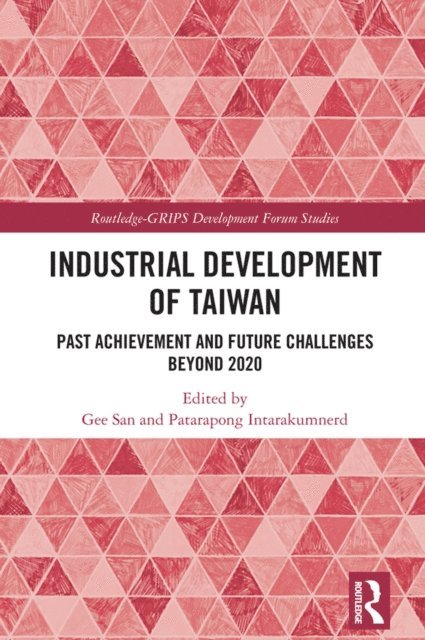
Industrial Development of Taiwan
Past Achievement and Future Challenges Beyond 2020
Av Gee San, Patarapong Intarakumnerd
Inbunden, 2021
2578 kr
Lägg i varukorg
Before the arrival of the twenty-first century, Taiwan was widely regarded as a successful model of a country which had not only transformed herself from an underdeveloped economy into a high-tech industrialised island, but had also undergone a revolution from an authoritarian regime to a …
Industrial Development of Taiwan
Past Achievement and Future Challenges Beyond 2020
Av Gee San, Patarapong Intarakumnerd
Häftad, 2022
710 kr
Lägg i varukorg
Before the arrival of the twenty-first century, Taiwan was widely regarded as a successful model of a country which had not only transformed herself from an underdeveloped economy into a high-tech industrialised island, but had also undergone a revolution from an authoritarian regime to a …
Industrial Development of Taiwan
Past Achievement and Future Challenges Beyond 2020
Av Patarapong Intarakumnerd, Gee San
E-bok, 2021
838 kr
Lägg i varukorg
Before the arrival of the twenty-first century, Taiwan was widely regarded as a successful model of a country which had not only transformed herself from an underdeveloped economy into a high-tech industrialised island, but had also undergone a revolution from an authoritarian regime to a …
Industrial Development of Taiwan
Past Achievement and Future Challenges Beyond 2020
Av Patarapong Intarakumnerd, Gee San
E-bok, 2021
820 kr
Lägg i varukorg
Before the arrival of the twenty-first century, Taiwan was widely regarded as a successful model of a country which had not only transformed herself from an underdeveloped economy into a high-tech industrialised island, but had also undergone a revolution from an authoritarian regime to a …
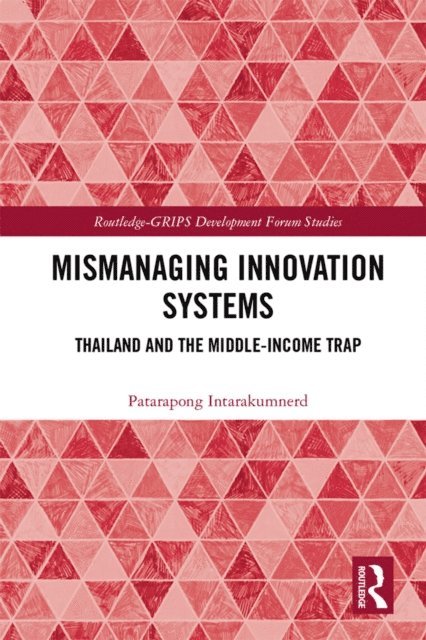
Mismanaging Innovation Systems
Thailand and the Middle-income Trap
Inbunden, 2017
2586 kr
Lägg i varukorg
Once recognised as a high-performing newly industrialising Asian economy with the potential for economic and developmental success similar to South Korea, Taiwan, Hong Kong and Singapore, Thailand’s growth rate and competitive edge have declined substantially. With slower adoption and movement …
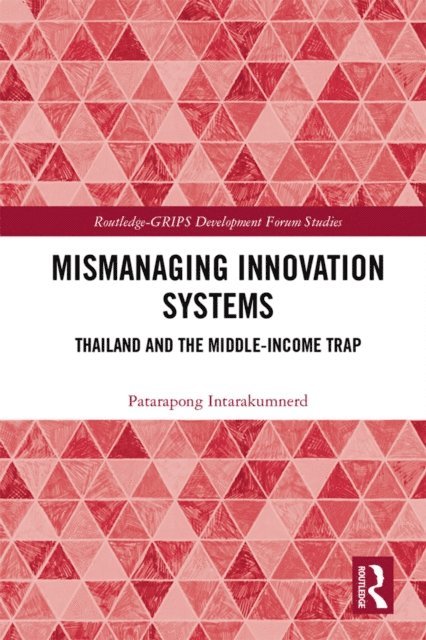
Mismanaging Innovation Systems
Thailand and the Middle-income Trap
E-bok, 2017
849 kr
Lägg i varukorg
Once recognised as a high-performing newly industrialising Asian economy with the potential for economic and developmental success similar to South Korea, Taiwan, Hong Kong and Singapore, Thailand’s growth rate and competitive edge have declined substantially. With slower adoption and movement …
Mismanaging Innovation Systems
Thailand and the Middle-income Trap
E-bok, 2017
849 kr
Lägg i varukorg
Once recognised as a high-performing newly industrialising Asian economy with the potential for economic and developmental success similar to South Korea, Taiwan, Hong Kong and Singapore, Thailand’s growth rate and competitive edge have declined substantially. With slower adoption and movement …
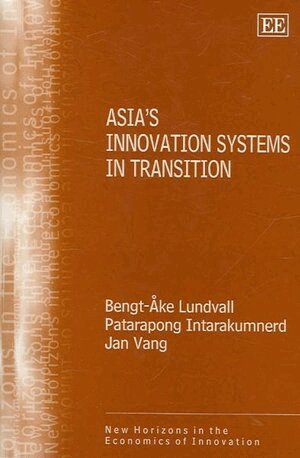
Asia’s Innovation Systems in Transition
Av Bengt-Åke Lundvall, Patarapong Intarakumnerd m. fl.
Inbunden, 2006
2321 kr
Lägg i varukorg
This comprehensive book captures the transition of Asian national innovation systems in the era of the global learning economy.The success of Asian economies (first Japan, then Taiwan, South Korea, Singapore, Hong Kong and, more recently, China and India) has made it tempting to look for 'an Asian …
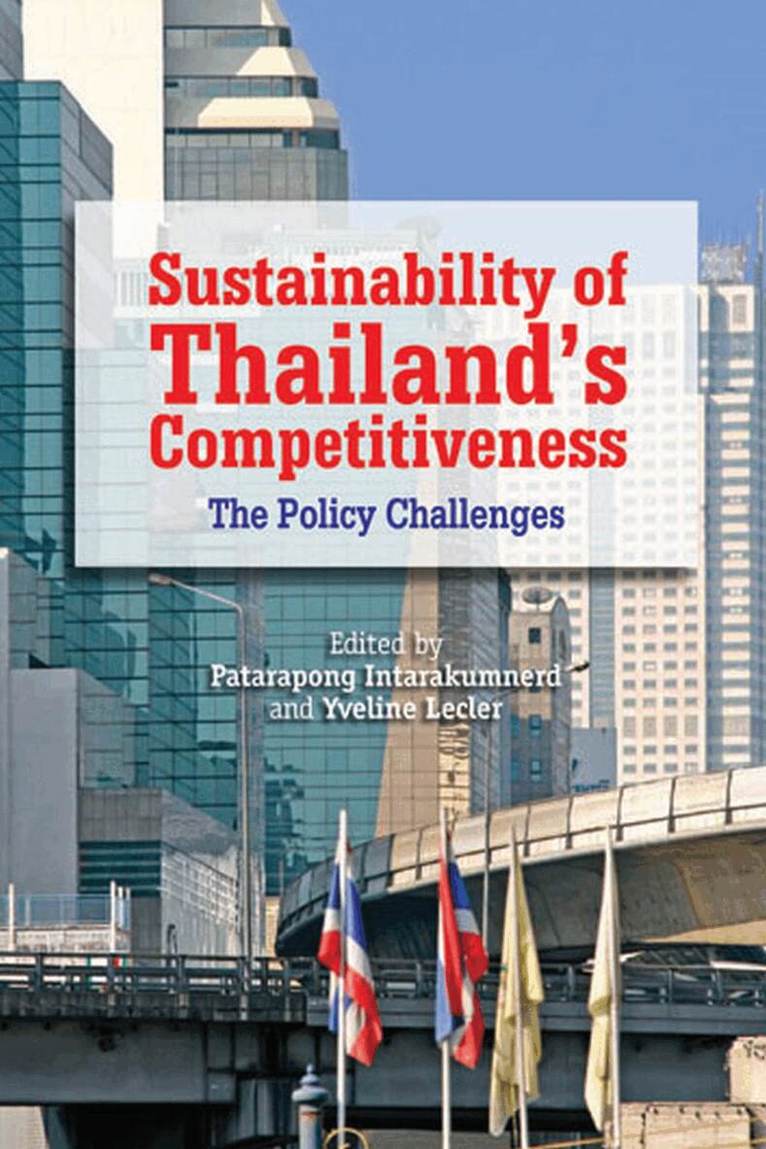
Sustainability of Thailand's Competitiveness
The Policy Challenges
Av Patarapong Intarakumnerd, Yvonne Lecler
Häftad, 2011
589 kr
Lägg i varukorg
Competitiveness of a country requires continuous upgrading and, sometimes, major transformation. Thailand is at the crossroad. It can no longer pursue a strategy based on low-cost advantages, but its capability achievements are still too low to become an advanced economy. This book points out …
Sustainability of Thailand's Competitiveness
The Policy Challenges
Av Yveline Lecler, Patarapong Intarakumnerd
E-bok, 2018
819 kr
Lägg i varukorg
No detailed description available for "Sustainability of Thailand''s Competitiveness".