Jane Ball - Böcker
Visar alla böcker från författaren Jane Ball. Handla med fri frakt och snabb leverans.
4 produkter
4 produkter
Housing Disadvantaged People?
Insiders and Outsiders in French Social Housing
Inbunden, Engelska, 2011
2 576 kr
Skickas inom 10-15 vardagar
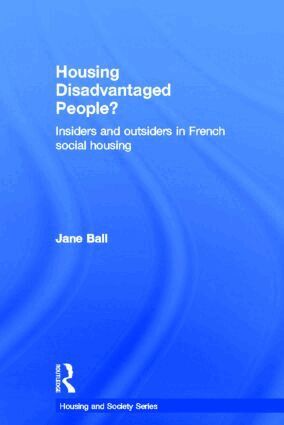
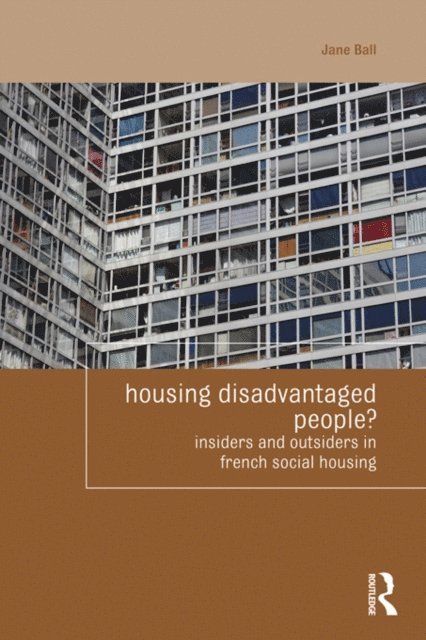
Social housing appears to offer a solution for the housing of poor and disadvantaged people. The French "right to housing" offers poor and disadvantaged citizens priority in social housing allocation, and even a legal action against the State to obtain a social home. Despite this, France is suffering a long-lasting housing crisis with disadvantaged people having particular difficulties of access, often despite the efforts of local housing actors. This situation is affected by the European Court of Human Rights and EU decisions limiting diverse national housing and rental policies.Between historic French revolutions and the modern riots, negotiated solutions to social dilemmas emerged. Despite progress in constitutional principles, complex local negotiations still ultimately determine who is housed. Local social landlords, mayors and employee and tenant representatives use their privileges to house their insiders: existing tenants, locals and employees, with rent insufficiently subsidized. ‘Insider Outsider’ theory is used for an economic analysis of exclusion in social housing allocation: its processes, institutional context, and stigmatizing effects. This highlights the spatial effects of nimbyism, excluding disadvantaged outsiders, and concentrating them in deprived areas. Simultaneously, urban regeneration reduced affordable housing stock and ‘social mix’ became a reason to refuse a social home.History, comparative law, economic theory and local interviews with housing actors give a detailed picture of what happens in and around French social housing allocation for an interdisciplinary housing policy audience. Constitutional principles appear in an unfamiliar guise as negotiating positions, with the "right to property" supporting landlords and the "right to housing" supporting tenants. French debates about the function of social landlords are echoed across Europe and reflected in European policies concerning rights, and the exclusion of disadvantaged minorities.
812 kr
Skickas inom 10-15 vardagar
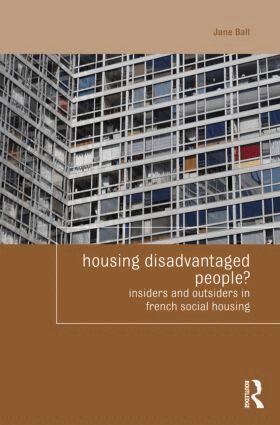
Social housing appears to offer a solution for the housing of poor and disadvantaged people. The French "right to housing" offers poor and disadvantaged citizens priority in social housing allocation, and even a legal action against the State to obtain a social home. Despite this, France is suffering a long-lasting housing crisis with disadvantaged people having particular difficulties of access, often despite the efforts of local housing actors. This situation is affected by the European Court of Human Rights and EU decisions limiting diverse national housing and rental policies.Between historic French revolutions and the modern riots, negotiated solutions to social dilemmas emerged. Despite progress in constitutional principles, complex local negotiations still ultimately determine who is housed. Local social landlords, mayors and employee and tenant representatives use their privileges to house their insiders: existing tenants, locals and employees, with rent insufficiently subsidized. ‘Insider Outsider’ theory is used for an economic analysis of exclusion in social housing allocation: its processes, institutional context, and stigmatizing effects. This highlights the spatial effects of nimbyism, excluding disadvantaged outsiders, and concentrating them in deprived areas. Simultaneously, urban regeneration reduced affordable housing stock and ‘social mix’ became a reason to refuse a social home.History, comparative law, economic theory and local interviews with housing actors give a detailed picture of what happens in and around French social housing allocation for an interdisciplinary housing policy audience. Constitutional principles appear in an unfamiliar guise as negotiating positions, with the "right to property" supporting landlords and the "right to housing" supporting tenants. French debates about the function of social landlords are echoed across Europe and reflected in European policies concerning rights, and the exclusion of disadvantaged minorities.
241 kr
Skickas inom 7-10 vardagar
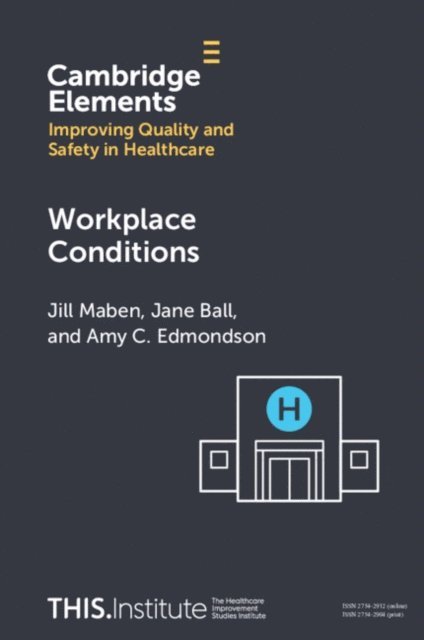
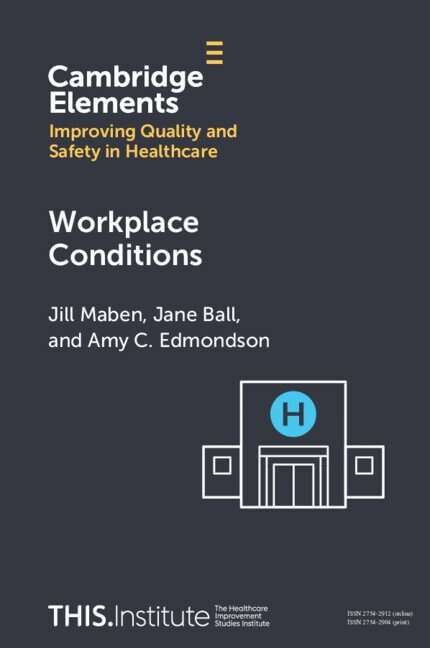
This Element reviews the evidence for three workplace conditions that matter for improving quality and safety in healthcare: staffing; psychological safety, teamwork, and speaking up; and staff health and well-being at work. The authors propose that these are environmental prerequisites for improvement. They examine the relationship between staff numbers and skills in delivering care and the attainment of quality of care and the ability to improve it. They present evidence for the importance of psychological safety, teamwork, and speaking up, noting that these are interrelated and critical for healthcare improvement. They present evidence of associations between staff well-being at work and patient outcomes. Finally, they suggest healthcare improvement should be embedded into the day-to-day work of frontline staff; adequate time and resources must be provided, with quality as the mainstay of professionals' work. Every day at every level, the working context must support the question 'how could we do this better?' This title is also available as Open Access on Cambridge Core.
218 kr
Skickas inom 5-8 vardagar
From Mariame Kaba, New York Times-bestselling author of We Do This ‘Til We Free Us, and social worker Jane Ball comes a powerful book showing the harm that prisons cause and exploring alternatives, gorgeously illustrated by Olly Costello.Prisons, they do no good.They do not help. They do not teach.On a moonlit road, tucked away from prying eyes, a child sees a prison complex—cinder blocks, watch towers, barbed wire. Page by page, we come to see the prison as a child sees it. Prisons hurt people and leave them lonely, without loved ones to comfort them or lend a listening ear.As dandelion stars float up in the air, this dreamscape becomes a hope-scape, where love transcends the prison walls. All the families and friends of the people in the prison march and protest in beautiful song, march together to a new way and a new dawn—in this case a cooperative housing and community center, next to a neighborhood greenhouse for restoration and healing. A new world, where connection and repair are fundamental, and even tangible, as people around a table quilt messages, “I hear you. I’m sorry for what I did. How can I make it better?”In Prisons Must Fall, Mariame Kaba, a longtime activist, together with co-author Jane Ball, present solutions that do not involve incarceration, such as meeting people’s basic needs, restorative justice, and community support—seeds for a safe world. Illustrator Olly Costello provides textured images of a global majority community and a grey, monotone backdrop that is overtaken by joyful colors. A gentle but effective addition to all social justice bookshelves and libraries. Discussion questions included.Perfect for:Parents, teachers, and librarians looking for books on the prison industrial complex and prison reformKids who are interested in fairness and social justiceReaders who love exceptional and sophisticated illustration