Jane Bliss - Böcker
Visar alla böcker från författaren Jane Bliss. Handla med fri frakt och snabb leverans.
6 produkter
6 produkter
406 kr
Skickas inom 5-8 vardagar
608 kr
Skickas inom 5-8 vardagar
Make We Merry More and Less
An Anthology of Medieval English Popular Literature
Häftad, Engelska, 2019
406 kr
Skickas inom 5-8 vardagar
Make We Merry More and Less
An Anthology of Medieval English Popular Literature
Inbunden, Engelska, 2019
608 kr
Skickas inom 5-8 vardagar
Del 7 - Studies in Medieval Romance
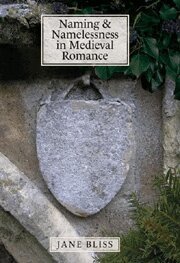
Naming and Namelessness in Medieval Romance
Inbunden, Engelska, 2008
1 363 kr
Skickas inom 10-15 vardagar
A survey of the significance of names, or their absence, in medieval English, French, and Anglo-Norman romance.Naming and namelessness are among the major themes of medieval romance. Because the genre is so difficult to define, scholars have viewed romance as containing a critical number of themes; this book treats naming as a major themeof romance, and furthermore examines romance's relationship with contemporary naming-theory. A new genre, it is able to play with naming in a way that previously established genres are not.The book begins with a discussion of the medieval background to romance, and explores a series of naming-patterns found across a broad range of texts. It continues with detailed analysis of twenty-one romances [in English, French, and Anglo-Norman, from 1130 to 1500], to show how naming-themes are treated differently in each, and to demonstrate the importance of name as a generic marker. Finally, an appendix provides details of each romance's context, together with indications for further research.JANE BLISS is an independent scholar; she gained her PhD from Oxford Brookes University.
2 134 kr
Skickas inom 7-10 vardagar
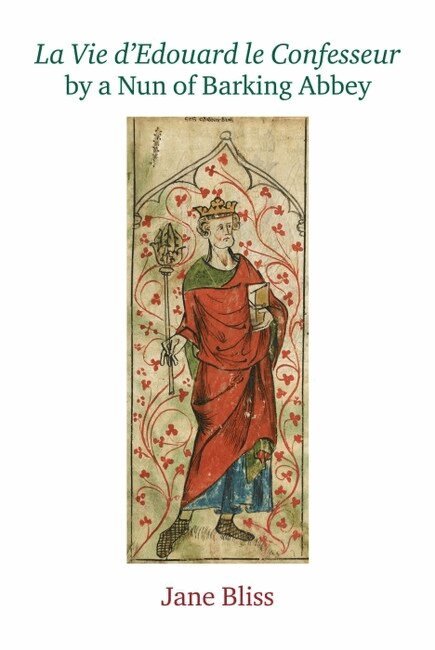
The twelfth-century Anglo-Norman verse Life of King Edward the Confessor is presented here in modern English for the first time, and with a full introduction and notes. Its author, an anonymous Nun of Barking Abbey, offers a many-faceted and absorbing portrait of the celebrated king and saint, together with legendary material found in no other version of this hagiographic narrative.There is also a wealth of detail about Edward’s times as well as about the twelfth-century context in which the Nun was writing, making the poem of great interest to historians as well as to literary scholars. This is among the earliest texts in French known to be by a woman, and so will also be of great value to scholars investigating medieval female authorship.Long neglected, perhaps because mistakenly thought to be a mere translation of Aelred of Rievaulx’s Vita in Latin, it proves to be remarkably independent of its main source and raises questions about the freedom and originality of medieval ‘transposition’ or translation.