Jane Junn - Böcker
Visar alla böcker från författaren Jane Junn. Handla med fri frakt och snabb leverans.
7 produkter
7 produkter
259 kr
Skickas inom 7-10 vardagar
The United States is once again experiencing a major influx of immigrants. Questions about who should be admitted and what benefits should be afforded to new members of the polity are among the most divisive and controversial contemporary political issues. Using an impressive array of evidence from national surveys, The Politics of Belonging illuminates patterns of public opinion on immigration and explains why Americans hold the attitudes they do. Rather than simply characterizing Americans as either nativist or nonnativist, this book argues that controversies over immigration policy are best understood as questions of political membership and belonging to the nation. The relationships between citizenship, race, and immigration drive the politics of belonging in the United States and represent a dynamic central to understanding patterns of contemporary public opinion on immigration policy. Beginning with a historical analysis, the book documents why this is the case by tracing the development of immigration law and the formation of the American racial hierarchy.Then, through a comparative analysis of public opinion among white, black, Latino, and Asian Americans, it identifies and tests the critical moderating role of racial categorization and group identity on variation in public opinion on immigration.
267 kr
Skickas inom 7-10 vardagar
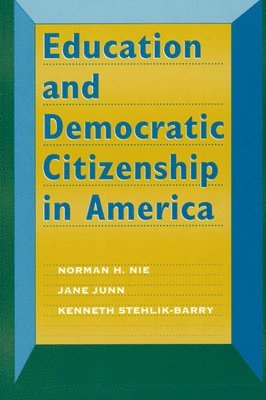
Formal education is crucial for creating enlightened and active citizens. However, despite an increase in education attainment since the 1970s, political engagement has not risen at a commensurate level. This text explores how and why education affects citizenship in these ways. The authors seek to provide answers by uncovering the causal relationship between education and democratic citizenship. They argue that citizenship encompasses both political engagement in pursuit of interests and commitment to democratic values that temper what citizens can do to win in politics. Education affects the two dimensions in distinct ways. Especially significant is the influence of education on political engagement through occupational prominence and position in social networks. Formal education orders the distribution of social position and connections, and creates an uneven political playing field.
387 kr
Skickas inom 5-8 vardagar
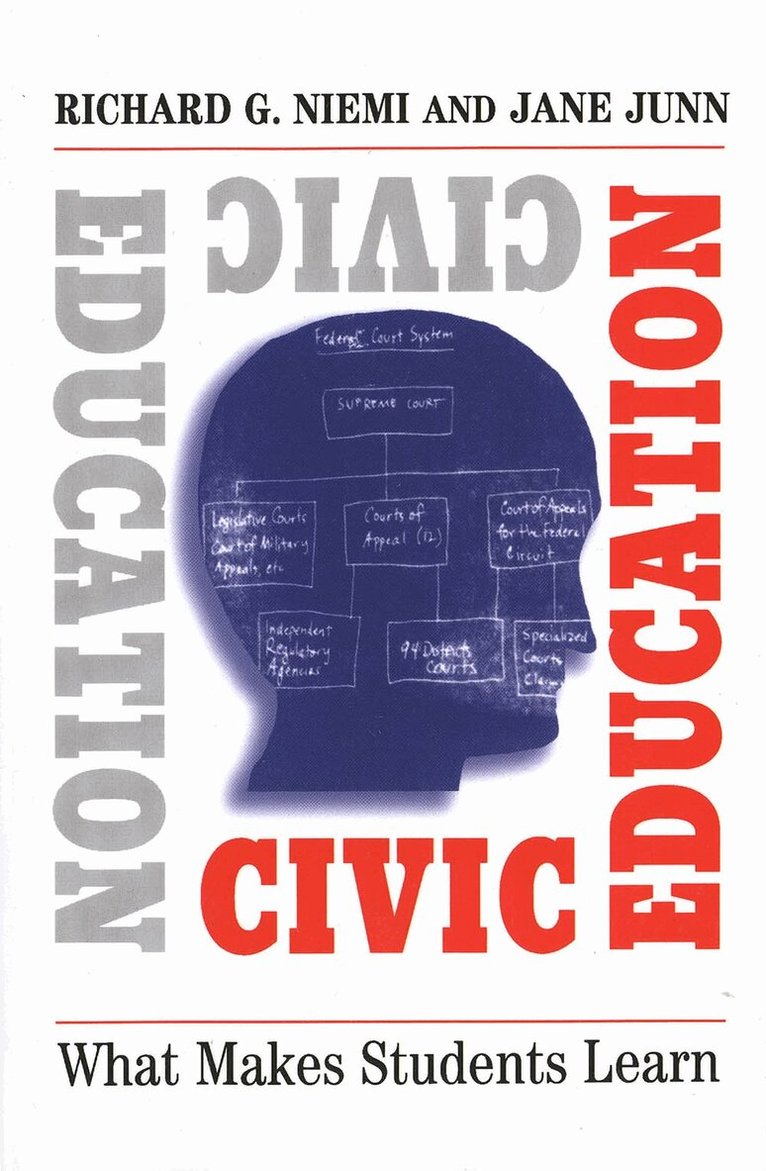
Sound democratic decisions rely on a citizenry with at least a partial mastery of the rules and workings of democratic government. American high schools, where students learn the basics of citizenship, thus ought to play a critical role in the success of democracy. Yet studies examining the impact of high school government and civics courses on political knowledge over the past quarter-century have generally shown that these courses have little or no effect. In this important book, Richard G. Niemi and Jane Junn take a fresh look at what America’s high school seniors know about government and politics and how they learn it. The authors argue convincingly that secondary school civics courses do indeed enhance students’ civic knowledge. This book is based on the most extensive assessment to date of civic knowledge among American youth—the 1988 National Assessment of Education Progress (NAEP) Civics Assessment. The authors develop and test a theoretical model to explain the cognitive process by which students learn about politics and they conclude by suggesting specific changes in the style and emphasis of civics teaching.
334 kr
Skickas inom 7-10 vardagar
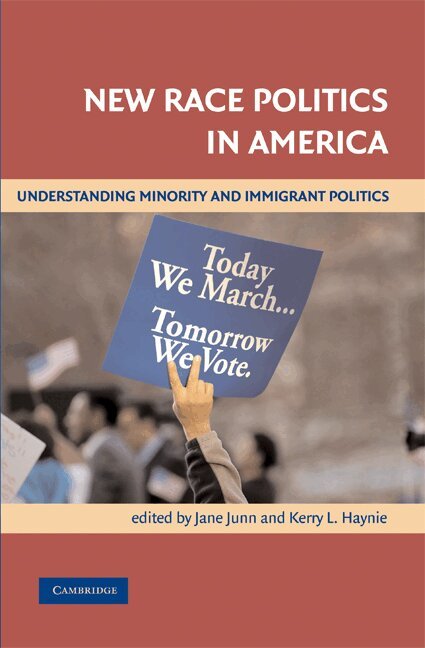
Foreign migration to the United States is dramatically altering the demographic profile of the American electorate. Nearly a third of all Americans are of non-white and non-European descent. Latinos and Hispanics have recently eclipsed African Americans as the largest minority group in the United States. Between 1990 and 2000, Asians doubled the size of their population to more than 4 percent of Americans. Though immigration has altered the racial and ethnic composition of every state in the nation, surprisingly little is known about the consequences of this new heterogeneity for American politics. This book explores the impact and political consequences of immigration. After considering the organizations that mobilize new citizens to politics, the authors examine the political psychology of group consciousness for political mobilization. Finally, they consider the emerging patterns and choices of new voters.
1 034 kr
Skickas inom 7-10 vardagar
Foreign migration to the United States is dramatically altering the demographic profile of the American electorate. Nearly a third of all Americans are of non-white and non-European descent. Latinos and Hispanics have recently eclipsed African Americans as the largest minority group in the United States. Between 1990 and 2000, Asians doubled the size of their population to more than 4 percent of Americans. Though immigration has altered the racial and ethnic composition of every state in the nation, surprisingly little is known about the consequences of this new heterogeneity for American politics. This book explores the impact and political consequences of immigration. After considering the organizations that mobilize new citizens to politics, the authors examine the political psychology of group consciousness for political mobilization. Finally, they consider the emerging patterns and choices of new voters.
234 kr
Skickas inom 7-10 vardagar
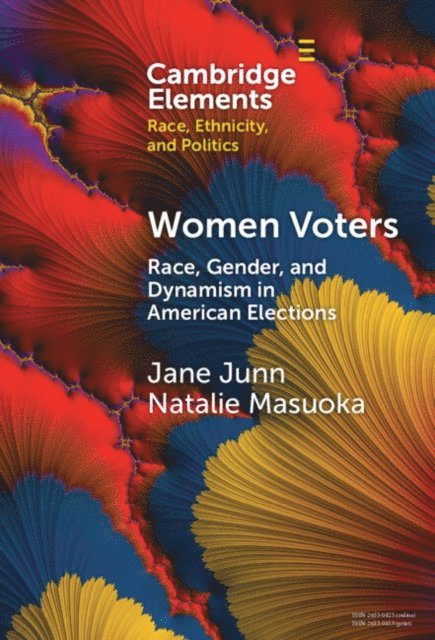
Women Voters documents and explains three important phenomena implicating gender, race, and immigration. The Element contributes to a better understanding of partisan candidate choice in US presidential elections. First, women are diverse and politically heterogenous, where white women are more likely to vote Republican and women of color are majority Democratic voters. Second, due to the unequal privileges and constraints associated with race, white women have greater agency to sort by partisan preference, whereas women of color have more limited choice in their partisan support. Finally, the authors emphasize compositional change in the electorate as an important explanation of electoral outcomes.
753 kr
Skickas inom 7-10 vardagar
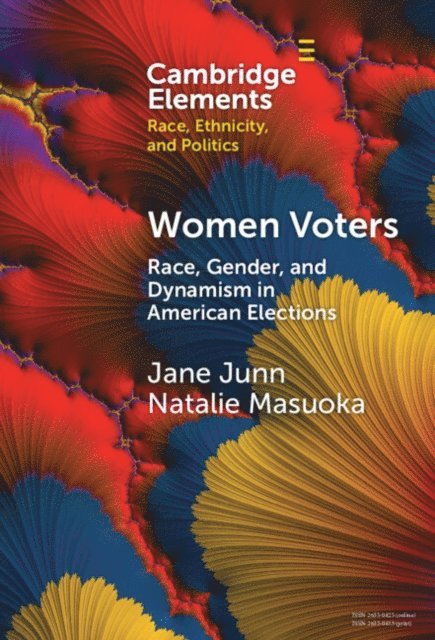
Women Voters documents and explains three important phenomena implicating gender, race, and immigration. The Element contributes to a better understanding of partisan candidate choice in US presidential elections. First, women are diverse and politically heterogenous, where white women are more likely to vote Republican and women of color are majority Democratic voters. Second, due to the unequal privileges and constraints associated with race, white women have greater agency to sort by partisan preference, whereas women of color have more limited choice in their partisan support. Finally, the authors emphasize compositional change in the electorate as an important explanation of electoral outcomes.