Jane Tylus - Böcker
Visar alla böcker från författaren Jane Tylus. Handla med fri frakt och snabb leverans.
8 produkter
8 produkter
246 kr
Skickas inom 7-10 vardagar
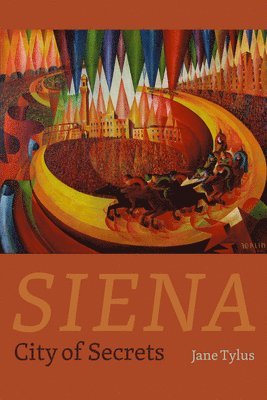
Jane Tylus's Siena is a compelling and intimate portrait of this most secretive of cities, often overlooked by travelers to Italy. Cultural history and intellectual memoir, travelogue and guidebook, it takes the reader on a quest of discovery through the well- and not-so-well-traveled roads and alleys of a town both medieval and modern. As Tylus leads us through the city, she shares her passion for Siena in novelistic prose, while never losing sight of the historical complexities that have made Siena one of the most fascinating and beautiful towns in Europe. Today, Siena can appear on the surface standoffish and old-fashioned, especially when compared to its larger, flashier cousins Rome and Florence. But first impressions wear away as we learn from Tylus that Siena was an innovator among the cities of Italy: the first to legislate the building and maintenance of its streets, the first to publicly fund its university, the first to institute a municipal bank, and even the first to ban automobile traffic from its city center.We learn about Siena's great artistic and architectural past, hidden behind centuries of painting and rebuilding, and about the distinctive characters of its different neighborhoods, exemplified in the Palio, the highly competitive horserace that takes place twice a year in the city's main piazza and that serves as both a dividing and a uniting force for the Sienese. Throughout we are guided by the assured voice of a seasoned scholar with a gift for spinning a good story and an eye for the telling detail, whether we are traveling Siena's modern highways, exploring its underground tunnels, tracking the city's financial history, or celebrating giants of painting like Simone Martini or giants of the arena, Siena's former Serie A soccer team. A practical and engaging guide for tourists and armchair travelers alike, Siena is a testament to the powers of community and resilience in a place that is not quite as timeless and serene as it may at first appear.
453 kr
Skickas inom 7-10 vardagar
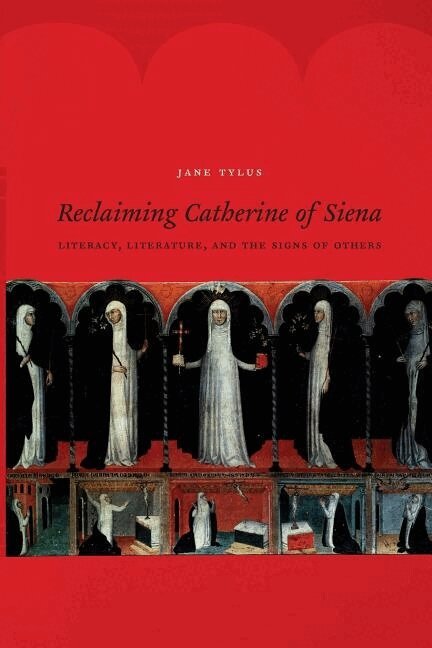
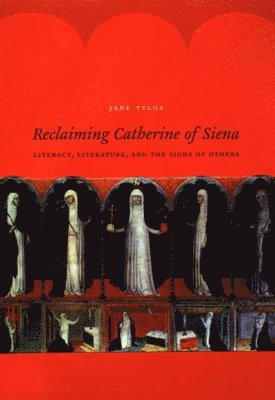
Catherine of Siena (1347-1380) wrote almost four hundred epistles in her lifetime, effectively insinuating herself into the literary, political, and theological debates of her day. At the same time, as the daughter of a Sienese dyer, Catherine had no formal education, and her accomplishments were considered miracles rather than the work of her own hand. As a result, she has been largely excluded from accounts of the development of European humanism and the language and literature of Italy. Reclaiming Catherine of Siena makes the case for considering Catherine alongside literary giants such as Dante and Petrarch, as it underscores Catherine's commitment to using the vernacular to manifest Christ's message and her own. Jane Tylus charts here the contested struggles of scholars over the centuries to situate Catherine in the history of Italian culture in early modernity. But she mainly focuses on Catherine's works, calling attention to the interplay between orality and textuality in the letters and demonstrating why it was so important for Catherine to envision herself as a writer.Tylus argues for a reevalution of Catherine as not just a medieval saint, but one of the major figures at the birth of the Italian literary canon.
453 kr
Skickas inom 7-10 vardagar
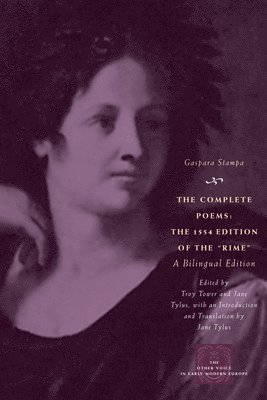
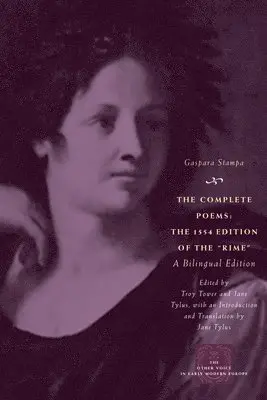
Gaspara Stampa (1523-1554) is one of the finest female poets ever to write in Italian. Although she was lauded for her singing during her lifetime, her success and critical reputation as a poet emerged only after her verse was republished in the early eighteenth century. Her poetry runs the gamut of human emotion, ranging from ecstasy over a consummated love affair to despair at its end. While these tormented works and their multiple male addressees have led to speculation that Stampa may have been one of Venice's famous courtesans, they can also be read as a rebuttal of typical assumptions about women's roles. Championed by Rainer Maria Rilke, among others, she has more recently been celebrated by feminist scholars for her distinctive and original voice and her challenge to convention. The first complete translation of Stampa into English, this volume collects all of her passionate and lyrical verse. It is also the first modern critical edition of her poems, and in restoring the original sequence of the 1554 text, it allows readers the opportunity to encounter Stampa as she intended.Jane Tylus renders Stampa's verse in precise and graceful English translations, allowing a new generation of students and scholars of poetry, Renaissance literature, and music history to rediscover this incipiently modern Italian poet.
344 kr
Skickas inom 7-10 vardagar
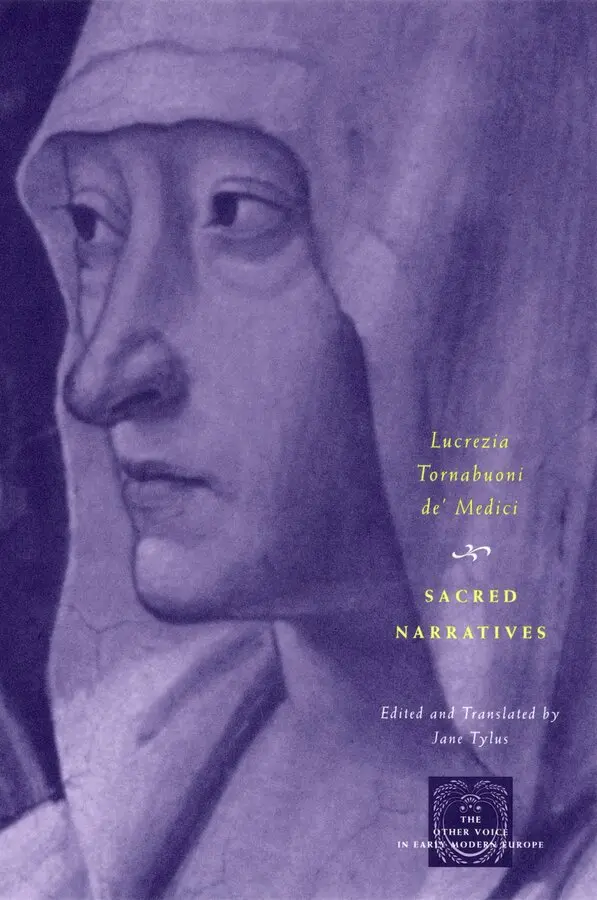
The most prominent woman in Renaissance Florence, Lucrezia Tornabuoni de' Medici (1425-1482) lived during her city's golden age. Wife of Piero de' Medici and mother of Lorenzo the Magnificent, Tornabuoni exerted considerable influence on Florence's political and social affairs. She was also, as this volume illustrates, a gifted and prolific poet.This is the first major collection in any language of her extensive body of religious poems. Ranging from gentle lyrics on the Nativity to moving dialogues between a crucified Christ and the weeping sinner who kneels before him, the nine laudi (poems of praise) included here are among the few such poems known to have been written by a woman. Tornabuoni's five storie sacre, narrative poems based on the lives of biblical figures-three of whom, Judith, Susanna, and Esther, are Old Testament heroines-are virtually unique in their range and expressiveness. Together with Jane Tylus's substantial introduction, these poems offer us both a fascinating portrait of a highly educated and creative woman and a lively sense of cultural and social life in Renaissance Florence.
652 kr
Tillfälligt slut
Catherine of Siena (1347-80) wrote almost four hundred epistles in her lifetime, effectively insinuating herself into the literary, political, and theological debates of her day. At the same time, as the daughter of a Sienese dyer, Catherine had no formal education, and her accomplishments were considered miracles rather than the work of her own hand. As a result, she has been largely excluded from accounts of the development of European humanism and the language and literature of Italy. "Reclaiming Catherine of Siena" makes the case for considering Catherine alongside literary giants such as Dante and Petrarch, as it underscores Catherine's commitment to using the vernacular to manifest Christ's message - and her own.Jane Tylus charts here the contested struggles of scholars over the centuries to situate Catherine in the history of Italian culture in early modernity. But she mainly focuses on Catherine's works, calling attention to the interplay between orality and textuality in the letters and demonstrating why it was so important for Catherine to envision herself as a writer.Tylus argues for a reevalution of Catherine as not just a medieval saint, but one of the major figures at the birth of the Italian literary canon.
630 kr
Skickas inom 3-6 vardagar
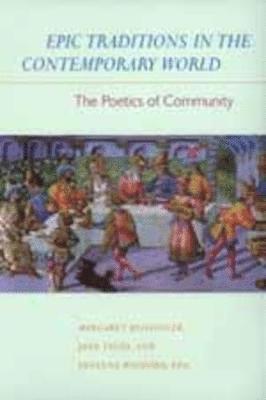
The epic tradition has been part of many different cultures throughout human history. This noteworthy collection of essays provides a comparative reassessment of epic and its role in the ancient, medieval, and modern worlds, as it explores the variety of contemporary approaches to the epic genre. Employing theoretical perspectives drawn from anthropology, literary studies, and gender studies, the authors examine familiar and less well known oral and literary traditions--ancient Greek and Latin, Arabic, South Slavic, Indian, Native American, Italian, English, and Caribbean--demonstrating the continuing vitality of the epic tradition. Juxtaposing work on the traditional canon of western epics with scholarship on contemporary epics from various parts of the world, these essays cross the divide between oral and literary forms that has long marked the approach to the genre. With its focus on the links among narrative, politics, and performance, the collection creates a new dialogue illustrating the sociopolitical significance of the epic tradition.Taken together, the essays raise compelling new issues for the study of epic, as they examine concerns such as national identity, gender, pedagogy, and the creation of the canon.
269 kr
Skickas inom 7-10 vardagar
Interest in material culture has produced a rigorous body of scholarship that considers the dynamics of licensing, permissions, and patronage - an ongoing history of the estrangement of works from their authors. Additionally, translation studies is enabling new ways to think about the emergence of European vernaculars and the reappropriation of classical and early Christian texts. This Element emerges from these intersecting stories. How did early modern authors say goodbye to their works; how do translators and editors articulate their duty to the dead or those incapable of caring for their work; what happens once censorship is invoked in the name of other forms of protection? The notion of the work as orphan, sent out and unable to return to its author, will take us from Horace to Dante, Montaigne, Anne Bradstreet, and others as we reflect on the relevance of the vocabularies of loss, charity, and licence for literature.
865 kr
Skickas inom 7-10 vardagar
Interest in material culture has produced a rigorous body of scholarship that considers the dynamics of licensing, permissions, and patronage - an ongoing history of the estrangement of works from their authors. Additionally, translation studies is enabling new ways to think about the emergence of European vernaculars and the reappropriation of classical and early Christian texts. This Element emerges from these intersecting stories. How did early modern authors say goodbye to their works; how do translators and editors articulate their duty to the dead or those incapable of caring for their work; what happens once censorship is invoked in the name of other forms of protection? The notion of the work as orphan, sent out and unable to return to its author, will take us from Horace to Dante, Montaigne, Anne Bradstreet, and others as we reflect on the relevance of the vocabularies of loss, charity, and licence for literature.