Janet Gyatso - Böcker
Visar alla böcker från författaren Janet Gyatso. Handla med fri frakt och snabb leverans.
6 produkter
6 produkter
2 127 kr
Skickas inom 3-6 vardagar
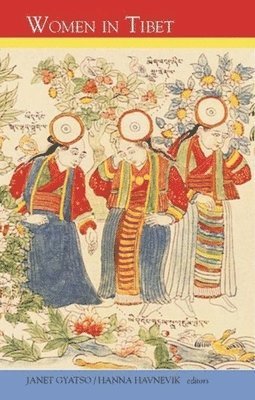
Filling a gap in the literature, this volume explores the struggles and accomplishments of women from both past and present-day Tibet. Here are queens from the imperial period, yoginis and religious teachers of medieval times, Buddhist nuns, oracles, political workers, medical doctors, and performing artists. Most of the essays focus on the lives of individual women, whether from textual sources or from anthropological data, and show that Tibetan women have apparently enjoyed more freedom than women in many other Asian countries. The book is innovative in resisting both romanticization and hypercriticism of women's status in Tibetan society, attending rather to historical description, and to the question of what is distinctive about women's situations in Tibet, and what is common to both men and women in Tibetan society.
578 kr
Skickas inom 3-6 vardagar
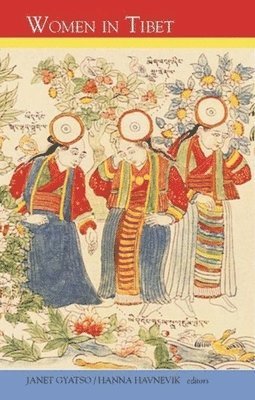
Filling a gap in the literature, this volume explores the struggles and accomplishments of women from both past and present-day Tibet. Here are queens from the imperial period, yoginis and religious teachers of medieval times, Buddhist nuns, oracles, political workers, medical doctors, and performing artists. Most of the essays focus on the lives of individual women, whether from textual sources or from anthropological data, and show that Tibetan women have apparently enjoyed more freedom than women in many other Asian countries. The book is innovative in resisting both romanticization and hypercriticism of women's status in Tibetan society, attending rather to historical description, and to the question of what is distinctive about women's situations in Tibet, and what is common to both men and women in Tibetan society.
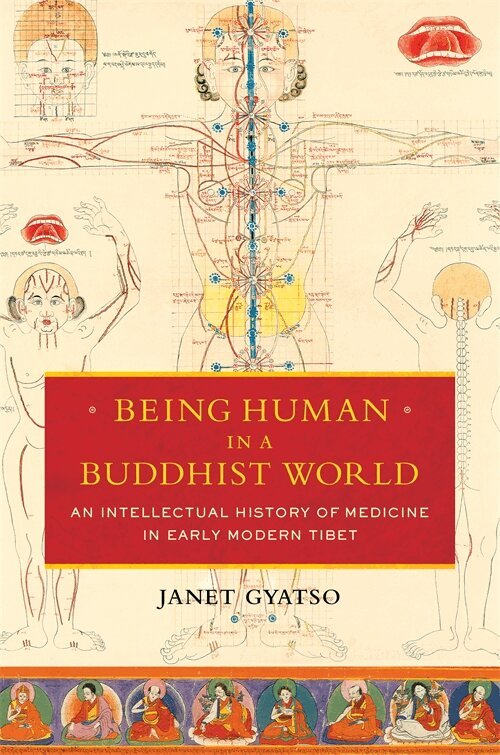
Being Human in a Buddhist World
An Intellectual History of Medicine in Early Modern Tibet
Inbunden, Engelska, 2015
1 572 kr
Skickas inom 7-10 vardagar
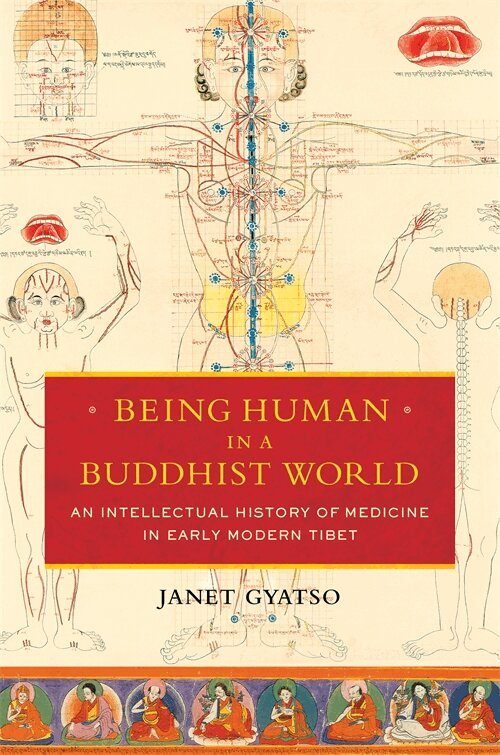
Critically exploring medical thought in a cultural milieu with no discernible influence from the European Enlightenment, Being Human in a Buddhist World reveals an otherwise unnoticed intersection of early modern sensibilities and religious values in traditional Tibetan medicine. It further studies the adaptation of Buddhist concepts and values to medical concerns and suggests important dimensions of Buddhism's role in the development of Asian and global civilization. Through its unique focus and sophisticated reading of source materials, Being Human adds a crucial chapter in the larger historiography of science and religion. The book opens with the bold achievements in Tibetan medical illustration, commentary, and institution building during the period of the Fifth Dalai Lama and his regent, Desi Sangye Gyatso, then looks back to the work of earlier thinkers, tracing a strategically astute dialectic between scriptural and empirical authority on questions of history and the nature of human anatomy.It follows key differences between medicine and Buddhism in attitudes toward gender and sex and the moral character of the physician, who had to serve both the patient's and the practitioner's well-being. Being Human in a Buddhist World ultimately finds that Tibetan medical scholars absorbed ethical and epistemological categories from Buddhism yet shied away from ideal systems and absolutes, instead embracing the imperfectability of the human condition.
Being Human in a Buddhist World
An Intellectual History of Medicine in Early Modern Tibet
Häftad, Engelska, 2016
442 kr
Skickas inom 7-10 vardagar
Critically exploring medical thought in a cultural milieu with no discernible influence from the European Enlightenment, Being Human in a Buddhist World reveals an otherwise unnoticed intersection of early modern sensibilities and religious values in traditional Tibetan medicine. It further studies the adaptation of Buddhist concepts and values to medical concerns and suggests important dimensions of Buddhism's role in the development of Asian and global civilization. Through its unique focus and sophisticated reading of source materials, Being Human adds a crucial chapter in the larger historiography of science and religion. The book opens with the bold achievements in Tibetan medical illustration, commentary, and institution building during the period of the Fifth Dalai Lama and his regent, Desi Sangye Gyatso, then looks back to the work of earlier thinkers, tracing a strategically astute dialectic between scriptural and empirical authority on questions of history and the nature of human anatomy.It follows key differences between medicine and Buddhism in attitudes toward gender and sex and the moral character of the physician, who had to serve both the patient's and the practitioner's well-being. Being Human in a Buddhist World ultimately finds that Tibetan medical scholars absorbed ethical and epistemological categories from Buddhism yet shied away from ideal systems and absolutes, instead embracing the imperfectability of the human condition.
626 kr
Skickas inom 7-10 vardagar
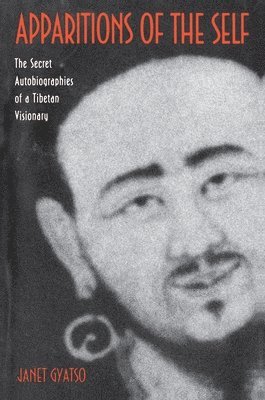
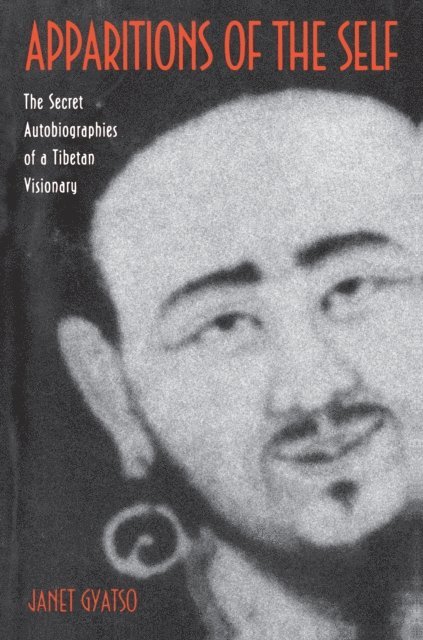
Apparitions of the Self is a groundbreaking investigation into what is known in Tibet as "secret autobiography," an exceptional, rarely studied literary genre that presents a personal exploration of intimate religious experiences. In this volume, Janet Gyatso translates and studies the outstanding pair of secret autobiographies by the famed Tibetan Buddhist visionary, Jigme Lingpa (1730-1798), whose poetic and self-conscious writings are as much about the nature of his own identity, memory, and the undecidabilities of autobiographical truth as they are narrations of the actual content of his experiences. Their translation in this book marks the first time that works of this sort have been translated in a Western language. Gyatso is among the first to consider Tibetan literature from a comparative perspective, examining the surprising fit--as well as the misfit--of Western literary theory with Tibetan autobiography. She examines the intriguing questions of why Tibetan Buddhists produced so many autobiographies (far more than other Asian Buddhists) and how autobiographical self-assertion is possible even while Buddhists believe that the self is ultimately an illusion.Also explored are Jigme Lingpa's historical milieu, his revelatory visions of the ancient Tibetan dynasty, and his meditative practices of personal cultivation. The book concludes with a study of the subversive female figure of the "Dakini" in Jigme Lingpa's writings, and the implications of her gender, her sexuality, and her unsettling discourse for the autobiographical subject in Tibet.
In the Mirror of Memory
Reflections on Mindfulness and Remembrance in Indian and Tibetan Buddhism
Häftad, Engelska, 1992
402 kr
Tillfälligt slut
This book studies the diverse array of species of memory in Buddhism. Contributors focus on a particular school, group of texts, terms, or practices and identify a considerable range of types of mnemonic faculties in Buddhism. Included are discussions of Buddhist teaching, meditation, visualization, prayer, commemoration of the Buddha, dhārani practice, the use of mnemonic lists to condense lengthy scriptures, and the purported recollection of infinite previous lives that immediately preceded Sakyamuni's attainment of Buddhahood. Even enlightened awareness itself is said by some Buddhist schools to consist in a "mnemic engagement" with reality as such.The authors explore Buddhist views on mundane acts of memory such as recognizing, reminding, memorizing, and storing data as well as special types of memory that are cultivated in religious practice.One of the most striking discoveries is that perception is intimately related to certain types of memory. Several essays investigate if, and if so, how, meditative mindfulness and recollection of the past-both of which can be designated by the term smrti-are connected within the Buddhist tradition. The question of whether recollection of the past can be explained without violating the foundational Buddhist notions of radical impermanence and no-self is addressed by several of the contributing scholars.Among the primary sources for the studies in this volume are the northern and southern Abhidharma literature, the Mtks, Pli and Mahyna stras, works of the Buddhist logicians, Yogācāra materials, the Tibetan Great Perfection (Rdzogschen) tradition, and Indian and Tibetan commentarial works. Affinities of Buddhist views on memory with those found in Western phenomenology, semiology, psychology, and history of religions are considered as well.