Janet L. Kolodner – författare
Visar alla böcker från författaren Janet L. Kolodner. Handla med fri frakt och snabb leverans.
6 produkter
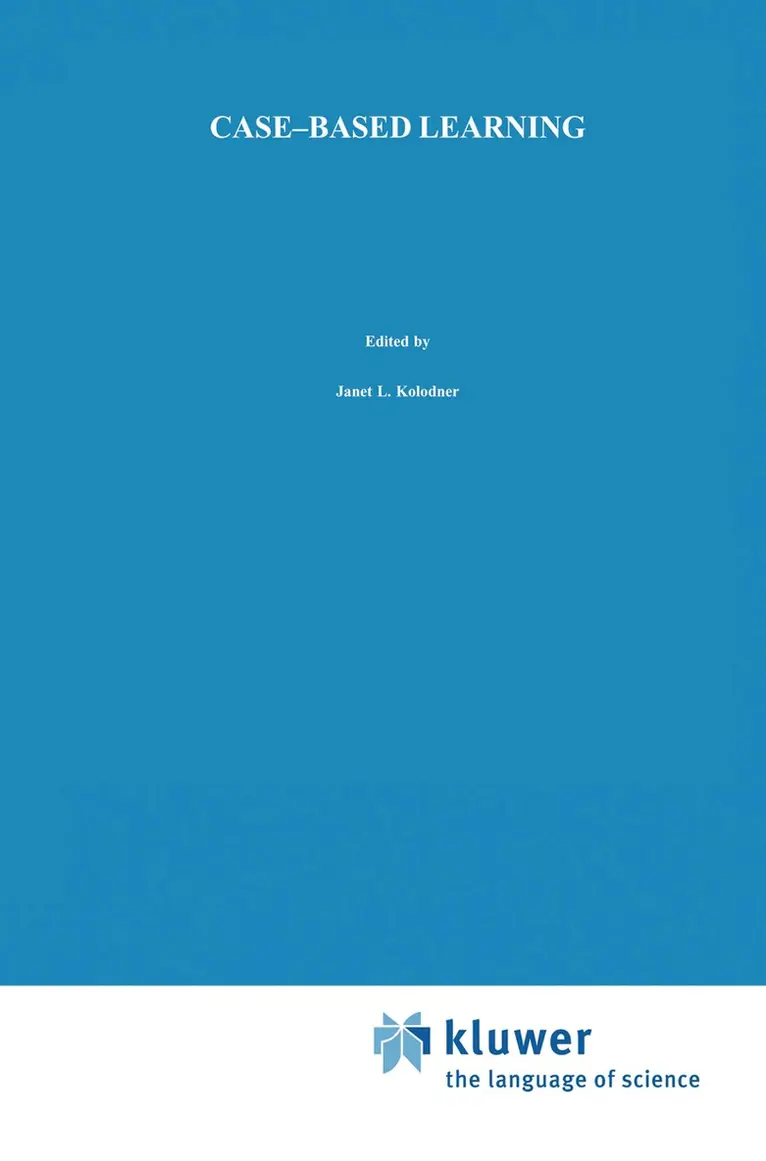
Case-Based Learning
Inbunden, 1993
2245 kr
Lägg i varukorg
Case-based reasoning means reasoning based on remembering previous experiences. A reasoner using old experiences/cases might use those cases to suggest solutions to problems; to point out potential problems with a solution being computed; to interpret a new situation and make predictions about what …
Experience, Memory, and Reasoning
Av Janet L. Kolodner, Christopher K. Riesbeck
Inbunden, 1986
2445 kr
Lägg i varukorg
First published in 1986. The chapters in this collection are based on presentations made at the First Annual Workshop on Theoretical Issues in Conceptual Information Processing (TICIP) grew out of that. It was held in Atlanta, Georgia in March 1984 and included 50 people with roughly the same world …
Experience, Memory, and Reasoning
Av Christopher K. Riesbeck, Janet L. Kolodner
E-bok, 2014
993 kr
Lägg i varukorg
First published in 1986. The chapters in this collection are based on presentations made at the First Annual Workshop on Theoretical Issues in Conceptual Information Processing (TICIP) grew out of that. It was held in Atlanta, Georgia in March 1984 and included 50 people with roughly the same world …
Experience, Memory, and Reasoning
Av Christopher K. Riesbeck, Janet L. Kolodner
E-bok, 2014
993 kr
Lägg i varukorg
First published in 1986. The chapters in this collection are based on presentations made at the First Annual Workshop on Theoretical Issues in Conceptual Information Processing (TICIP) grew out of that. It was held in Atlanta, Georgia in March 1984 and included 50 people with roughly the same world …
Case-Based Learning
Häftad, 2013
2245 kr
Lägg i varukorg
Case-based reasoning means reasoning based on remembering previous experiences. A reasoner using old experiences (cases) might use those cases to suggest solutions to problems, to point out potential problems with a solution being computed, to interpret a new situation and make predictions about …
Case-Based Learning
E-bok, 2012
3013 kr
Lägg i varukorg
Case-based reasoning means reasoning based on remembering previous experiences. A reasoner using old experiences (cases) might use those cases to suggest solutions to problems, to point out potential problems with a solution being computed, to interpret a new situation and make predictions about …