Janet Phillips - Böcker
Visar alla böcker från författaren Janet Phillips. Handla med fri frakt och snabb leverans.
5 produkter
5 produkter
2 166 kr
Skickas inom 10-15 vardagar
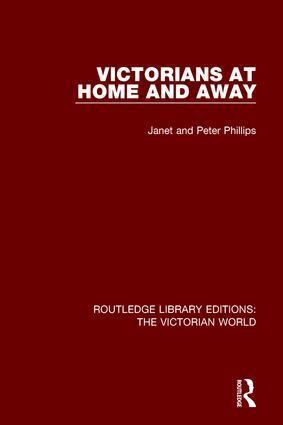
First published in 1978, this book explores everyday Victorian likes and dislikes, manners, fashions, ideals and illusions. It discusses their changing attitudes to women, children, the poor, the common soldier and their country. It explains the rise and fall of home entertainment, the growth of soccer, racing and cricket to national sports, the rise of public schools and new professions as well as the appeal of missionary work. It is argued that all this happened not because the Victorians were fools, hypocrites or villains, but because they sensibly adapted themselves to peculiar and novel circumstances. This title will be of interest to students of history.
569 kr
Skickas inom 10-15 vardagar
First published in 1978, this book explores everyday Victorian likes and dislikes, manners, fashions, ideals and illusions. It discusses their changing attitudes to women, children, the poor, the common soldier and their country. It explains the rise and fall of home entertainment, the growth of soccer, racing and cricket to national sports, the rise of public schools and new professions as well as the appeal of missionary work. It is argued that all this happened not because the Victorians were fools, hypocrites or villains, but because they sensibly adapted themselves to peculiar and novel circumstances. This title will be of interest to students of history.
Del 77 - Archaeopress Roman Archaeology
Life, Death and Rubbish Disposal in Roman Norton, North Yorkshire
Excavations at Brooklyn House 2015-16
Häftad, Engelska, 2021
725 kr
Skickas
Life, Death and Rubbish Disposal in Roman Norton, North Yorkshire: Excavations at Brooklyn House 2015-16 reports on excavations in advance of the development of a site in Norton-on-Derwent, North Yorkshire close to the line of the main Roman road running from the crossing point of the River Derwent near Malton Roman fort to York (Eboracum). The Brooklyn House site provided much information on aspects of the poorly understood ‘small town’ of Delgovicia. The area came to be used for apparently widely-dispersed burials in the mid-3rd century AD. Among these was the bustumtype burial of a soldier, or former soldier, which produced a well-preserved assemblage of military equipment and incorporated some ‘non-standard’ features. In addition, evidence was found for a possible mausoleum. During the late third and fourth centuries the burial activity was succeeded by occupation in the form of substantial stone-founded, or in some cases possibly stone-built buildings fronting onto the Roman road which was the main approach road to the town from the south. These structures could have been related in some way to the Norton Roman pottery industry, the core area of which was located to the east of the site, although no evidence from them suggested this. Following the fairly short-lived occupation, much of the site was used for the disposal of large quantities of rubbish and structural debris that presumably originated from locations closer to or beyond the river crossing, including possibly the Roman fort. The Roman pottery assemblage incorporated in excess of 21,000 sherds and adds considerably to our knowledge of pottery use and production in Roman Malton/Norton. Similarly, the substantial and well-preserved Roman-period finds assemblage provides insights, not only into the bustum burial but also wider aspects of life in Delgovicia. Within the assemblage, there were some unusual and rarely found individual items such as a pair of iron-working tongs, a two-link snaffle bit and a bone needle case, as well as a wide range of other material including military equipment, jewellery, styli and a possible scroll holder. The medieval and later pottery from the site provides a baseline for work on assemblages recovered from Malton/Norton in the future.
235 kr
Skickas
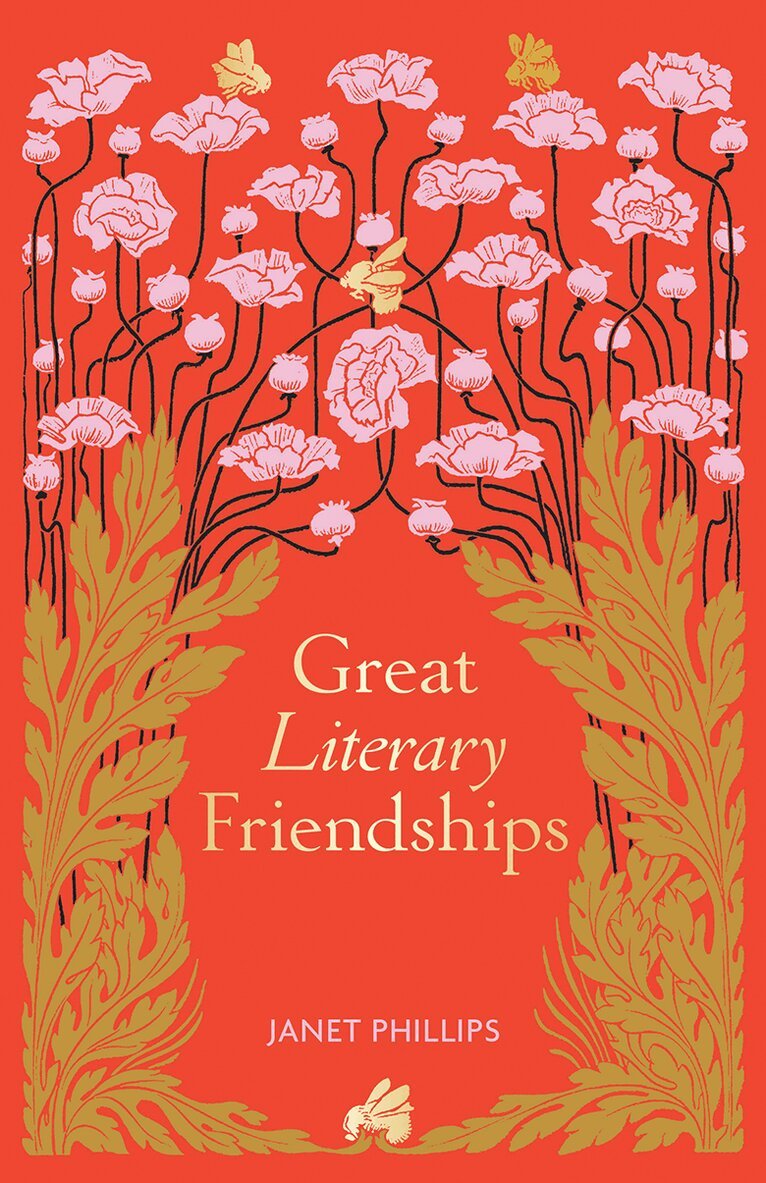
Close friendships are a heart-warming feature of many of our best-loved works of fiction. From Jane Eyre and Helen Burns’ poignant schoolgirl relationship to Tom Sawyer and Huckleberry Finn’s adventures on the Mississippi, fictional friends have supported, guided, comforted, nursed and at times betrayed the heroes and heroines of our popular and influential plays and novels. This book explores twenty-four literary friendships and, together with character studies and publication history, describes how each key relationship influences character, determines plot, promotes or disguises romance, preserves a reputation, sometimes results in betrayal, or underlines the theme of each literary work. It shows how authors from William Shakespeare to Elena Ferrante have by turns celebrated, lamented or transformed friendships throughout the ages, and how some friends – Don Quixote and Sancho Panza, Holmes and Watson or even Bridget Jones and pals – have taken on creative lives beyond the bounds of their original narrative. Including a broad scope of literature spanning a period of 400 years from writers as diverse as Jane Austen, Charles Dickens, George Eliot, Evelyn Waugh, John Steinbeck and Alice Walker, this book is the ideal gift for your literature-loving friend.
235 kr
Kommande
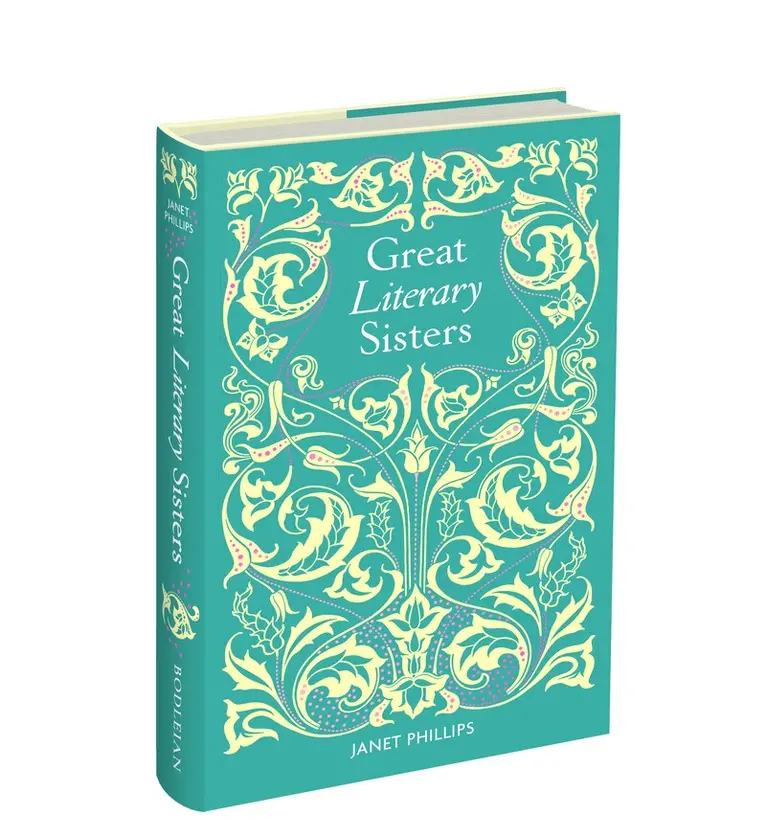
Sisterly relationships feature prominently in some of our best-loved classic literature. From Jane and Elizabeth Bennet in Pride and Prejudice to Hasina and Nazneen in Brick Lane, they have provided inspiration for novelists over the centuries.Sisters can be best friends, mother figures, rivals, heroes, sounding boards or partners in crime, depending on literary genre, era, or the demands of plot. They can bring into focus the changing roles of women in society, especially in literature that predates the twentieth century, such as Middlemarch, The Woman in White and The Old Wives’ Tale. Their bonds with younger or older siblings, like those of Meg, Jo, Beth and Amy in Little Women, are often complex and nuanced, and occasionally devastating.Covering childhood, adventure, affairs of the heart and mental health, this book explores the role of sisters in twenty individual entries, each one providing a synopsis and analysis of the work in question. Including writers as diverse as Charles Dickens, E.M. Forster, J.D. Salinger, Toni Morrison and Chimamanda Ngozi Adichie, it makes the perfect read for book-loving sisters whatever their connection.