Jang-Sup Shin – författare
Visar alla böcker från författaren Jang-Sup Shin. Handla med fri frakt och snabb leverans.
23 produkter
Predatory Value Extraction
How the Looting of the Business Corporation Became the US Norm and How Sustainable Prosperity Can Be Restored
Av Jang-Sup Shin, William Lazonick
E-bok, 2019
642 kr
Lägg i varukorg
Predatory Value Extraction explains how an ideology of corporate resource allocation known as ''maximizing shareholder value'' (MSV) that emerged in the 1980s came to dominate strategic thinking in business schools and corporate boardrooms in the United States. Undermining the social foundations of …
Predatory Value Extraction
How the Looting of the Business Corporation Became the US Norm and How Sustainable Prosperity Can Be Restored
Av Jang-Sup Shin, William Lazonick
E-bok, 2019
642 kr
Lägg i varukorg
Predatory Value Extraction explains how an ideology of corporate resource allocation known as ''maximizing shareholder value'' (MSV) that emerged in the 1980s came to dominate strategic thinking in business schools and corporate boardrooms in the United States. Undermining the social foundations of …
Predatory Value Extraction
How the Looting of the Business Corporation Became the US Norm and How Sustainable Prosperity Can Be Restored
Av William Lazonick, Jang-Sup Shin
Inbunden, 2019
1178 kr
Lägg i varukorg
Predatory Value Extraction explains how an ideology of corporate resource allocation known as 'maximizing shareholder value' (MSV) that emerged in the 1980s came to dominate strategic thinking in business schools and corporate boardrooms in the United States. Undermining the social foundations of …
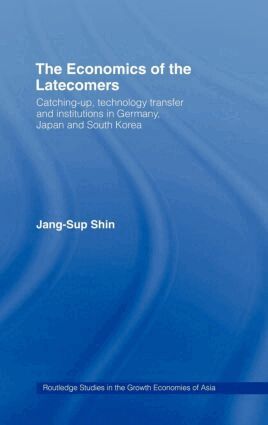
Economics of the Latecomers
Catching-Up, Technology Transfer and Institutions in Germany, Japan and South Korea
Inbunden, 1996
3894 kr
Lägg i varukorg
This book examines the spectacularly successful economies of East Asia, Japan and South Korea. The comparison of the 'catching-up' process in Japan and South Korea includes studies of the iron and steel and semi-conductor industries. The author shows the difficulties involved in trying to detect …
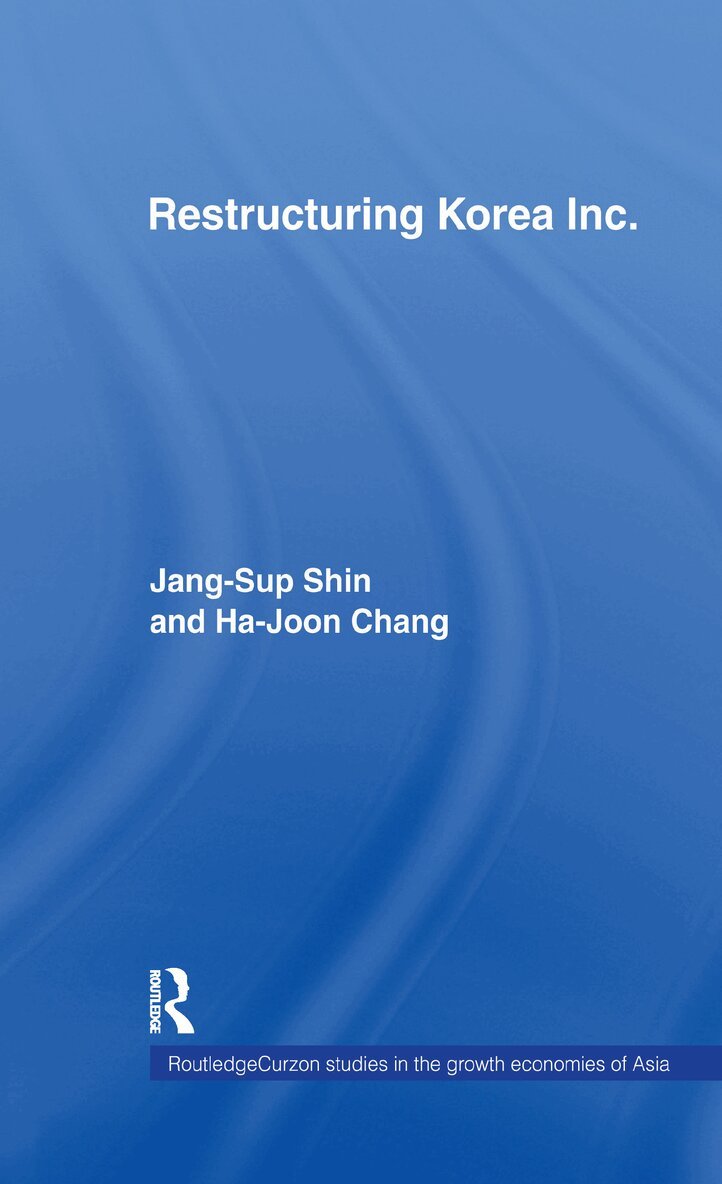
Restructuring 'Korea Inc.'
Financial Crisis, Corporate Reform, and Institutional Transition
Av Jang-Sup Shin, Ha-Joon Chang
Inbunden, 2003
2578 kr
Lägg i varukorg
The 1997 South Korean financial crisis not only shook the country itself but also sent shock waves through the financial world at large. This impressive book critically assesses the conventional wisdom surrounding the Korean crisis and the performance of the IMF-sponsored reform programme.Looking …
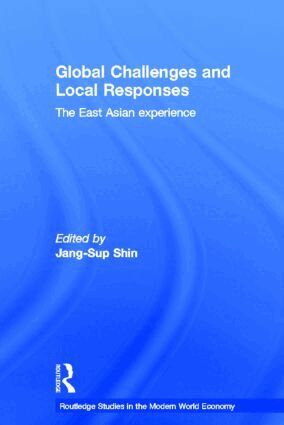
Global Challenges and Local Responses
The East Asian Experience
Inbunden, 2007
2512 kr
Lägg i varukorg
East Asia has in many ways been the cockpit of the globalization process. If the phenomenon as it is generally defined is largely recognized as a relatively recent one, the countries that have experienced most change during this period have been in the region.Rapid economic growth leading to the …
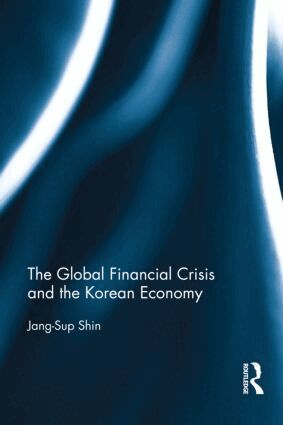
Global Financial Crisis and the Korean Economy
Inbunden, 2013
2826 kr
Lägg i varukorg
The world economy fell into a global financial crisis in 2008/9 and is still jittered by its aftershocks. Like other financial crises happened in the world economy, it came as a surprise. In historical perspective, financial crises should be understood as a natural fact of life in the world economy …
Global Challenges and Local Responses
The East Asian Experience
Häftad, 2013
849 kr
Lägg i varukorg
East Asia has in many ways been the cockpit of the globalization process. If the phenomenon as it is generally defined is largely recognized as a relatively recent one, the countries that have experienced most change during this period have been in the region.Rapid economic growth leading to the …
Why Do Corporations Exist?
Häftad, 2026
253 kr
Lägg i varukorg
Corporations are the engine of the modern economy, yet public debates are ideologically polarized between two extremes-shareholder value theory and stakeholder theory-and the real workings of corporations and their contributions to society are obscured. This book attempts to break the shackles of …
Why Do Corporations Exist?
Inbunden, 2026
918 kr
Lägg i varukorg
Corporations are the engine of the modern economy, yet public debates are ideologically polarized between two extremes-shareholder value theory and stakeholder theory-and the real workings of corporations and their contributions to society are obscured. This book attempts to break the shackles of …
Global Challenges and Local Responses
The East Asian Experience
E-bok, 2007
1004 kr
Lägg i varukorg
East Asia has in many ways been the cockpit of the globalization process. If the phenomenon as it is generally defined is largely recognized as a relatively recent one, the countries that have experienced most change during this period have been in the region. Rapid economic growth leading to the …
Global Challenges and Local Responses
The East Asian Experience
E-bok, 2007
983 kr
Lägg i varukorg
East Asia has in many ways been the cockpit of the globalization process. If the phenomenon as it is generally defined is largely recognized as a relatively recent one, the countries that have experienced most change during this period have been in the region. Rapid economic growth leading to the …
Restructuring 'Korea Inc.'
Financial Crisis, Corporate Reform, and Institutional Transition
Av Ha-Joon Chang, Jang-Sup Shin
E-bok, 2003
856 kr
Lägg i varukorg
The 1997 South Korean financial crisis not only shook the country itself but also sent shock waves through the financial world at large. This impressive book critically assesses the conventional wisdom surrounding the Korean crisis and the performance of the IMF-sponsored reform programme.Looking …
Restructuring 'Korea Inc.'
Financial Crisis, Corporate Reform, and Institutional Transition
Av Ha-Joon Chang, Jang-Sup Shin
E-bok, 2003
838 kr
Lägg i varukorg
The 1997 South Korean financial crisis not only shook the country itself but also sent shock waves through the financial world at large. This impressive book critically assesses the conventional wisdom surrounding the Korean crisis and the performance of the IMF-sponsored reform programme.Looking …
Economics of the Latecomers
Catching-Up, Technology Transfer and Institutions in Germany, Japan and South Korea
E-bok, 2013
1034 kr
Lägg i varukorg
This book examines the spectacularly successful economies of East Asia, Japan and South Korea. The comparison of the ''catching-up'' process in Japan and South Korea includes studies of the iron and steel and semi-conductor industries. The author shows the difficulties involved in trying to detect …
Economics of the Latecomers
Catching-Up, Technology Transfer and Institutions in Germany, Japan and South Korea
E-bok, 2013
1034 kr
Lägg i varukorg
This book examines the spectacularly successful economies of East Asia, Japan and South Korea. The comparison of the ''catching-up'' process in Japan and South Korea includes studies of the iron and steel and semi-conductor industries. The author shows the difficulties involved in trying to detect …
Economics of the Latecomers
Catching-Up, Technology Transfer and Institutions in Germany, Japan and South Korea
Häftad, 2015
874 kr
Lägg i varukorg
This book examines the spectacularly successful economies of East Asia, Japan and South Korea. The comparison of the 'catching-up' process in Japan and South Korea includes studies of the iron and steel and semi-conductor industries. The author shows the difficulties involved in trying to detect …
Global Financial Crisis and the Korean Economy
Häftad, 2016
844 kr
Lägg i varukorg
The world economy fell into a global financial crisis in 2008/9 and is still jittered by its aftershocks. Like other financial crises happened in the world economy, it came as a surprise. In historical perspective, financial crises should be understood as a natural fact of life in the world economy …
Global Financial Crisis and the Korean Economy
E-bok, 2013
977 kr
Lägg i varukorg
The world economy fell into a global financial crisis in 2008/9 and is still jittered by its aftershocks. Like other financial crises happened in the world economy, it came as a surprise. In historical perspective, financial crises should be understood as a natural fact of life in the world economy …
Global Financial Crisis and the Korean Economy
E-bok, 2013
999 kr
Lägg i varukorg
The world economy fell into a global financial crisis in 2008/9 and is still jittered by its aftershocks. Like other financial crises happened in the world economy, it came as a surprise. In historical perspective, financial crises should be understood as a natural fact of life in the world economy …
MAN CALLED KIM-GHIS KHAN: THE RISE AND FALL OF KIM WOO CHOONG AND DAEWOO
Inbunden, 2026
777 kr
Lägg i varukorg
This book presents a conversational history of Kim Woo Choong, once dubbed "Kim-ghis Khan" by the Western media. By 1997, he had built the largest multinational corporation originating from an emerging market economy. His Daewoo Group was poised to become Korea's largest conglomerate, having …