Janis Mink - Böcker
Visar alla böcker från författaren Janis Mink. Handla med fri frakt och snabb leverans.
9 produkter
9 produkter
179 kr
Skickas inom 3-6 vardagar
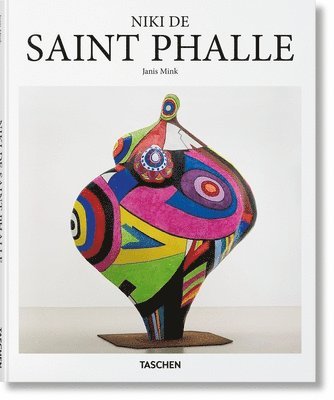
A key contributor to Nouveau Réalisme in early 1960s Paris, Niki de Saint Phalle (1930-2002) worked alongside artists such as Arman, Yves Klein, and Jean Tinguely, scavenging real objects in place of traditional art materials. She connected art to life by instrumentalizing household items, machine parts, and even toys for her early assemblages. Saint Phalle created her first shooting painting, or Tir, in 1961, and went on to conduct these performances in such varied locations as the Impasse Ronsin in Paris, a garden in Amsterdam, a sandpit outside Stockholm, and the Malibu Hills. Reliefs made of plaster, small objects, paint, wood, and wire were punctured by the bullets of a gun.This book provides an introduction to Saint Phalle’s work, highlighting some of her most important contributions to 20th century art. From birthing mothers to harbingers of death, she created sculptures that celebrated and exposed the female form in works such as Pink Birth (1964) and Hon En Kathedral (1966). She also used real-life figures as inspiration: her early Nana sculptures are named after the artist’s women friends and family members. She later extended her practice to films such as Daddy (1973), artist’s books including AIDS: You Can’t Catch it Holding Hands (1987), and the Tarot Garden, a monumental sculpture park with figures modeled on the 22 named cards of the Major Arcana figures in the Tarot deck, the karmic cards of destiny.
504 kr
Kommande
Surrealism freed art from the grip of logic. Turning instead to dreams, desire, memory, and the volatile realm of the subconscious, these five modern masters pursued the impulse of Surrealism along radically individual paths, each one arriving at a distinct creative destination.Max Ernst was the movement’s great experimentalist. Embracing chance, collage, and invention, he pioneered new methods of image-making in which accident and intuition were his trusted collaborators. Joan Miró developed a language of dancing symbols and radiant color, filling his canvases with poetic constellations that are both playful and cosmically charged. René Magritte’s cool, cerebral wit shifted the focus to perception itself. He reveled in visual paradoxes and deadpan humor, questioning the dynamics between image, language, and reality. Salvador Dalí was infamous for his theatrical flair and virtuosic precision. His images, rendered with almost scientific clarity, turned the irrational into something uncannily tangible. Frida Kahlo was often placed at Surrealism’s margins and resisted the label herself. Her fiercely personal works fused physical pain, Mexican identity, folklore, and autobiography, juxtaposing reality and fantasy in images of raw emotional force.Surrealism was never a single doctrine but a shared impulse: to ignite the imagination and dismantle the familiar. Bringing landmark works from five canonical artists together with incisive commentaries, this is both the perfect primer and a rewarding deep dive into art’s dream state, where fantasy, intellect, and emotion collide.
187 kr
Skickas
A key contributor to Nouveau Réalisme in early 1960s Paris, Niki de Saint Phalle (1930-2002) worked alongside artists such as Arman, Yves Klein, and Jean Tinguely, scavenging real objects in place of traditional art materials. She connected art to life by instrumentalizing household items, machine parts, and even toys for her early assemblages. Saint Phalle created her first shooting painting, or Tir, in 1961, and went on to conduct these performances in such varied locations as the Impasse Ronsin in Paris, a garden in Amsterdam, a sandpit outside Stockholm, and the Malibu Hills. Reliefs made of plaster, small objects, paint, wood, and wire were punctured by the bullets of a gun.This book provides an introduction to Saint Phalle’s work, highlighting some of her most important contributions to 20th century art. From birthing mothers to harbingers of death, she created sculptures that celebrated and exposed the female form in works such as Pink Birth (1964) and Hon En Kathedral (1966). She also used real-life figures as inspiration: her early Nana sculptures are named after the artist’s women friends and family members. She later extended her practice to films such as Daddy (1973), artist’s books including AIDS: You Can’t Catch it Holding Hands (1987), and the Tarot Garden, a monumental sculpture park with figures modeled on the 22 named cards of the Major Arcana figures in the Tarot deck, the karmic cards of destiny.
171 kr
Skickas inom 3-6 vardagar
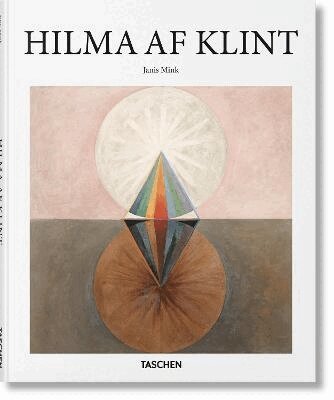
Hilma af Klint painted as though she was channeling the universe. Fascinated from childhood by botany and mathematics, she began her career painting landscapes and portraits, but other preoccupations stirred within her: questions of spirit, unseen energies, patterns too vast for the eye alone.Her art was inseparable from her spiritual practice. With a circle of female artists called The Five, she held séances, heard voices from "High Masters," and was inspired by the Theosophical Society and Rudolf Steiner’s theories. Working tirelessly to map life’s hidden dimensions, she would paint to the point of physical collapse. By 1906, her canvases featured radiant geometries of spirals and orbs, impregnated with symbols, letters, and words, anticipating the later embrace of abstraction by Kandinsky, Malevich, Mondrian, and others. Her vast painted cycles—like her works for the Temple and The Ten Largest—often depicted dualities: inside and out, the earthly and the esoteric, man and woman, good and evil.Living as a vegetarian, questioning the fixity of gender, af Klint was clearly before her time, yet very much of it too, and pretty much uncelebrated in her day. Her prodigious output lay unseen for decades, locked away by her own instruction. Only in the 1980s did the world begin to recognize her as a true pioneer of abstract art.This book invites you into her visionary world, via a luminous selection of her works and a detailed essay distilling their complexity. Her once-secret universe is revealed to us anew.
185 kr
Skickas inom 3-6 vardagar
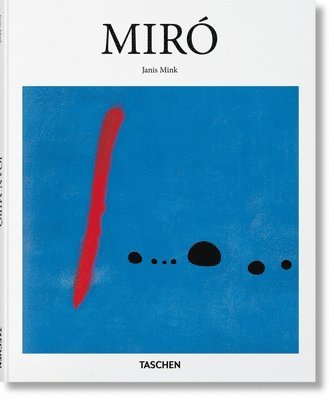
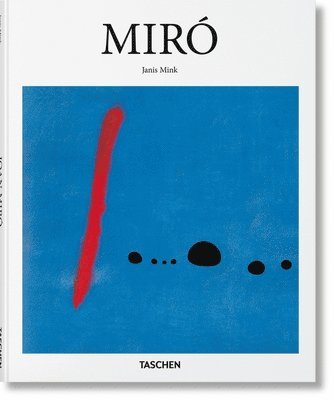
With a career spanning seven decades, Catalan-born Joan Miró (1893–1983) was a polymath giant of modern art, producing masterworks across painting, sculpture, art books, tapestry, and ceramics, and embracing ideologies as varied as Fauvism, Surrealism, Dada, Magic Realism, Cubism, and abstraction.Over the course of his prodigious output, Miró evolved constantly, seeking to eschew categorization and the approval of “bourgeois” art critics as much as he pursued his own dreamlike worlds. Emerging into the public spotlight in the early 1920s, he first experimented with Fauvism and Cubism before developing a distinctive style of symbols and pictograms, arranged in elusive visual narratives, with frequent reference to Catalan life. As his career progressed, Miró moved towards Surrealism, and, despite never fully identifying with the movement, emerged as one of its most celebrated practitioners with techniques including automated drawing, Lyrical Abstraction, and Color Field painting. In later years, he diversified his media further, working with ceramics, textiles, and even proposing sculptures made of gas.Through his vivid colors, dreamlike fantasies, and enigmatic symbols, this book brings together the numerous strands of Miró’s kaleidoscopic oeuvre to introduce his fascinating career, its interaction with major modernist movements, and how it made him into a modernist legend.
187 kr
Tillfälligt slut
With a career spanning seven decades, Catalan-born Joan Miró (1893–1983) was a polymath giant of modern art, producing masterworks across painting, sculpture, art books, tapestry, and ceramics, and embracing ideologies as varied as Fauvism, Surrealism, Dada, Magic Realism, Cubism, and abstraction.Over the course of his prodigious output, Miró evolved constantly, seeking to eschew categorization and the approval of “bourgeois” art critics as much as he pursued his own dreamlike worlds. Emerging into the public spotlight in the early 1920s, he first experimented with Fauvism and Cubism before developing a distinctive style of symbols and pictograms, arranged in elusive visual narratives, with frequent reference to Catalan life. As his career progressed, Miró moved towards Surrealism, and, despite never fully identifying with the movement, emerged as one of its most celebrated practitioners with techniques including automated drawing, Lyrical Abstraction, and Color Field painting. In later years, he diversified his media further, working with ceramics, textiles, and even proposing sculptures made of gas.Through his vivid colors, dreamlike fantasies, and enigmatic symbols, this book brings together the numerous strands of Miró’s kaleidoscopic oeuvre to introduce his fascinating career, its interaction with major modernist movements, and how it made him into a modernist legend.
186 kr
Skickas
With a career spanning seven decades, Catalan-born Joan Miró (1893–1983) was a polymath giant of modern art, producing masterworks across painting, sculpture, art books, tapestry, and ceramics, and embracing ideologies as varied as Fauvism, Surrealism, Dada, Magic Realism, Cubism, and abstraction.Over the course of his prodigious output, Miró evolved constantly, seeking to eschew categorization and the approval of “bourgeois” art critics as much as he pursued his own dreamlike worlds. Emerging into the public spotlight in the early 1920s, he first experimented with Fauvism and Cubism before developing a distinctive style of symbols and pictograms, arranged in elusive visual narratives, with frequent reference to Catalan life. As his career progressed, Miró moved towards Surrealism, and, despite never fully identifying with the movement, emerged as one of its most celebrated practitioners with techniques including automated drawing, Lyrical Abstraction, and Color Field painting. In later years, he diversified his media further, working with ceramics, textiles, and even proposing sculptures made of gas.Through his vivid colors, dreamlike fantasies, and enigmatic symbols, this book brings together the numerous strands of Miró’s kaleidoscopic oeuvre to introduce his fascinating career, its interaction with major modernist movements, and how it made him into a modernist legend.
179 kr
Skickas inom 3-6 vardagar
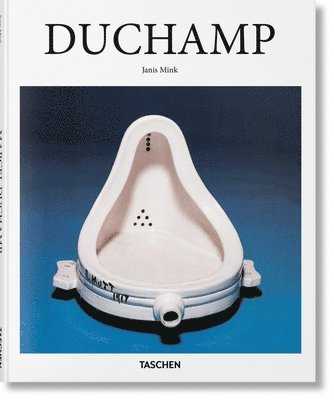
When is a urinal no longer a urinal? When Marcel Duchamp (1887–1968) declared it to be art. The uproar that greeted the French artist’s Fountain (1917), a porcelain urinal installed in a gallery, sent shock waves through the art world establishment that reverberate right through to today.This essential introduction distills all the daring and the scandal of Duchamp’s practice into one essential overview not only of a pioneering creative but also of a critical moment in Western culture. From his groundbreaking blend of abstraction, Cubism, and Futurism in Nude Descending a Staircase (1912) to his forays into the now-iconic “readymades” such as Bicycle Wheel (1913) and Bottle Rack (1914) we explore how Duchamp consistently challenged the notion of what art is and, in so doing, opened up a world of conceptual possibilities beyond the “retinal” experience.
181 kr
Skickas
Hilma af Klint painted as though she was channeling the universe. Fascinated from childhood by botany and mathematics, she began her career painting landscapes and portraits, but other preoccupations stirred within her: questions of spirit, unseen energies, patterns too vast for the eye alone.Her art was inseparable from her spiritual practice. With a circle of female artists called The Five, she held séances, heard voices from "High Masters," and was inspired by the Theosophical Society and Rudolf Steiner’s theories. Working tirelessly to map life’s hidden dimensions, she would paint to the point of physical collapse. By 1906, her canvases featured radiant geometries of spirals and orbs, impregnated with symbols, letters, and words, anticipating the later embrace of abstraction by Kandinsky, Malevich, Mondrian, and others. Her vast painted cycles—like her works for the Temple and The Ten Largest—often depicted dualities: inside and out, the earthly and the esoteric, man and woman, good and evil.Living as a vegetarian, questioning the fixity of gender, af Klint was clearly before her time, yet very much of it too, and pretty much uncelebrated in her day. Her prodigious output lay unseen for decades, locked away by her own instruction. Only in the 1980s did the world begin to recognize her as a true pioneer of abstract art.This book invites you into her visionary world, via a luminous selection of her works and a detailed essay distilling their complexity. Her once-secret universe is revealed to us anew.