Janna Coomans – författare
Visar alla böcker från författaren Janna Coomans. Handla med fri frakt och snabb leverans.
3 produkter
3 produkter
1 659 kr
Skickas inom 5-8 vardagar
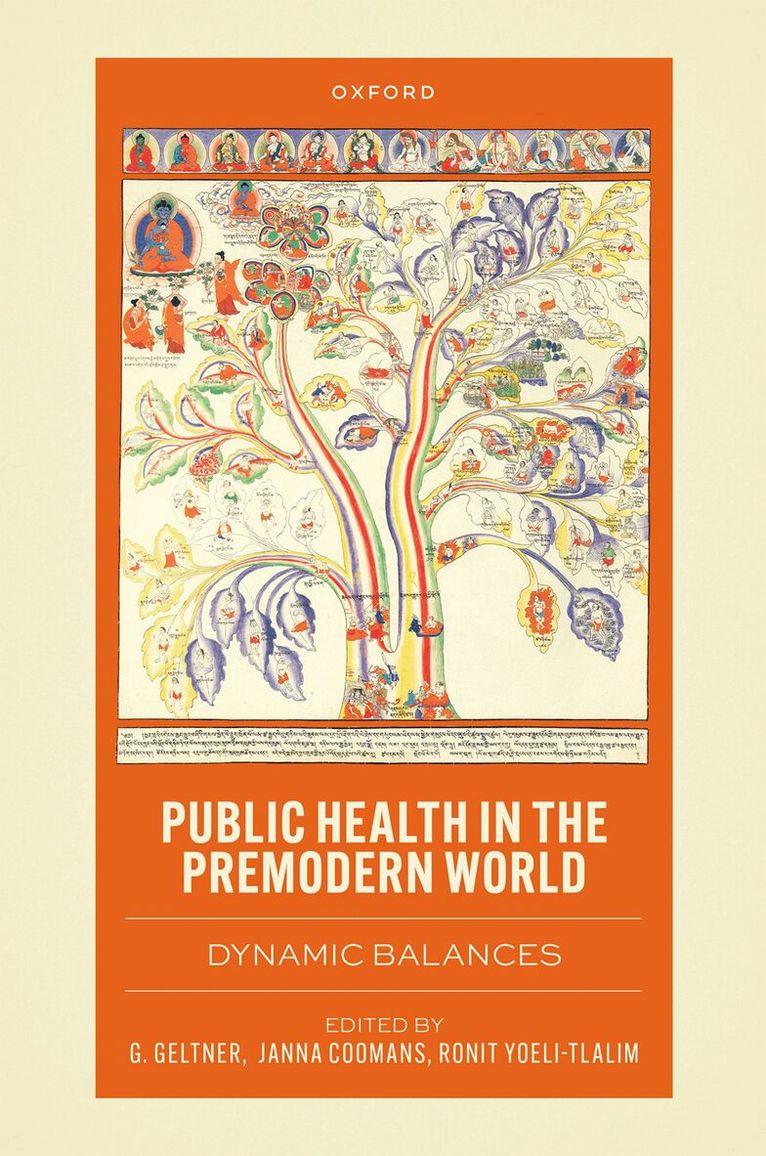
Chapters [6, 12, and 14] of this work are available under the terms of a [CC BY-NC-ND 4.0 International] open access licence. This part/these parts of the work is/are free to read on [the Oxford Academic platform] and offered as a free PDF download from OUP and selected open access locations.The public health movement is commonly (and incorrectly) characterized as a response to the ills of industrialization and modernization. Setting out to correct this misconception, this volume gathers sixteen studies on the deeper history and archaeology of public health from across the premodern globe. Each chapter vividly reconstructs preventative ideas and practices in a different region, critically engaging with the paradigm of 'healthscaping', or designing environments where health can bloom. Studies range from programs to fight fire in later medieval England and restrict the movements of poor migrants in the Low Countries, to invoking gendered spirits in central America, maintaining water infrastructures in Cairo, and creating visual prophylactics in Tibet. All of these programs had shortcomings and limitations, but tracing them collectively stresses two main points. First, there is a transregional justification for rejecting the concept of public health as a modern, industrial phenomenon embedded in Western biomedicine and beholden to centralised states and bureaucracies. Secondly, preventative biopolitics predate and transcend urban centers in Europe and can be documented for numerous civilizations in other world regions, as well as in the countryside, for both sedentary and mobile groups. The volume accordingly illustrates that public health has a far richer history than a recent set of ideas and practices developed in response to the Industrial Revolution of the eighteenth century, and that communities across the globe defined and pursued health in different ways, using the social, intellectual, legal, and physical tools at their disposal. This has important implications for all those interested in histories of health, medicine, and science in the medieval world, as well as for understandings of modern public health programs.
Del 119 - Cambridge Studies in Medieval Life and Thought: Fourth Series
Community, Urban Health and Environment in the Late Medieval Low Countries
Inbunden, Engelska, 2021
1 059 kr
Skickas inom 7-10 vardagar
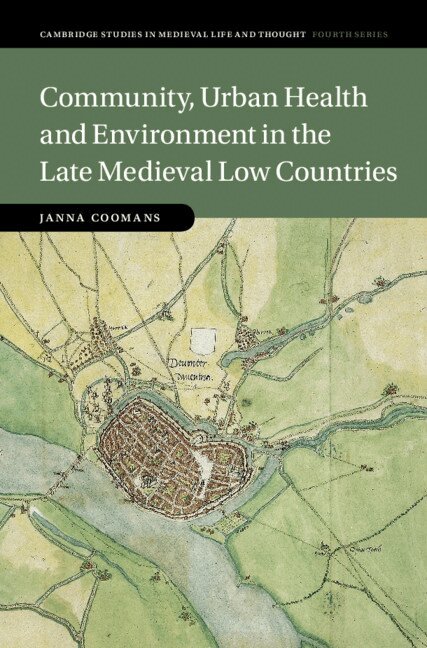
By exploring the uniquely dense urban network of the Low Countries, Janna Coomans debunks the myth of medieval cities as apathetic towards filth and disease. Based on new archival research and adopting a bio-political and spatial-material approach, Coomans traces how cities developed a broad range of practices to protect themselves and fight disease. Urban societies negotiated challenges to their collective health in the face of social, political and environmental change, transforming ideas on civic duties and the common good. Tasks were divided among different groups, including town governments, neighbours and guilds, and affected a wide range of areas, from water, fire and food, to pigs, prostitutes and plague. By studying these efforts in the round, Coomans offers new comparative insights and bolsters our understanding of the importance of population health and the physical world - infrastructures, flora and fauna - in governing medieval cities.
Del 119 - Cambridge Studies in Medieval Life and Thought: Fourth Series
Community, Urban Health and Environment in the Late Medieval Low Countries
Häftad, Engelska, 2023
331 kr
Skickas inom 7-10 vardagar
By exploring the uniquely dense urban network of the Low Countries, Janna Coomans debunks the myth of medieval cities as apathetic towards filth and disease. Based on new archival research and adopting a bio-political and spatial-material approach, Coomans traces how cities developed a broad range of practices to protect themselves and fight disease. Urban societies negotiated challenges to their collective health in the face of social, political and environmental change, transforming ideas on civic duties and the common good. Tasks were divided among different groups, including town governments, neighbours and guilds, and affected a wide range of areas, from water, fire and food, to pigs, prostitutes and plague. By studying these efforts in the round, Coomans offers new comparative insights and bolsters our understanding of the importance of population health and the physical world - infrastructures, flora and fauna - in governing medieval cities.