G. Geltner – författare
Visar alla böcker från författaren G. Geltner. Handla med fri frakt och snabb leverans.
8 produkter
8 produkter
1 659 kr
Skickas inom 5-8 vardagar
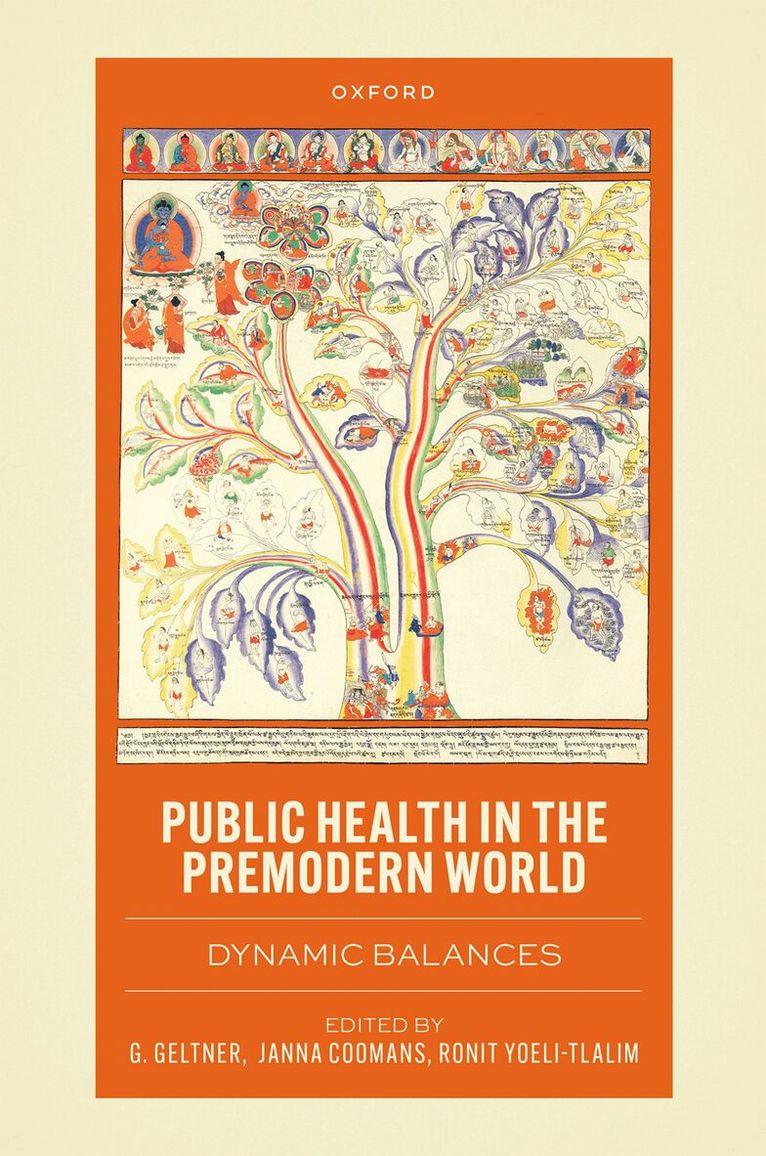
Chapters [6, 12, and 14] of this work are available under the terms of a [CC BY-NC-ND 4.0 International] open access licence. This part/these parts of the work is/are free to read on [the Oxford Academic platform] and offered as a free PDF download from OUP and selected open access locations.The public health movement is commonly (and incorrectly) characterized as a response to the ills of industrialization and modernization. Setting out to correct this misconception, this volume gathers sixteen studies on the deeper history and archaeology of public health from across the premodern globe. Each chapter vividly reconstructs preventative ideas and practices in a different region, critically engaging with the paradigm of 'healthscaping', or designing environments where health can bloom. Studies range from programs to fight fire in later medieval England and restrict the movements of poor migrants in the Low Countries, to invoking gendered spirits in central America, maintaining water infrastructures in Cairo, and creating visual prophylactics in Tibet. All of these programs had shortcomings and limitations, but tracing them collectively stresses two main points. First, there is a transregional justification for rejecting the concept of public health as a modern, industrial phenomenon embedded in Western biomedicine and beholden to centralised states and bureaucracies. Secondly, preventative biopolitics predate and transcend urban centers in Europe and can be documented for numerous civilizations in other world regions, as well as in the countryside, for both sedentary and mobile groups. The volume accordingly illustrates that public health has a far richer history than a recent set of ideas and practices developed in response to the Industrial Revolution of the eighteenth century, and that communities across the globe defined and pursued health in different ways, using the social, intellectual, legal, and physical tools at their disposal. This has important implications for all those interested in histories of health, medicine, and science in the medieval world, as well as for understandings of modern public health programs.
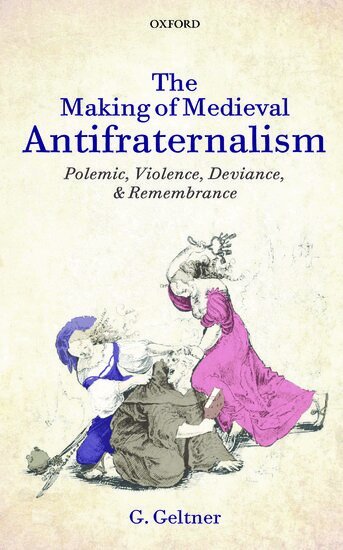
The Making of Medieval Antifraternalism
Polemic, Violence, Deviance, and Remembrance
Inbunden, Engelska, 2012
1 928 kr
Skickas inom 7-10 vardagar
The mendicant orders-Augustinians, Carmelites, Dominicans, Franciscans, and several other groups-spread across Europe apace from the early thirteenth century, profoundly influencing numerous aspect of medieval life. But alongside their tremendous success, their members (friars) also encountered derision, scorn, and even violence. Such opposition, generally known as antifraternalism, is often seen as an ecclesiastical in-house affair or an ideological response to the brethren's laxity: both cases registering a moral decline symptomatic of a decadent church. Challenging the accuracy of these views, Geltner contends that the phenomenon exhibits a breadth of scope that on the one hand pushes it far beyond its accustomed boundaries, and on the other supports only tenuous links with Reformation or modern forms of anticlericalism.Drawing from numerous sources, from theological treatises to poetry and criminal court records, Guy Geltner shows that people from all walks of life lambasted and occasionally assaulted the brethren, orchestrating detailed scenes of urban violence in the process. Their myriad motivations and diverse goals preclude us from associating antifraternalism with any one ideology or agenda, let alone allow us to brand many of its proponents as religious reformers. At the same time, he demonstrates the friars' active role in forging a medieval antifraternal tradition, not only by deviating from their founders' paths to varying degrees, but also by chronicling their suffering inter fideles and thus incorporating it into the orders' identity as the vanguard of Christianity. In doing so, Geltner illuminates a major chapter in Europe's social, urban, and religious history.
491 kr
Skickas inom 5-8 vardagar
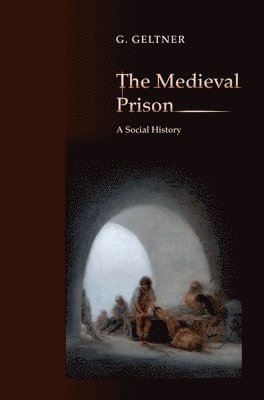
The modern prison is commonly thought to be the fruit of an Enlightenment penology that stressed man's ability to reform his soul. The Medieval Prison challenges this view by tracing the institution's emergence to a much earlier period beginning in the late thirteenth century, and in doing so provides a unique view of medieval prison life. G. Geltner carefully reconstructs life inside the walls of prisons in medieval Venice, Florence, Bologna, and elsewhere in Europe. He argues that many enduring features of the modern prison--including administration, finance, and the classification of inmates--were already developed by the end of the fourteenth century, and that incarceration as a formal punishment was far more widespread in this period than is often realized. Geltner likewise shows that inmates in medieval prisons, unlike their modern counterparts, enjoyed frequent contact with society at large. The prison typically stood in the heart of the medieval city, and inmates were not locked away but, rather, subjected to a more coercive version of ordinary life.Geltner explores every facet of this remarkable prison experience--from the terror of an inmate's arrest to the moment of his release, escape, or death--and the ways it was viewed by contemporary observers. The Medieval Prison rewrites penal history and reveals that medieval society did not have a "persecuting mentality" but in fact was more nuanced in defining and dealing with its marginal elements than is commonly recognized.
266 kr
Skickas inom 5-8 vardagar
The modern prison is commonly thought to be the fruit of an Enlightenment penology that stressed man's ability to reform his soul. The Medieval Prison challenges this view by tracing the institution's emergence to a much earlier period beginning in the late thirteenth century, and in doing so provides a unique view of medieval prison life. G. Geltner carefully reconstructs life inside the walls of prisons in medieval Venice, Florence, Bologna, and elsewhere in Europe. He argues that many enduring features of the modern prison--including administration, finance, and the classification of inmates--were already developed by the end of the fourteenth century, and that incarceration as a formal punishment was far more widespread in this period than is often realized. Geltner likewise shows that inmates in medieval prisons, unlike their modern counterparts, enjoyed frequent contact with society at large. The prison typically stood in the heart of the medieval city, and inmates were not locked away but, rather, subjected to a more coercive version of ordinary life.Geltner explores every facet of this remarkable prison experience--from the terror of an inmate's arrest to the moment of his release, escape, or death--and the ways it was viewed by contemporary observers. The Medieval Prison rewrites penal history and reveals that medieval society did not have a "persecuting mentality" but in fact was more nuanced in defining and dealing with its marginal elements than is commonly recognized.
788 kr
Skickas inom 10-15 vardagar
In Roads to Health, G. Geltner demonstrates that urban dwellers in medieval Italy had a keen sense of the dangers to their health posed by conditions of overcrowding, shortages of food and clean water, air pollution, and the improper disposal of human and animal waste. He consults scientific, narrative, and normative sources that detailed and consistently denounced the physical and environmental hazards urban communities faced: latrines improperly installed and sewers blocked; animals left to roam free and carcasses left rotting on public byways; and thoroughfares congested by artisanal and commercial activities that impeded circulation, polluted waterways, and raised miasmas. However, as Geltner shows, numerous administrative records also offer ample evidence of the concrete measures cities took to ameliorate unhealthy conditions. Toiling on the frontlines were public functionaries generally known as viarii, or "road-masters," appointed to maintain their community's infrastructures and police pertinent human and animal behavior. Operating on a parallel track were the camparii, or "field-masters," charged with protecting the city's hinterlands and thereby the quality of what would reach urban markets, taverns, ovens, and mills.Roads to Health provides a critical overview of the mandates and activities of the viarii and camparii as enforcers of preventive health and safety policies between roughly 1250 and 1500, and offers three extended case studies, for Lucca, Bologna, and the smaller Piedmont town of Pinerolo. In telling their stories, Geltner contends that preventive health practices, while scientifically informed, emerged neither solely from a centralized regime nor as a reaction to the onset of the Black Death. Instead, they were typically negotiated by diverse stakeholders, including neighborhood residents, officials, artisans, and clergymen, and fostered throughout the centuries by a steady concern for people's greater health.
840 kr
Kommande
Del 6 - Medieval Franciscans
Defenders and Critics of Franciscan Life
Essays in Honor of John V. Fleming
Inbunden, Engelska, 2009
2 707 kr
Skickas inom 3-6 vardagar
The essays in this volume were presented at a conference honoring John V. Fleming at Princeton University on April 21-22, 2004. The aim of the conference was to revisit Fleming's 1977 book, An Introduction to the Franciscan Literature of the Middle Ages, from a number of different perspectives, including social, religious and literary history, as well as art, exegesis, political thought and the history of education. A prominent, but not exclusive, theme of the contributions is the distinction between "defenders" and "critics" of medieval Franciscanism. Recent scholarship has shown that the dividing line between medieval defenders and critics of Franciscan life was not as sharp or as clear as had once been thought. This, more nuanced approach to medieval Franciscanism is a reflection of the many scholarly developments that have occurred since - and as a result of - Fleming's volume. The present work offers a selection of current approaches to the question.
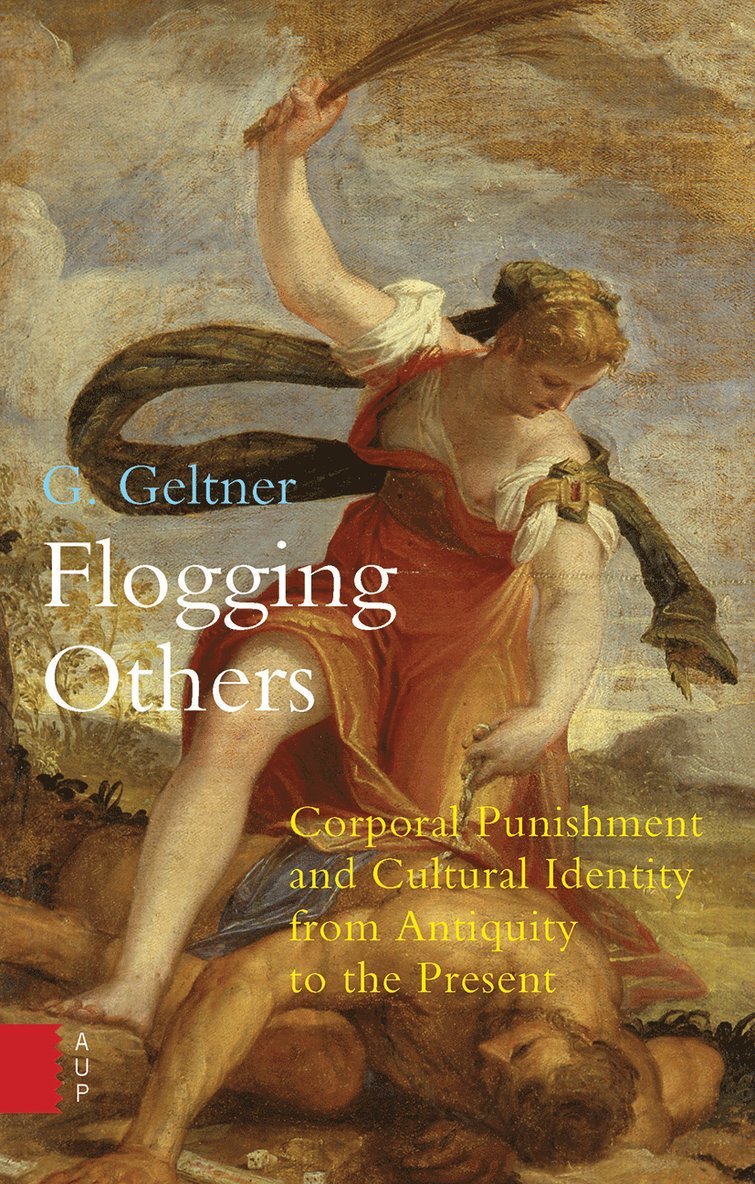
Flogging Others
Corporal Punishment and Cultural Identity from Antiquity to the Present
Häftad, Engelska, 2014
364 kr
Skickas inom 10-15 vardagar
Corporal punishment is often seen as a litmus test for a society's degree of civilization. Its licit use purports to separate modernity from premodernity, enlightened from barbaric cultures. As Geltner argues, however, neither did the infliction of bodily pain typify earlier societies nor did it vanish from penal theory, policy, or practice. Far from displaying a steady decline that accelerated with the Enlightenment, physical punishment was contested throughout Antiquity and the Middle Ages, its application expanding and contracting under diverse pressures. Moreover, despite the integration of penal incarceration into criminal justice systems since the nineteenth century, modern nation states and colonial regimes increased rather than limited the use of corporal punishment. Flogging Others thus challenges a common understanding of modernization and Western identity and underscores earlier civilizations' nuanced approaches to punishment, deviance, and the human body. Today as in the past, corporal punishment thrives due to its capacity to define otherness efficiently and unambiguously, either as a measure acting upon a deviant's body or as a practice that epitomizes - in the eyes of external observers - a culture's backwardness.