Janne Nijman - Böcker
Visar alla böcker från författaren Janne Nijman. Handla med fri frakt och snabb leverans.
3 produkter
3 produkter
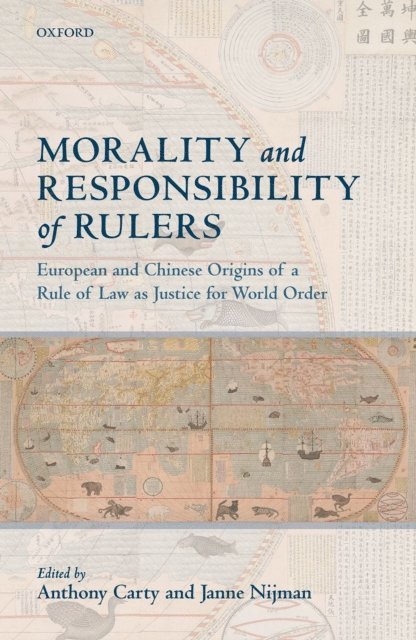
Morality and Responsibility of Rulers
European and Chinese Origins of a Rule of Law as Justice for World Order
Inbunden, Engelska, 2018
1 534 kr
Skickas inom 7-10 vardagar
The history of ideas on rule of law for world order is a fascinating one, as revealed in this comparative study of both Eastern and Western traditions. This book discerns 'rule of law as justice' conceptions alternative to the positivist conceptions of the liberal internationalist rule of law today. The volume begins by revisiting early-modern European roots of rule of law for world order thinking. In doing so it looks to Northern Humanism and to natural law, in the sense of justice as morally and reasonably ordered self-discipline. Such a standard is not an instrument of external monitoring but of self-reflection and self-cultivation. It then considers whether comparable concepts exist in Chinese thought. Inspired by Confucius and even Laozi, the Chinese official and intellectual elite readily imagined that international law was governed by moral principles similar to their own. A series of case studies then reveals the dramatic change after the East-West encounters from the 1860s until after 1901, as Chinese disillusionment with the Hobbesian positivism of Western international law becomes ever more apparent.What, therefore, are the possibilities of traditional Chinese and European ethical thinking in the context of current world affairs? Considering the obstacles which stand in the way of this, both East and West, this book reaches the conclusion that everything is possible even in a world dominated by state bureaucracies and late capitalist postmodernism. The rational, ethical spirit is universal.
1 900 kr
Skickas inom 10-15 vardagar
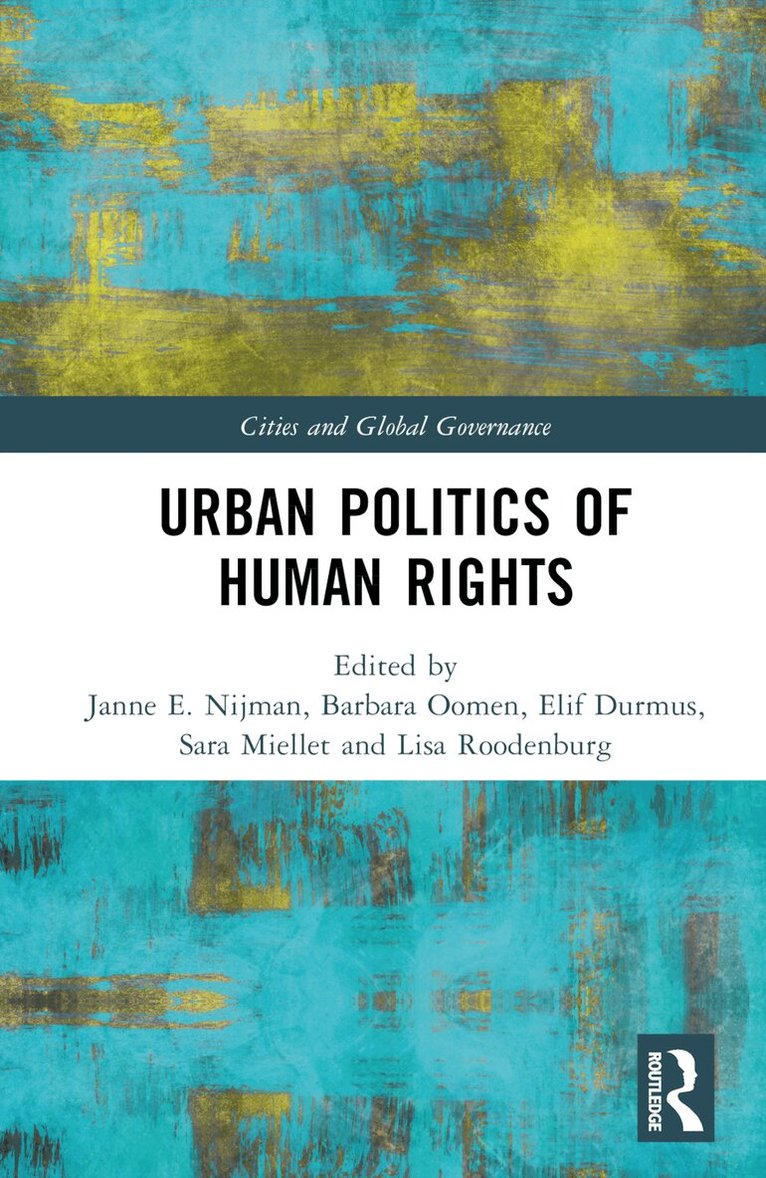
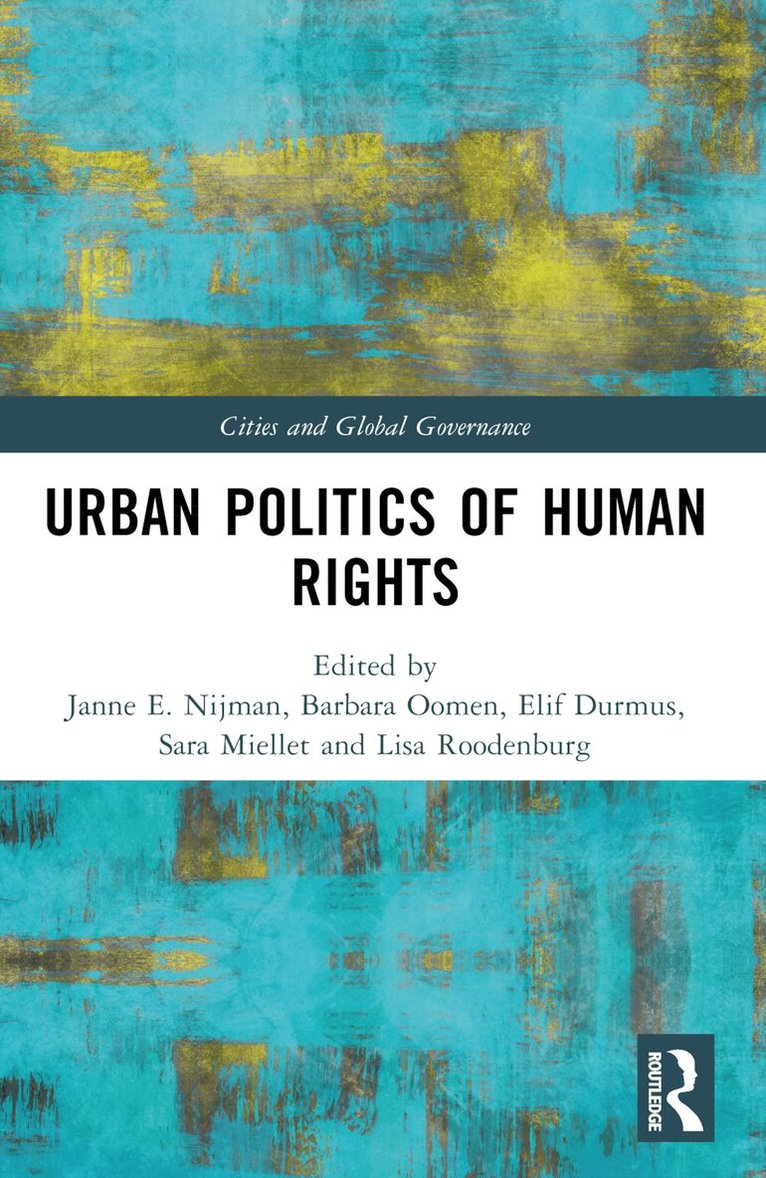
Increasingly, urban actors invoke human rights to address inequalities, combat privatisation, and underline common aspirations, or to protect vested (private) interests. The potential and the pitfalls of these processes are conditioned by the urban, and deeply political. These urban politics of human rights are at the heart of this book. An international line-up of contributors with long-term engagement in this field shed light on these politics in cities on four continents and eight cities, presenting a wealth of empirical detail and disciplinary theoreticalisation perspectives. They analyse the ‘city society’, the urban actors involved, and the mechanisms of human rights mobilisation. In doing so, they show the commonalities in rights engagement in today’s globalised and often deeply unequal cities characterised by urban law, private capital but also communities that rally around concepts as the ‘right to the city’. Most importantly, the chapters highlight the conditions under which this mobilisation truly contributes to social justice, be it concerning the simple right to presence, cultural rights, accessible housing or – in times of COVID – health care. Urban Politics of Human Rights provides indispensable reading for anyone with a practical or theoretical interest in the complex, deeply political, and at times also truly promising interrelationship between human rights and the urban. Creative Commons Attribution-Non Commercial-No Derivatives 4.0 license.
575 kr
Skickas inom 10-15 vardagar
Increasingly, urban actors invoke human rights to address inequalities, combat privatisation, and underline common aspirations, or to protect vested (private) interests. The potential and the pitfalls of these processes are conditioned by the urban, and deeply political. These urban politics of human rights are at the heart of this book. An international line-up of contributors with long-term engagement in this field shed light on these politics in cities on four continents and eight cities, presenting a wealth of empirical detail and disciplinary theoreticalisation perspectives. They analyse the ‘city society’, the urban actors involved, and the mechanisms of human rights mobilisation. In doing so, they show the commonalities in rights engagement in today’s globalised and often deeply unequal cities characterised by urban law, private capital but also communities that rally around concepts as the ‘right to the city’. Most importantly, the chapters highlight the conditions under which this mobilisation truly contributes to social justice, be it concerning the simple right to presence, cultural rights, accessible housing or – in times of COVID – health care. Urban Politics of Human Rights provides indispensable reading for anyone with a practical or theoretical interest in the complex, deeply political, and at times also truly promising interrelationship between human rights and the urban. Creative Commons Attribution-Non Commercial-No Derivatives 4.0 license.