Janny Venema - Böcker
Visar alla böcker från författaren Janny Venema. Handla med fri frakt och snabb leverans.
6 produkter
6 produkter
1 088 kr
Tillfälligt slut
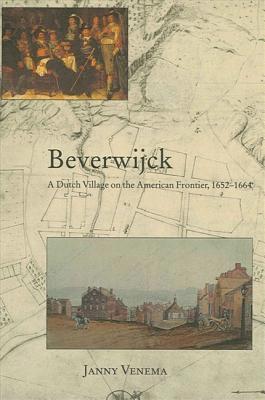
Paints a detailed picture of everyday life in an early American community.Winner of the 2004 Annual Archives Award for Excellence in Research Using the Holdings of the New York State Archives presented by the Board of Regents and the New State York Archives Beverwijck explores the rich history and Dutch heritage of one of North America's oldest cities-Albany, New York. Drawing on documents translated from the colonial Dutch as well as maps, architectural drawings, and English-language sources, Janny Venema paints a lively picture of everyday life in colonial America.In 1652, Petrus Stuyvesant, director general of New Netherland, established a court at Fort Orange, on the west side of New York State's upper Hudson River. The area within three thousand feet of the fort became the village of Beverwijck. From the time of its establishment until 1664, when the English conquered New Netherland and changed the name of the settlement to Albany, Beverwijck underwent rapid development as newly wealthy traders, craftsmen, and other workers built houses, roads, bridges, and a school, as well as a number of inns. A well-organized system of poor relief also helped less wealthy settlers survive in the harsh colonial conditions. Venema's careful research shows that although Beverwijck resembled villages in the Dutch Republic in many ways, it quickly took on features of the new, "American" society that was already coming into being.
387 kr
Tillfälligt slut
Paints a detailed picture of everyday life in an early American community.Winner of the 2004 Annual Archives Award for Excellence in Research Using the Holdings of the New York State Archives presented by the Board of Regents and the New State York Archives Beverwijck explores the rich history and Dutch heritage of one of North America's oldest cities-Albany, New York. Drawing on documents translated from the colonial Dutch as well as maps, architectural drawings, and English-language sources, Janny Venema paints a lively picture of everyday life in colonial America.In 1652, Petrus Stuyvesant, director general of New Netherland, established a court at Fort Orange, on the west side of New York State's upper Hudson River. The area within three thousand feet of the fort became the village of Beverwijck. From the time of its establishment until 1664, when the English conquered New Netherland and changed the name of the settlement to Albany, Beverwijck underwent rapid development as newly wealthy traders, craftsmen, and other workers built houses, roads, bridges, and a school, as well as a number of inns. A well-organized system of poor relief also helped less wealthy settlers survive in the harsh colonial conditions. Venema's careful research shows that although Beverwijck resembled villages in the Dutch Republic in many ways, it quickly took on features of the new, "American" society that was already coming into being.
1 010 kr
Skickas inom 7-10 vardagar
The records from 1654 to 1679 aretranslated from the original Dutch.This is part of our New NetherlandDocuments Series.
1 629 kr
Skickas inom 7-10 vardagar
The latest contribution to the New Netherland Documents series, this volume provides a translation from the Dutch of the proceedings of New Netherland’s council meetings from 1656 to 1658. Included among the minutes is the 1657 Flushing Remonstrance, a protest for religious tolerance, which will be placed in its historical context for the first time. In addition, this volume contains a glossary of terms, a key to abbreviations, a detailed introduction, and an appendix containing information about weights and measures. An invaluable resource for scholars interested in early American history, this series presents the world’s largest collection of original documentation of the Dutch West India Company and its New World colonies.
1 066 kr
Skickas inom 7-10 vardagar
Volume XIII of the New Netherland Documents series includes the surviving correspondence of New Netherland’s director general Petrus Stuyvesant and council from 1659 to 1660. These records reveal the broad range of issues with which the director general and his administration had to deal, including illegal trade, relations with Native Americans, appointments of ministers and other officials in various places in New Netherland, the discovery of copper and minerals, agriculture, and the critical situation in the city of Amsterdam’s colony of New Amstel on the South River. Stuyvesant and council were expected to follow policies stipulated by the directors of the West India Company in Amsterdam, whose insights and motivations greatly depended on the situation in Europe and the financial situation of the company. This firsthand account shows the often competing visions of the Company directors and that of Stuyvesant and council, giving scholars valuable access to the issues that faced the New World colonies.
406 kr
Tillfälligt slut
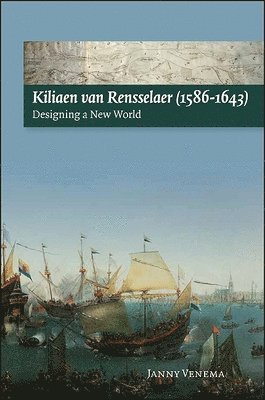
A biography of Kiliaen van Rensselaer, one of the founding directors of the Dutch West India Company and a leading figure in the establishment of the New Netherland colonyWinner of the 2011 Annual Hendricks Award presented by the New Netherland Institute During the early 1600s, as the Republic of the Seven United Netherlands was locked in a war with Spain that would last for eighty years, thousands of immigrants came to Amsterdam and greatly influenced the development of the Republic. Among them was Kiliaen van Rensselaer, a young man from a small eastern town on the war front. Young Kiliaen quickly became part of the culture of this rapidly developing city, where he was trained as a jeweler and merchant by wealthy relatives. He would work within this family network for the rest of his life, to great success. As one of the founding directors of the Dutch West India Company, he was instrumental in the establishment of the New Netherland colony on the East Coast of North America, becoming one of its first patroons. Although he never actually set foot in the New World, his patroonship, Rensselaerswyck, encompassed much of what is now New York State's Capital District and survived as a legal entity up until the 1840s. In this engrossing biography, Janny Venema examines the time in which Kiliaen van Rensselaer lived, his surroundings, the rapidly expanding city of Amsterdam, the great trading companies, the jewelry business, and the people in his network. Along the way, she explores his motivations and the powerful role he played in helping to establish a Dutch presence in the New World.