Jaqueline Berndt - Böcker
Visar alla böcker från författaren Jaqueline Berndt. Handla med fri frakt och snabb leverans.
5 produkter
5 produkter
2 728 kr
Skickas inom 10-15 vardagar
Focusing on the art and literary form of manga, this volume examines the intercultural exchanges that have shaped manga during the twentieth century and how manga’s culturalization is related to its globalization. Through contributions from leading scholars in the fields of comics and Japanese culture, it describes "manga culture" in two ways: as a fundamentally hybrid culture comprised of both subcultures and transcultures, and as an aesthetic culture which has eluded modernist notions of art, originality, and authorship. The latter is demonstrated in a special focus on the best-selling manga franchise, NARUTO.
325 kr
Skickas inom 7-10 vardagar
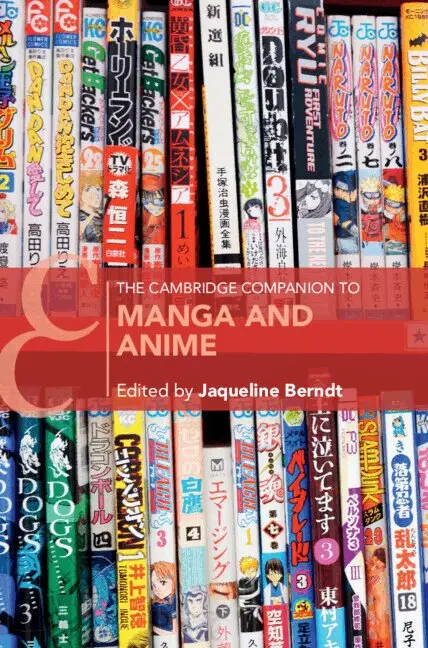
In recent years, manga and anime have attracted increasing scholarly interest beyond the realm of Japanese studies. This Companion takes a unique approach, committed to exploring both the similarities and differences between these two distinct but interrelated media forms. Firmly based in Japanese sources, this volume offers a lively and accessible introduction, exploring the local contexts of manga and anime production, distribution, and reception in Japan, as well as the global influence and impact of these versatile media. Chapters explore common characteristics such as visuals, voice, serial narrative and characters, whilst also highlighting distinct challenges and histories. The volume provides both a basis for further research in this burgeoning field and a source of inspiration for those new to the topic.
694 kr
Skickas inom 10-15 vardagar
Focusing on the art and literary form of manga, this volume examines the intercultural exchanges that have shaped manga during the twentieth century and how manga’s culturalization is related to its globalization. Through contributions from leading scholars in the fields of comics and Japanese culture, it describes "manga culture" in two ways: as a fundamentally hybrid culture comprised of both subcultures and transcultures, and as an aesthetic culture which has eluded modernist notions of art, originality, and authorship. The latter is demonstrated in a special focus on the best-selling manga franchise, NARUTO.
1 089 kr
Skickas inom 7-10 vardagar
In recent years, manga and anime have attracted increasing scholarly interest beyond the realm of Japanese studies. This Companion takes a unique approach, committed to exploring both the similarities and differences between these two distinct but interrelated media forms. Firmly based in Japanese sources, this volume offers a lively and accessible introduction, exploring the local contexts of manga and anime production, distribution, and reception in Japan, as well as the global influence and impact of these versatile media. Chapters explore common characteristics such as visuals, voice, serial narrative and characters, whilst also highlighting distinct challenges and histories. The volume provides both a basis for further research in this burgeoning field and a source of inspiration for those new to the topic.
1 516 kr
Skickas inom 10-15 vardagar
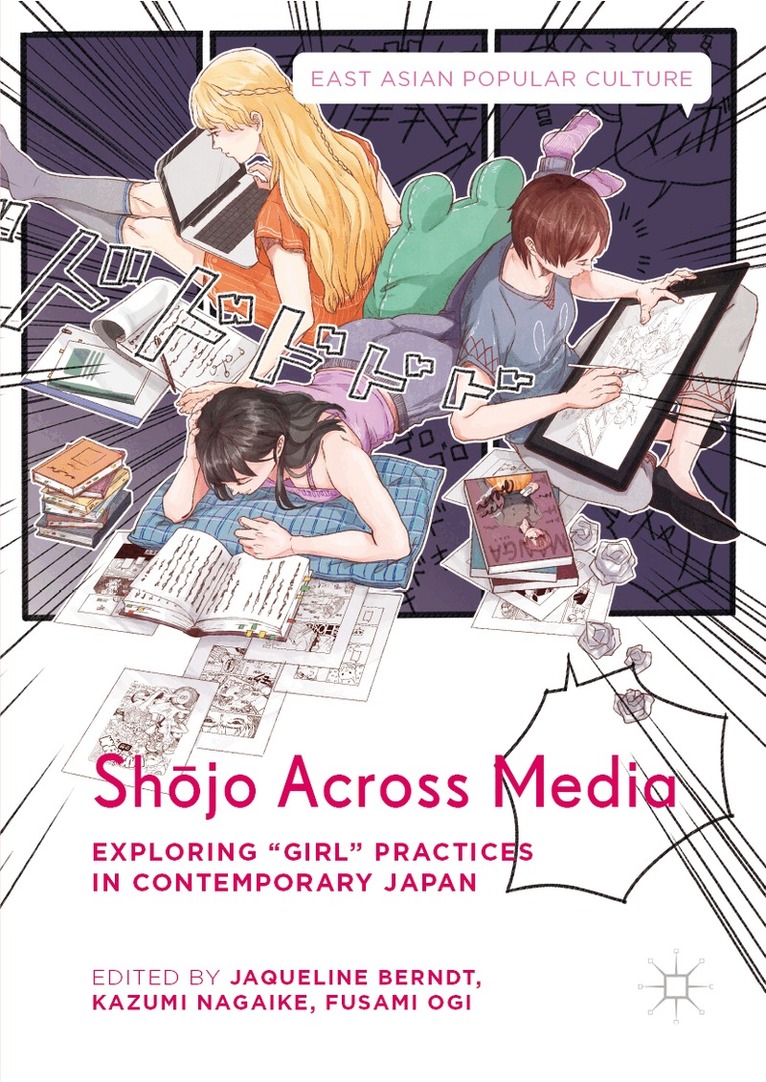
Since the 2000s, the Japanese word shōjo has gained global currency, accompanying the transcultural spread of other popular Japanese media such as manga and anime. The term refers to both a character type specifically, as well as commercial genres marketed to female audiences more generally. Through its diverse chapters this edited collection introduces the two main currents of shōjo research: on the one hand, historical investigations of Japan’s modern girl culture and its representations, informed by Japanese-studies and gender-studies concerns; on the other hand, explorations of the transcultural performativity of shōjo as a crafted concept and affect-prone code, shaped by media studies, genre theory, and fan-culture research. While acknowledging that shōjo has mediated multiple discourses throughout the twentieth century—discourses on Japan and its modernity, consumption and consumerism, non-hegemonic gender, and also technology—this volume shifts the focus to shōjo mediations, stretching from media by and for actual girls, to shōjo as media. As a result, the Japan-derived concept, while still situated, begins to offer possibilities for broader conceptualizations of girlness within the contemporary global digital mediascape.