Kazumi Nagaike - Böcker
Visar alla böcker från författaren Kazumi Nagaike. Handla med fri frakt och snabb leverans.
7 produkter
7 produkter
1 010 kr
Skickas
The boys love (BL) genre was created for girls and women by young female manga (comic) artists in early 1970s Japan to challenge oppressive gender and sexual norms. Over the years, BL has seen almost irrepressible growth in popularity and since the 2000s has become a global media phenomenon, weaving its way into anime, prose fiction, live-action dramas, video games, audio dramas, and fan works. BL's male-male romantic and sexual relationships have found a particularly receptive home in other parts of Asia, where strong local fan communities and locally produced BL works have garnered a following throughout the region, taking on new meanings and engendering widespread cultural effects.Queer Transfigurations is the first detailed examination of the BL media explosion across Asia. The book brings together twenty-one scholars exploring BL media, its fans, and its sociocultural impacts in a dozen countries in East, Southeast, and South Asia--and beyond. Contributors draw on their expertise in an array of disciplines and fields, including anthropology, fan studies, gender and sexuality studies, history, literature, media studies, political science, and sociology to shed light on BL media and its fandoms.Queer Transfigurations reveals the far-reaching influences of the BL genre, demonstrating that it is truly transnational and transcultural in diverse cultural contexts. It has also helped bring about positive changes in the status of LGBT(Q) people and communities as well as enlighten local understandings of gender and sexuality throughout Asia.In short, Queer Transfigurations shows that, some fifty years after the first BL manga appeared in print, the genre is continuing to reverberate and transform lives.
282 kr
Skickas inom 7-10 vardagar
The boys love (BL) genre was created for girls and women by young female manga (comic) artists in early 1970s Japan to challenge oppressive gender and sexual norms. Over the years, BL has seen almost irrepressible growth in popularity and since the 2000s has become a global media phenomenon, weaving its way into anime, prose fiction, live-action dramas, video games, audio dramas, and fan works. BL’s male–male romantic and sexual relationships have found a particularly receptive home in other parts of Asia, where strong local fan communities and locally produced BL works have garnered a following throughout the region, taking on new meanings and engendering widespread cultural effects.Queer Transfigurations is the first detailed examination of the BL media explosion across Asia. The book brings together twenty-one scholars exploring BL media, its fans, and its sociocultural impacts in a dozen countries in East, Southeast, and South Asia—and beyond. Contributors draw on their expertise in an array of disciplines and fields, including anthropology, fan studies, gender and sexuality studies, history, literature, media studies, political science, and sociology to shed light on BL media and its fandoms.Queer Transfigurations reveals the far-reaching influences of the BL genre, demonstrating that it is truly transnational and transcultural in diverse cultural contexts. It has also helped bring about positive changes in the status of LGBT(Q) people and communities as well as enlighten local understandings of gender and sexuality throughout Asia. In short, Queer Transfigurations shows that, some fifty years after the first BL manga appeared in print, the genre is continuing to reverberate and transform lives.
361 kr
Skickas inom 7-10 vardagar
Boys Love Manga and Beyond looks at a range of literary, artistic and other cultural products that celebrate the beauty of adolescent boys and young men. In Japan, depiction of the ""beautiful boy"" has long been a romantic and sexualized trope for both sexes and commands a high degree of cultural visibility today across a range of genres from pop music to animation.In recent decades, ""Boys Love"" (or simply BL) has emerged as a mainstream genre in manga, anime, and games for girls and young women. This genre was first developed in Japan in the early 1970s by a group of female artists who went on to establish themselves as major figures in Japan's manga industry. By the late 1970s many amateur women fans were getting involved in the BL phenomenon by creating and self-publishing homoerotic parodies of established male manga characters and popular media figures. The popularity of these fan-made products, sold and circulated at huge conventions, has led to an increase in the number of commercial titles available. Today, a wide range of products produced both by professionals and amateurs are brought together under the general rubric of ""boys love,"" and are rapidly gaining an audience throughout Asia and globally.This collection provides the first comprehensive overview in English of the BL phenomenon in Japan, its history and various subgenres and introduces translations of some key Japanese scholarship not otherwise available. Some chapters detail the historical and cultural contexts that helped BL emerge as a significant part of girls' culture in Japan. Others offer important case studies of BL production, consumption, and circulation and explain why BL has become a controversial topic in contemporary Japan.
1 162 kr
Skickas inom 7-10 vardagar
Boys Love Manga and Beyond looks at a range of literary, artistic and other cultural products that celebrate the beauty of adolescent boys and young men. In Japan, depiction of the ""beautiful boy"" has long been a romantic and sexualized trope for both sexes and commands a high degree of cultural visibility today across a range of genres from pop music to animation.In recent decades, ""Boys Love"" (or simply BL) has emerged as a mainstream genre in manga, anime, and games for girls and young women. This genre was first developed in Japan in the early 1970s by a group of female artists who went on to establish themselves as major figures in Japan's manga industry. By the late 1970s many amateur women fans were getting involved in the BL phenomenon by creating and self-publishing homoerotic parodies of established male manga characters and popular media figures. The popularity of these fan-made products, sold and circulated at huge conventions, has led to an increase in the number of commercial titles available. Today, a wide range of products produced both by professionals and amateurs are brought together under the general rubric of ""boys love,"" and are rapidly gaining an audience throughout Asia and globally.This collection provides the first comprehensive overview in English of the BL phenomenon in Japan, its history and various subgenres and introduces translations of some key Japanese scholarship not otherwise available. Some chapters detail the historical and cultural contexts that helped BL emerge as a significant part of girls' culture in Japan. Others offer important case studies of BL production, consumption, and circulation and explain why BL has become a controversial topic in contemporary Japan.
1 531 kr
Skickas inom 10-15 vardagar
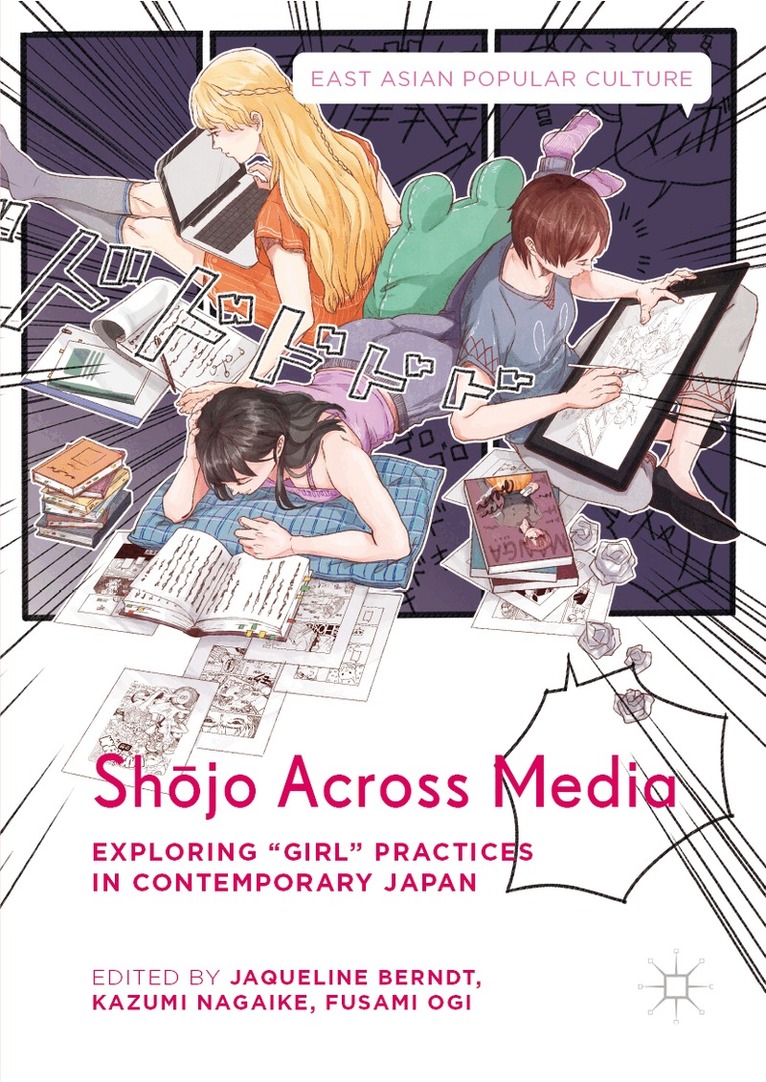
Since the 2000s, the Japanese word shōjo has gained global currency, accompanying the transcultural spread of other popular Japanese media such as manga and anime. The term refers to both a character type specifically, as well as commercial genres marketed to female audiences more generally. Through its diverse chapters this edited collection introduces the two main currents of shōjo research: on the one hand, historical investigations of Japan’s modern girl culture and its representations, informed by Japanese-studies and gender-studies concerns; on the other hand, explorations of the transcultural performativity of shōjo as a crafted concept and affect-prone code, shaped by media studies, genre theory, and fan-culture research. While acknowledging that shōjo has mediated multiple discourses throughout the twentieth century—discourses on Japan and its modernity, consumption and consumerism, non-hegemonic gender, and also technology—this volume shifts the focus to shōjo mediations, stretching from media by and for actual girls, to shōjo as media. As a result, the Japan-derived concept, while still situated, begins to offer possibilities for broader conceptualizations of girlness within the contemporary global digital mediascape.
1 744 kr
Skickas inom 10-15 vardagar
Women’s Manga in Asia and Beyond offers a variety of perspectives on women’s manga and the nature, scope, and significance of the relationship between women and comics/manga, both globally as well as locally.
739 kr
Kommande