Jarmo J. Levonen - Böcker
Visar alla böcker från författaren Jarmo J. Levonen. Handla med fri frakt och snabb leverans.
3 produkter
3 produkter
Del 7 - Advances in Learning and Instruction Series
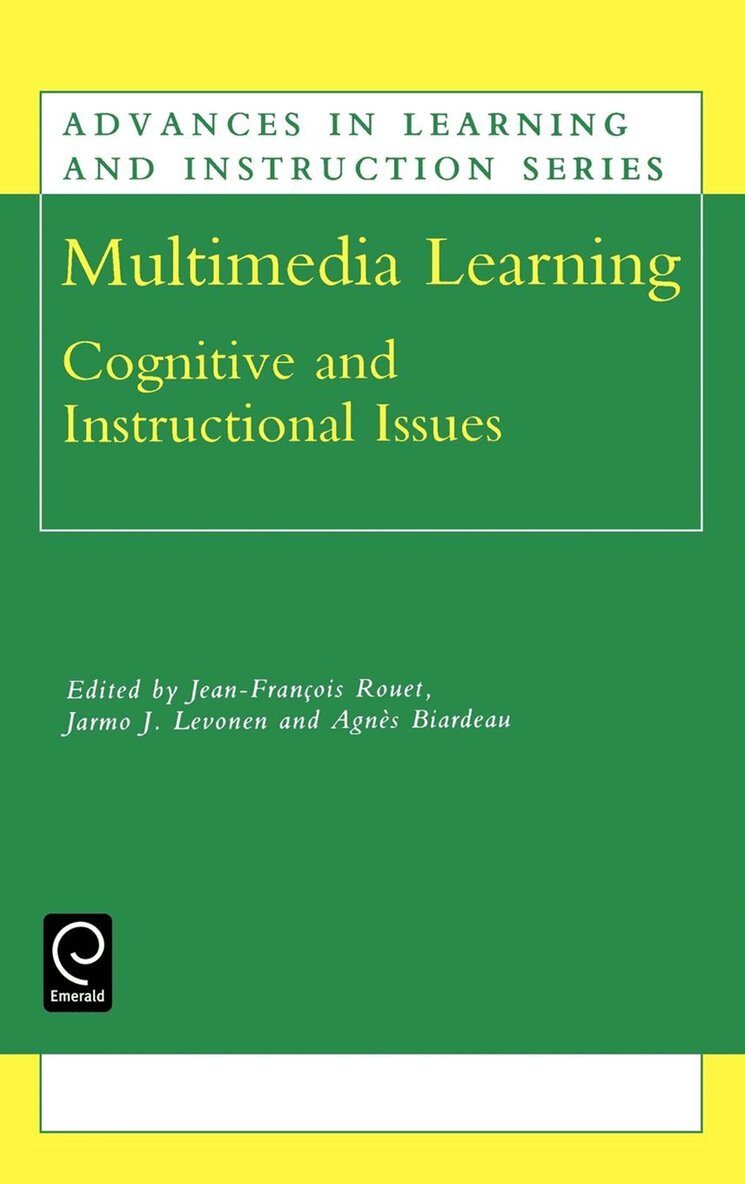
Multimedia Learning
Cognitive and Instructional Issues
Inbunden, Engelska, 2000
1 758 kr
Skickas inom 5-8 vardagar
With the increased dissemination of information technologies in education, the issue of how learners deal with multimedia information systems has become critical. New research questions have emerged such as: How well do people learn from multimedia documents? How do they achieve integration between text and any other media? How can you make computerised information systems fit user information processing strategies and styles? And what is the potential of hypermedia applications for education, training and work? This volume is based on a selection of papers presented at the first International Seminar on Using Complex Information Systems held in Poitiers, France. The volume presents a comprehensive overview of research issues related to multimedia usage considered from cognitive and instructive perspectives. It relates theories of mental representations, information processing and learning to issues of design and use of multimedia technologies.
1 964 kr
Skickas inom 10-15 vardagar
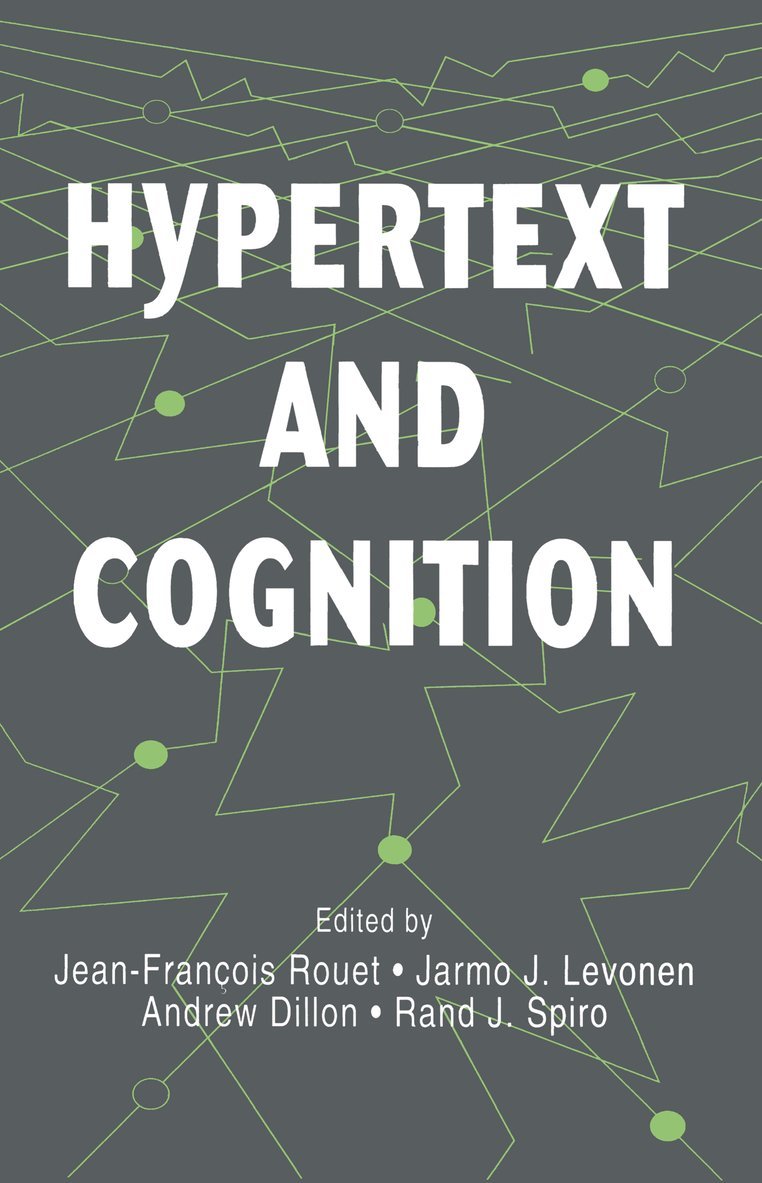
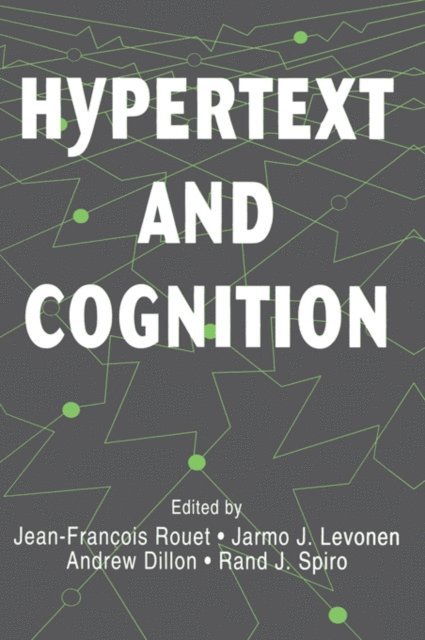
The recent evolution of western societies has been characterized by an increasing emphasis on information and communication. As the amount of available information increases, however, the user -- worker, student, citizen -- faces a new problem: selecting and accessing relevant information. More than ever it is crucial to find efficient ways for users to interact with information systems in a way that prevents them from being overwhelmed or simply missing their targets. As a result, hypertext systems have been developed as a means of facilitating the interactions between readers and text. In hypertext, information is organized as a network in which nodes are text chunks (e.g., lists of items, paragraphs, pages) and links are relationships between the nodes (e.g., semantic associations, expansions, definitions, examples -- virtually any kind of relation that can be imagined between two text passages). Unfortunately, the many ways in which these hypertext interfaces can be designed has caused a complexity that extends far beyond the processing abilities of regular users. Therefore, it has become widely recognized that a more rational approach based on a thorough analysis of information users' needs, capacities, capabilities, and skills is needed. This volume seeks to meet that need.From a user-centered perspective -- between systems and users -- this volume presents theoretical and empirical research on the cognitive processes involved in using hypertext. In so doing, it illustrates three main approaches to the design of hypertext systems: *cognitive, which examines how users process multilayered hypertext structures; *ergonomical, which explores how users interact with the design characteristics of hardware and software; and *educational, which studies the learning objectives, frequency and duration of hypertext sessions, type of reading activity, and the user's learning characteristics. This volume also tries to provide answers for the questions that have plagued hypertext research:*What is hypertext good for? *Who is hypertext good for? *If it is useful for learning and instruction, then what type? *What particular cognitive skills are needed to interact successfully with a hypertext system? Anyone interested in the fields of computer science, linguistics, psychology, education, and graphic design will find this volume intriguing, informative, and a definitive starting point for future research in the field of hypertext.
705 kr
Skickas inom 10-15 vardagar
The recent evolution of western societies has been characterized by an increasing emphasis on information and communication. As the amount of available information increases, however, the user -- worker, student, citizen -- faces a new problem: selecting and accessing relevant information. More than ever it is crucial to find efficient ways for users to interact with information systems in a way that prevents them from being overwhelmed or simply missing their targets. As a result, hypertext systems have been developed as a means of facilitating the interactions between readers and text. In hypertext, information is organized as a network in which nodes are text chunks (e.g., lists of items, paragraphs, pages) and links are relationships between the nodes (e.g., semantic associations, expansions, definitions, examples -- virtually any kind of relation that can be imagined between two text passages). Unfortunately, the many ways in which these hypertext interfaces can be designed has caused a complexity that extends far beyond the processing abilities of regular users. Therefore, it has become widely recognized that a more rational approach based on a thorough analysis of information users' needs, capacities, capabilities, and skills is needed. This volume seeks to meet that need.From a user-centered perspective -- between systems and users -- this volume presents theoretical and empirical research on the cognitive processes involved in using hypertext. In so doing, it illustrates three main approaches to the design of hypertext systems: *cognitive, which examines how users process multilayered hypertext structures; *ergonomical, which explores how users interact with the design characteristics of hardware and software; and *educational, which studies the learning objectives, frequency and duration of hypertext sessions, type of reading activity, and the user's learning characteristics. This volume also tries to provide answers for the questions that have plagued hypertext research:*What is hypertext good for? *Who is hypertext good for? *If it is useful for learning and instruction, then what type? *What particular cognitive skills are needed to interact successfully with a hypertext system? Anyone interested in the fields of computer science, linguistics, psychology, education, and graphic design will find this volume intriguing, informative, and a definitive starting point for future research in the field of hypertext.