Jarrod Hore – författare
Visar alla böcker från författaren Jarrod Hore. Handla med fri frakt och snabb leverans.
4 produkter
4 produkter
781 kr
Skickas inom 7-10 vardagar
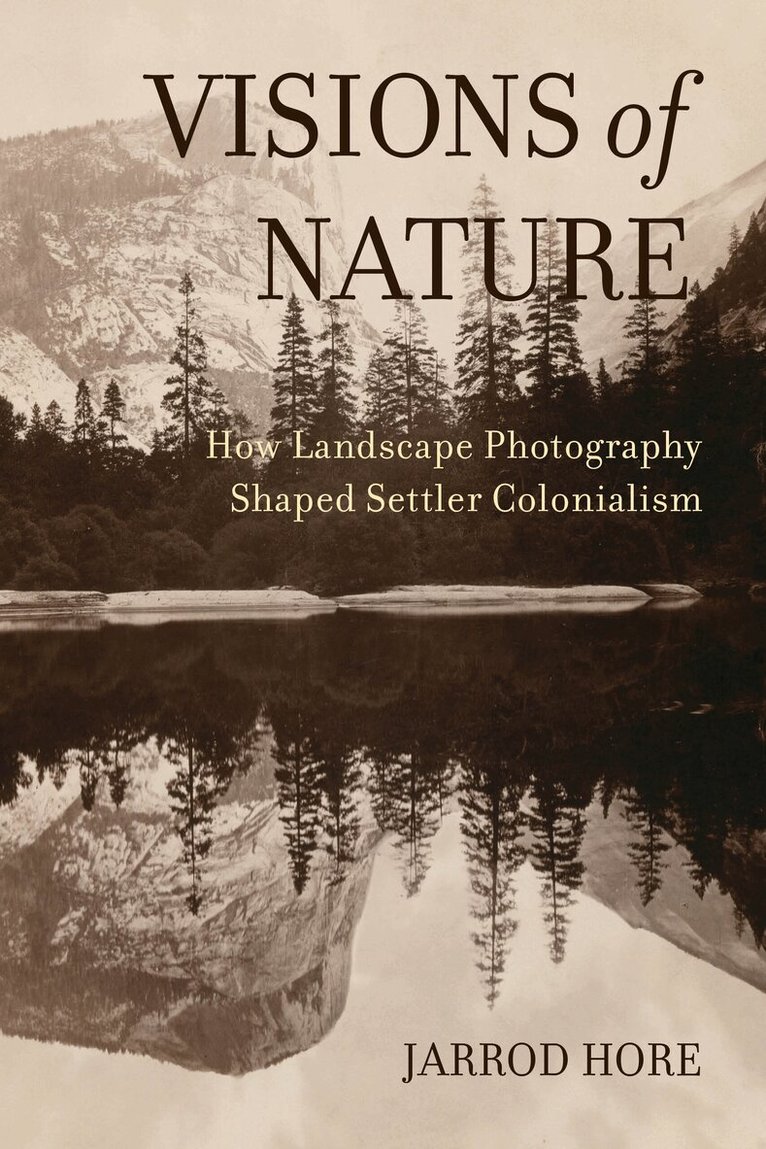
Visions of Nature revives the work of late nineteenth-century landscape photographers who shaped the environmental attitudes of settlers in the colonies of the Tasman World and in California. Despite having little association with one another, these photographers developed remarkably similar visions of nature. They rode a wave of interest in wilderness imagery and made pictures that were hung in settler drawing rooms, perused in albums, projected in theaters, and re-created on vacations. In both the American West and the Tasman World, landscape photography fed into settler belonging and produced new ways of thinking about territory and history. During this key period of settler revolution, a generation of photographers came to associate “nature” with remoteness, antiquity, and emptiness, a perspective that disguised the realities of Indigenous presence and reinforced colonial fantasies of environmental abundance. This book lifts the work of these photographers out of their provincial contexts and repositions it within a new comparative frame.
251 kr
Skickas inom 7-10 vardagar
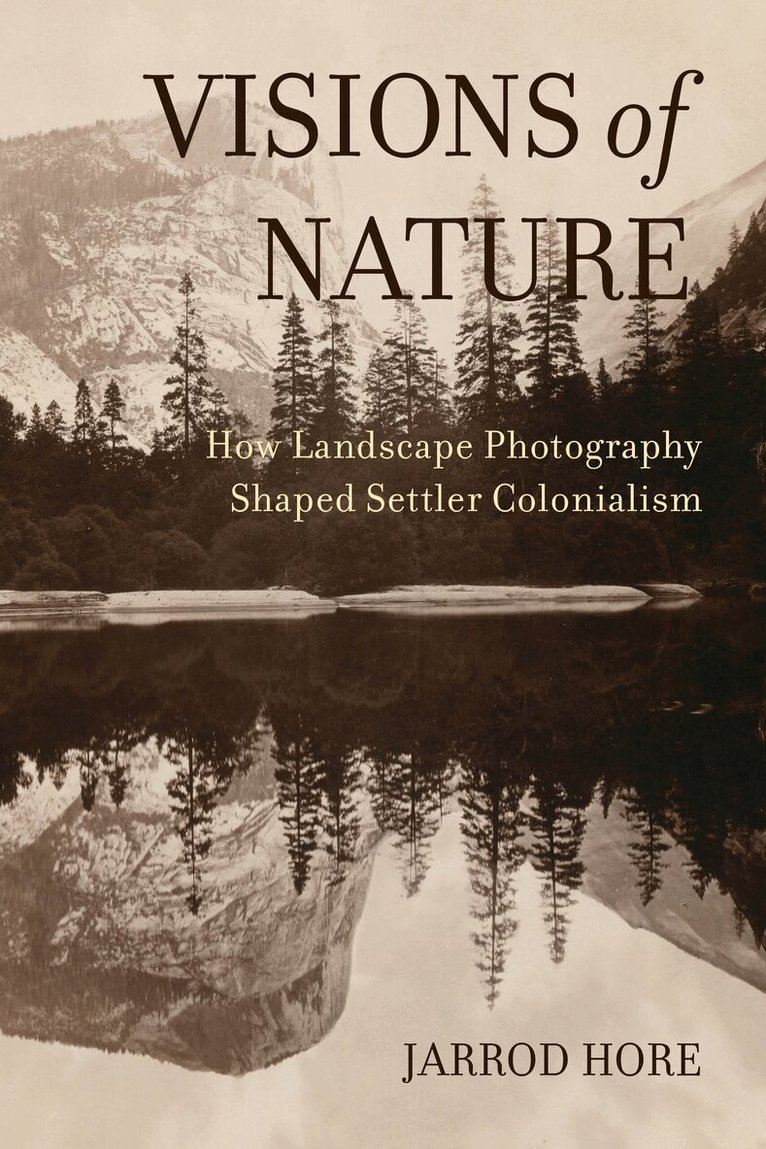
Visions of Nature revives the work of late nineteenth-century landscape photographers who shaped the environmental attitudes of settlers in the colonies of the Tasman World and in California. Despite having little association with one another, these photographers developed remarkably similar visions of nature. They rode a wave of interest in wilderness imagery and made pictures that were hung in settler drawing rooms, perused in albums, projected in theaters, and re-created on vacations. In both the American West and the Tasman World, landscape photography fed into settler belonging and produced new ways of thinking about territory and history. During this key period of settler revolution, a generation of photographers came to associate “nature” with remoteness, antiquity, and emptiness, a perspective that disguised the realities of Indigenous presence and reinforced colonial fantasies of environmental abundance. This book lifts the work of these photographers out of their provincial contexts and repositions it within a new comparative frame.
1 890 kr
Kommande
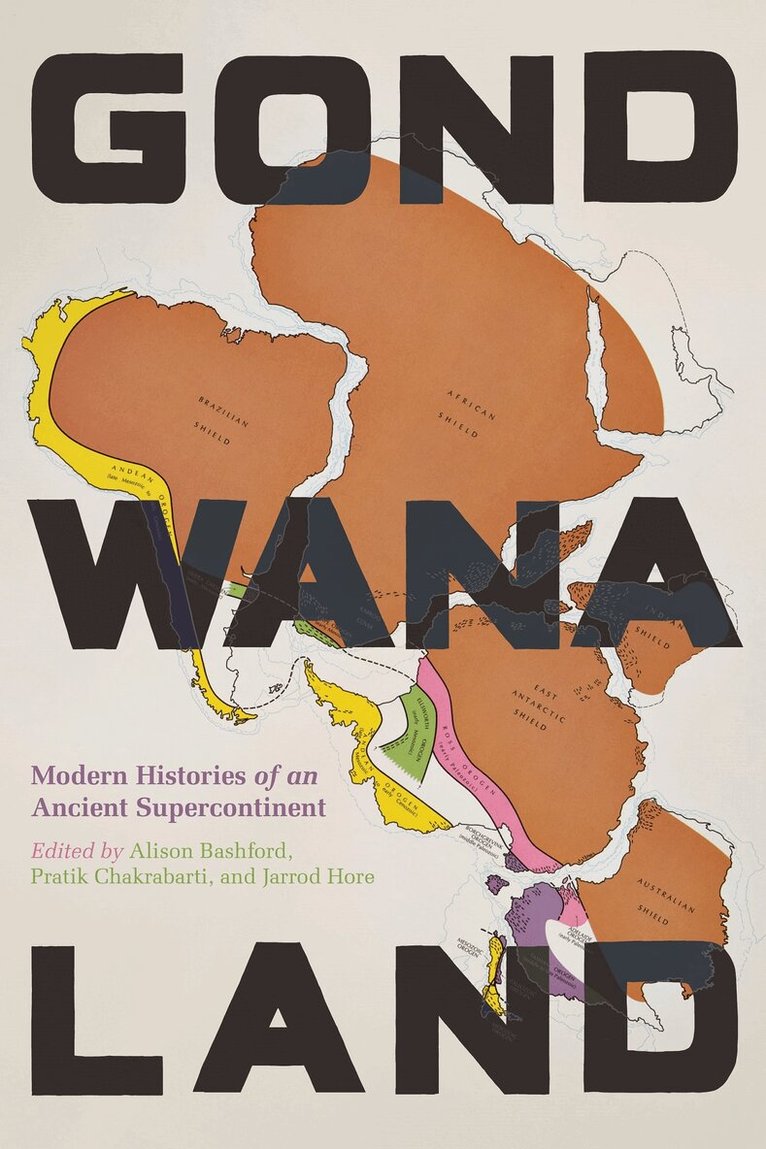
The ancient landmass of Gondwanaland began to break up two hundred million years ago into what would become present-day Africa, Antarctica, Australasia, South America, and South Asia—a prehuman “Global South” connected territorially across the southern hemisphere. Named by European geologists in the nineteenth century after the Gondwana region in central India, Gondwanaland has spawned rich and unexpected histories in which the supercontinent has been mythologized and reinvented in response to contemporary geopolitical circumstances. Bridging history, geography, and the geosciences, this volume analyzes the multidimensional interpretations of Gondwanaland in the modern world, tracing its diverse resonances and legacies in politics, science, culture, and the environment across five continents. By reassembling Gondwanaland into a hemispheric history of the southern Earth, this collection considers how deep geological pasts continue to inform geographical and political imaginaries into the present.
625 kr
Kommande
The ancient landmass of Gondwanaland began to break up two hundred million years ago into what would become present-day Africa, Antarctica, Australasia, South America, and South Asia—a prehuman “Global South” connected territorially across the southern hemisphere. Named by European geologists in the nineteenth century after the Gondwana region in central India, Gondwanaland has spawned rich and unexpected histories in which the supercontinent has been mythologized and reinvented in response to contemporary geopolitical circumstances. Bridging history, geography, and the geosciences, this volume analyzes the multidimensional interpretations of Gondwanaland in the modern world, tracing its diverse resonances and legacies in politics, science, culture, and the environment across five continents. By reassembling Gondwanaland into a hemispheric history of the southern Earth, this collection considers how deep geological pasts continue to inform geographical and political imaginaries into the present.