Jason P. Rosenblatt - Böcker
Visar alla böcker från författaren Jason P. Rosenblatt. Handla med fri frakt och snabb leverans.
4 produkter
4 produkter
1 442 kr
Skickas inom 7-10 vardagar
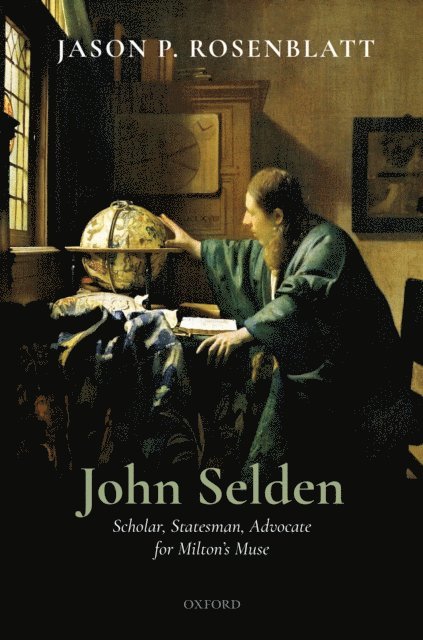
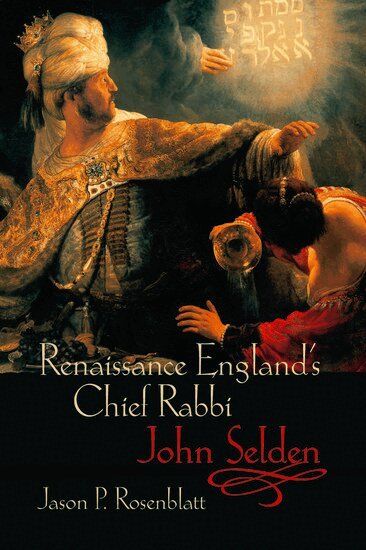
The life of John Selden (1584-1654) was both contemplative and active. Seventeenth-century England's most learned person, he was also one of the few survivors who continued in the Long Parliament of the 1640s his vigorous opposition, begun in the 1620s, to abuses of power, whether by Charles I or, later, by the Presbyterian-controlled Westminster Assembly. His gift for finding analogies among different cultures--Greco-Roman, Christian, Jewish, and Islamic--helped to transform both the poetry and prose of the century's greatest poet, John Milton. Regarding family law, the two might have influenced one another. Milton cites Selden, and Selden owned two of Milton's treatises on divorce, published in 1645, both of them presumably acquired while he was writing Uxor Ebraica (1646). Selden accepted the non-biblically rabbinic, externally imposed, coercive Adamic/Noachide precepts as universal laws of perpetual obligation, rejecting his predecessor Hugo Grotius' view of natural law as the innate result of right reason. He employed rhetorical strategies in De Jure Naturali et Gentium (The Law of Nature and of Nations) to prepare his readers for what might otherwise have shocked them. Although Selden was very active in the Long Parliament, his only surviving debates from that decade were as a lay member of the Westminster Assembly of Divines. The Assembly's scribe left so many gaps that the transcript is sometimes indecipherable. This book fills in the gaps and makes the speeches coherent by finding their contexts in Selden's printed works, both the scholarly, as in the massive De Synedriis, but also in the witty and informal Table Talk.
1 019 kr
Skickas inom 5-8 vardagar
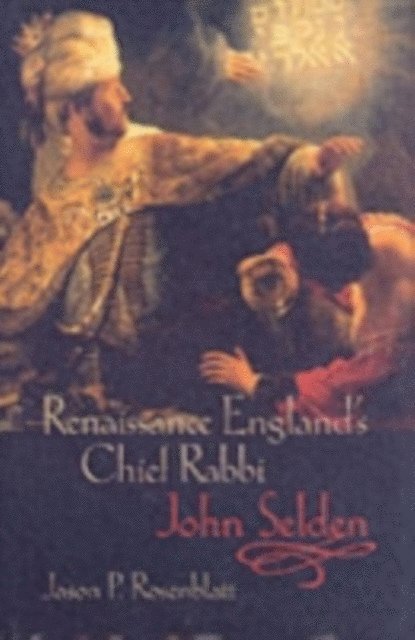
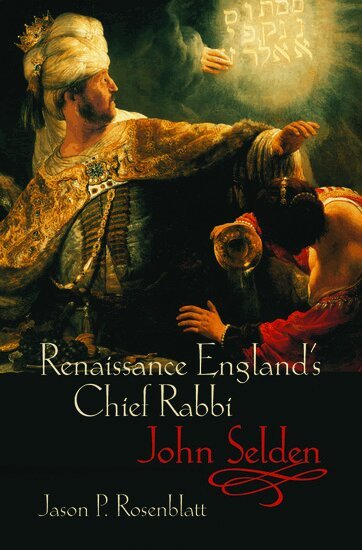
In the midst of an age of prejudice, John Selden's immense, neglected rabbinical works contain magnificent Hebrew scholarship that respects, to an extent remarkable for the times, the self-understanding of Judaism. Scholars celebrated for their own broad and deep learning gladly conceded Selden's superiority and conferred on him titles such as 'the glory of the English nation' (Hugo Grotius), 'Monarch in letters' (Ben Jonson), 'the chief of learned men reputed in this land' (John Milton). Although scholars have examined Selden (1584-1654) as a political theorist, legal and constitutional historian, and parliamentarian, Renaissance England's Chief Rabbi is the first book-length study of his rabbinic and especially talmudic publications, which take up most of the six folio volumes of his complete works and constitute his most mature scholarship. It traces the cultural influence of these works on some early modern British poets and intellectuals, including Jonson, Milton, Andrew Marvell, James Harrington, Henry Stubbe, Nathanael Culverwel, Thomas Hobbes, and Isaac Newton. It also explores some of the post-biblical Hebraic ideas that served as the foundation of Selden's own thought, including his identification of natural law with a set of universal divine laws of perpetual obligation pronounced by God to our first parents in paradise and after the flood to the children of Noah. Selden's discovery in the Talmud and in Maimonides' Mishneh Torah of shared moral rules in the natural, pre-civil state of humankind provides a basis for relationships among human beings anywhere in the world. The history of the religious toleration of Jews in England is incomplete without acknowledgment of the impact of Selden's uncommonly generous Hebrew scholarship.
3 423 kr
Skickas inom 5-8 vardagar
In the midst of an age of prejudice, John Selden's immense, neglected rabbinical works contain magnificent Hebrew scholarship that respects, to an extent remarkable for the times, the self-understanding of Judaism. Scholars celebrated for their own broad and deep learning gladly conceded Selden's superiority and conferred on him titles such as 'the glory of the English nation' (Hugo Grotius), 'Monarch in letters' (Ben Jonson), 'the chief of learned men reputed in this land' (John Milton). Although scholars have examined Selden (1584-1654) as a political theorist, legal and constitutional historian, and parliamentarian, Renaissance England's Chief Rabbi is the first book-length study of his rabbinic and especially talmudic publications, which take up most of the six folio volumes of his complete works and constitute his most mature scholarship. It traces the cultural influence of these works on some early modern British poets and intellectuals, including Jonson, Milton, Andrew Marvell, James Harrington, Henry Stubbe, Nathanael Culverwel, Thomas Hobbes, and Isaac Newton. It also explores some of the post-biblical Hebraic ideas that served as the foundation of Selden's own thought, including his identification of natural law with a set of universal divine laws of perpetual obligation pronounced by God to our first parents in paradise and after the flood to the children of Noah. Selden's discovery in the Talmud and in Maimonides' Mishneh Torah of shared moral rules in the natural, pre-civil state of humankind provides a basis for relationships among human beings anywhere in the world. The history of the religious toleration of Jews in England is incomplete without acknowledgment of the impact of Selden's uncommonly generous Hebrew scholarship.
280 kr
Skickas inom 7-10 vardagar
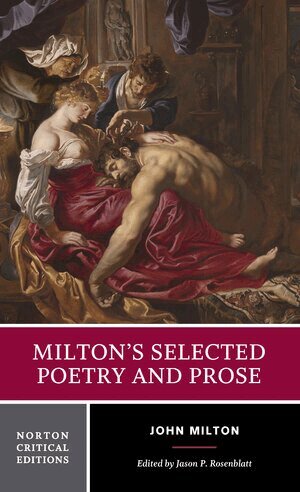
This Norton Critical Edition of Milton’s Selected Poetry and Prose includes “Lycidas”—widely considered the greatest short poem in English—the great tragedy Samson Agonistes, the masque Comus, the brief epic Paradise Regained, and eighteen sonnets as well as other poems. It also contains the complete text of five of Milton’s major prose works, among them Areopagitica and The Doctrine of Discipline and Divorce. Each major work is accompanied by an individual introduction, and all works have ample explanatory annotations.The major biblical sources that inspired Milton’s writing are reprinted, along with fourteen scholarly interpretations of the major texts. From the wealth of commentary on Milton’s poetry and prose, the editor has chosen those works that can be studied and appreciated by the greatest number of readers, including essays that can easily be paired for discussion in the classroom. Contributors include Anthony Hecht, William Kerrigan, Mary Nyquist, Stanley Fish, Barbara K. Lewalski, John Carey, and Sharon Achinstein, among others.A Chronology and Selected Bibliography are also included.