Jason Vincent A. Cabanes – författare
1 922 kr
Skickas inom 5-8 vardagar
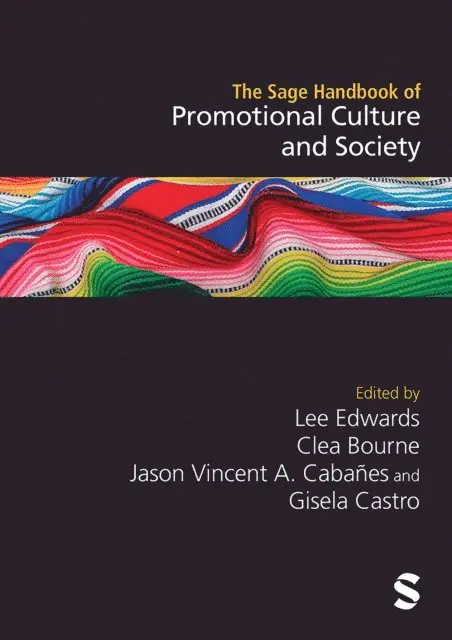
The Sage Handbook of Promotional Culture and Society critically examines the social, political, and cultural impact of promotional industries, including advertising, branding, public relations, strategic communication, and marketing communication.
By adopting a global and inclusive approach to its subject, the Handbook champions marginalised voices and cross-cultural scholarship. It brings together contributions from and about a broad range of countries and contexts beyond the Global North, providing a well-rounded picture of promotion as the international phenomenon it is today
Chapters explore both established and emerging topics, with an entire section dedicated to the interplay between promotion and identities, as well as providing coverage of interdisciplinary issues such as promotional media and children, the climate crisis, and social media influencers. There is also a clear focus on bridging theory and practice, with discussions of promotional occupations and workers woven through the chapters.
By reflecting on the questions of what promotional culture is today, how it has evolved, and where it is practiced and by whom, this Handbook is essential reading for scholars and students seeking to shape future research and debate in this dynamic field.
Part 1: Promotional Culture and Industry Logics
Part 2: Promotional Practices
Part 3: Promotion and Identities
Part 4: Promotion and Popular Culture
Part 5: Promotion and Institutional Power
1 282 kr
Läs direkt efter köp
The Sage Handbook of Promotional Culture and Society critically examines the social, political, and cultural impact of promotional industries, including advertising, branding, public relations, strategic communication, and marketing communication.
By adopting a global and inclusive approach to its subject, the Handbook champions marginalised voices and cross-cultural scholarship. It brings together contributions from and about a broad range of countries and contexts beyond the Global North, providing a well-rounded picture of promotion as the international phenomenon it is today
Chapters explore both established and emerging topics, with an entire section dedicated to the interplay between promotion and identities, as well as providing coverage of interdisciplinary issues such as promotional media and children, the climate crisis, and social media influencers. There is also a clear focus on bridging theory and practice, with discussions of promotional occupations and workers woven through the chapters.
By reflecting on the questions of what promotional culture is today, how it has evolved, and where it is practiced and by whom, this Handbook is essential reading for scholars and students seeking to shape future research and debate in this dynamic field.
Part 1: Promotional Culture and Industry Logics
Part 2: Promotional Practices
Part 3: Promotion and Identities
Part 4: Promotion and Popular Culture
Part 5: Promotion and Institutional Power
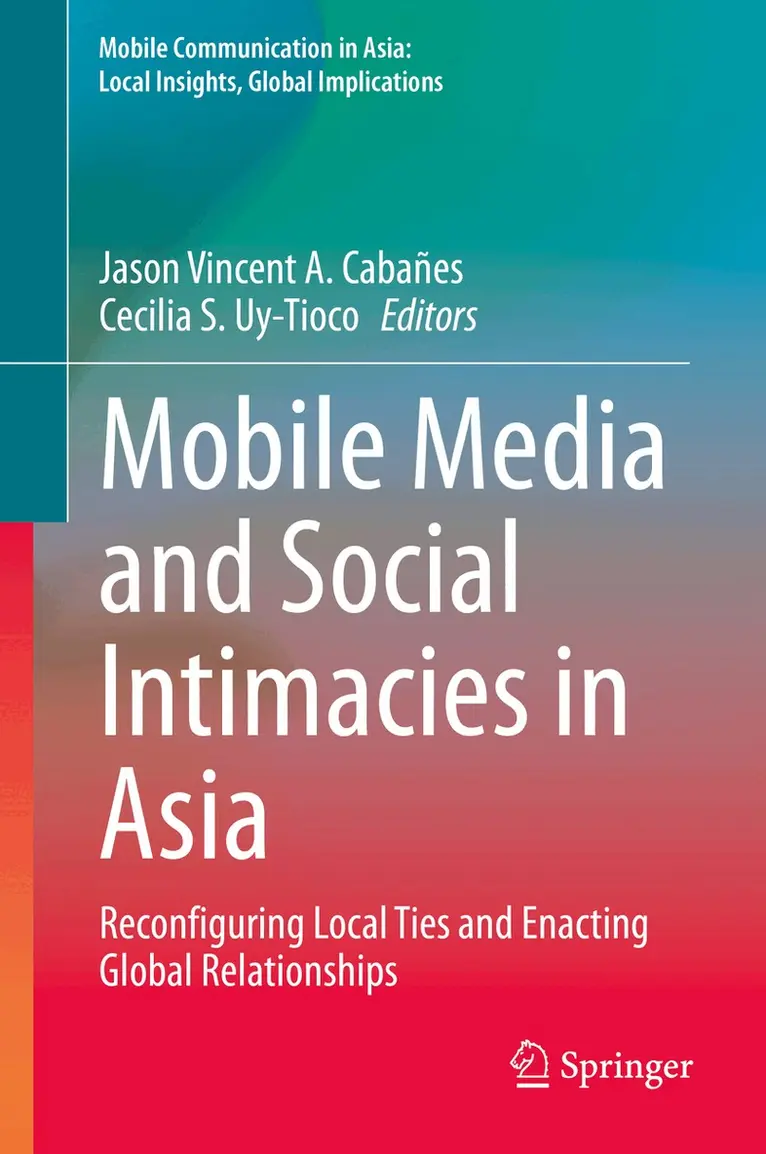
Mobile Media and Social Intimacies in Asia
Reconfiguring Local Ties and Enacting Global Relationships
1 524 kr
Skickas inom 10-15 vardagar
Mobile Media and Social Intimacies in Asia
Reconfiguring Local Ties and Enacting Global Relationships
1 946 kr
Läs direkt efter köp
This edited volume brings together cutting-edge studies from emerging scholars of East/Southeast Asia who explore the role of mobile media in the contemporary transformation of the region’s social intimacies, from the romantic to the familial to the communal. By providing a regional and transnational overview of such studies, it affords new insights into how these mobile technologies have contributed to the rise of ‘glocal intimacies’. This pertains to the normalisation and intensification of how people’s relationships of closeness are entangled in the ever-shifting and constantly negotiated flows between global modernity and local everyday life. In providing case studies of mobile media and glocal intimacies, the chapters in the volume attend to a broad range of countries that include China, Korea, Malaysia, the Philippines, Singapore, Vietnam, and Taiwan. This illustrates the differing ways in which mobile media might be embedded in the region’s divergent articulations of social intimacies, which reflect the ongoing tensions between Western and Asian imaginaries of modernity. The chapters also discuss a wide array of mobile media that people use, from social media platforms like Facebook and Instagram, to messaging apps like KakaoTalk and WhatsApp, to dating apps like Tinder and Blued. This allows for a mapping out of the different levels of impact that mobile media might have on social intimacies in a region that contains some of the most technologically advanced as well as the most technologically behind societies in the world. In summary, this book allows readers to take a comparative approach to understanding the complexity of the glocal intimacies that are emerging from the ways people in Asia use mobile media to reconfigure their local ties and to enact global relationships. This volume will benefit students, academics, and researchers who are keen in media and communication, cultural studies, sociology, anthropology, and Asian studies.
“This exciting and much-needed book will greatly advance our efforts to decolonise media and communications research. The chapters offer empirically rich and nuanced accounts that challenge the dominant paradigms about mediated intimacy.”
Mirca Madianou, Goldsmiths, University of London
“This collection develops the original concept of ‘glocal intimacies’ to describe how mobile media have become a crucial site where new social intimacies are enacted, reinforced and transformed in Asia. It introduces fresh empirical research from emerging scholars to furnish deep theoretical insights into these imaginaries and practices.”
Audrey Yue, National University of SingaporeMobile Media and Social Intimacies in Asia
Reconfiguring Local Ties and Enacting Global Relationships
1 524 kr
Skickas inom 10-15 vardagar
221 kr
Skickas inom 3-6 vardagar
104 kr
Läs direkt efter köp
Many current counter-disinformation initiatives focus on addressing the production or “supply side” of digital disinformation. Less attention tends to be paid to the consumption or the intended audiences of disinformation campaigns.
A central concept in understanding people’s consumption of and vulnerability to digital disinformation is its imaginative dimension as a communication act. Key to the power of disinformation campaigns is their ability to connect to people’s shared imaginaries. Consequently, counter-disinformation initiatives also need to attend to these imaginaries.
This report examines why the precarious middle class in the Philippines has been particularly susceptible to digital disinformation. It focuses on two key imaginaries that disinformation producers weaponized in the year leading up to the 2022 national elections. The first was a long-simmering anti-Chinese resentment, which racist social media campaigns about Philippines-China relations targeted. The other was a yearning for a “strong leader”, which history-distorting campaigns about the country’s Martial Law era amplified.
Ironically, some practices adopted by members of the public to protect themselves from the toxicity and vitriol of online spaces increased their vulnerability to digital disinformation. The cumulative impact of these was for people to dig deeper into their existing imaginaries, something that disinformation producers targeted and exploited.
We offer two suggestions for future counter-disinformation initiatives. The first has to do with addressing people’s vulnerability to the weaponization of their shared imaginaries. Counter-disinformation initiatives can move past divisive imaginaries by infusing creativity in imparting information. Collaborating with well-intentioned professionals in the media and creative industries would be key to these kinds of initiatives.
The second has to do with addressing people’s media consumption practices. These practices tend to open them up to sustained and long-term digital disinformation campaigns, which provide them with problematic imaginaries to dig into. To establish a similarly robust common ground of reality, counter-disinformation initiatives should themselves be programmatic, not ad hoc.