Javed Malick - Böcker
Visar alla böcker från författaren Javed Malick. Handla med fri frakt och snabb leverans.
4 produkter
4 produkter
1 217 kr
Skickas inom 7-10 vardagar
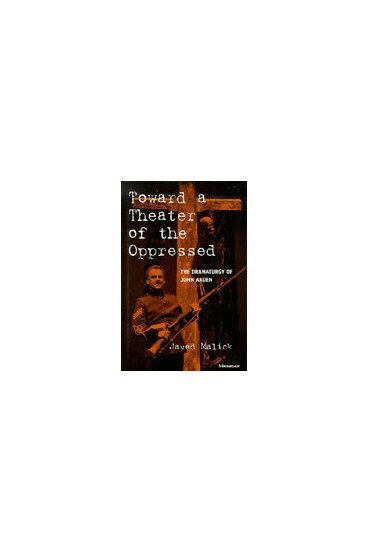
Toward a Theater of the Oppressed is an engaging study of the dramaturgy of contemporary British playwright John Arden and the political implications of his work. Arden made his debut on the London stage in the wake of a powerful new wave of young, "angry" drama in England during the late 1950s. Javed Malick argues that in contrast to contemporaries like John Osborne, Harold Pinter, and Arnold Wesker, Arden offered a radically different approach to drama and theater, employing a long-neglected writing style that derived from pre-bourgeois popular traditions. Malick situates Arden's dramaturgy in the wider context of the radical alternative tradition in Western drama, drawing connections to Brecht, Piscator, the radical playwrights of the 1960s. He then explores the formal structure, ideological implications, and historical significance of Arden's work, treating his stage plays as one dramaturgically coherent opus- from the early Waters of Babylon to his and Margaretta D'Arcy's ambitious trilogy, The Island of the Mighty. Finally, he discusses the last phase of Arden and D'Arcy's political and artistic development, which led them to turn their backs on the professional theater circuit. He argues that Arden's rejection of the institutional stage was the logical outcome of his persistent search for alternative forms of political theater. Toward a Theater of the Oppressed will be invaluable reading for those interested in modern drama, political theater, and popular performance, as well as students of contemporary British drama. Javed Malick is Reader in English, Khalsa College, University of Delhi, India.
2 151 kr
Skickas inom 10-15 vardagar
The five essays in this book reflect many years of the author's sustained academic engagement with dramatic forms and traditions. The opening essay traces the historical trajectory of modern drama in Europe from its bourgeois period through the period of the liberal dissent to the more recent periods of radical alternative. The subsequent essays deal with certain specific examples of that drama in India and the West, such as Shakespeare adaptations on the Parsi theatre stage, Habib Tanvir, and Samuel Beckett. The author places each of these in a historical perspective. This approach constitutes the theoretical underpinning of the book giving cohesion to this collection of diverse essays. Although they were individually published in various journals and books in their earlier versions, they have been substantially revived and updated by the author for this volume.This book is co-published with Aakar Books, New Delhi. Taylor & Francis does not sell or distribute the print versions of this book in India, Pakistan, Nepal, Bhutan, Bangladesh and Sri Lanka.
1 047 kr
Skickas inom 7-10 vardagar
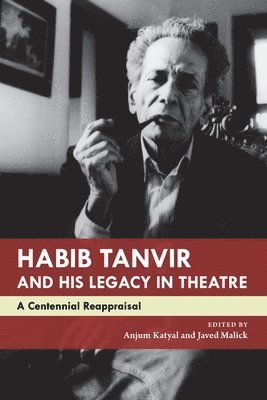
Essays exploring the lasting impact of Habib Tanvir's pioneering theatre which blended tradition with modernity in the post-Independence Indian theatre scene. This collection of essays delves into the profound legacy of Habib Tanvir (1923–2009), a luminary in the post-Independence Indian theater scene. Tanvir's decades-long contributions as a director, poet, playwright, and actor are explored by a diverse group of scholars, practitioners, and peers. The book examines his pivotal role in founding the Naya Theatre in 1959, a pioneering group blending rural traditions with contemporary theatre, challenging conventional norms. Against the backdrop of contemporary societal and political shifts, the essays reflect on Tanvir's fearless resistance against the right wing in his later years, particularly his challenges to religious dogma and caste discrimination in works like Ponga Pandit. The collection also emphasizes the enduring impact of Tanvir's seminal work, Charandas Chor, highlighting its adaptability across varied cultural landscapes. With international contributors, the book expands beyond national borders, showcasing Tanvir's impact on global theatre and cross-cultural collaborations. The essays in this volume assert Tanvir's continued relevance, positioning his ideals as a guiding force for India amid evolving cultural and political landscapes.
270 kr
Skickas inom 7-10 vardagar
Essays exploring the lasting impact of Habib Tanvir's pioneering theatre which blended tradition with modernity in the post-Independence Indian theatre scene. This collection of essays delves into the profound legacy of Habib Tanvir (1923–2009), a luminary in the post-Independence Indian theater scene. Tanvir's decades-long contributions as a director, poet, playwright, and actor are explored by a diverse group of scholars, practitioners, and peers. The book examines his pivotal role in founding the Naya Theatre in 1959, a pioneering group blending rural traditions with contemporary theatre, challenging conventional norms. Against the backdrop of contemporary societal and political shifts, the essays reflect on Tanvir's fearless resistance against the right wing in his later years, particularly his challenges to religious dogma and caste discrimination in works like Ponga Pandit. The collection also emphasizes the enduring impact of Tanvir's seminal work, Charandas Chor, highlighting its adaptability across varied cultural landscapes. With international contributors, the book expands beyond national borders, showcasing Tanvir's impact on global theatre and cross-cultural collaborations. The essays in this volume assert Tanvir's continued relevance, positioning his ideals as a guiding force for India amid evolving cultural and political landscapes.