Javier Abadía - Böcker
Visar alla böcker från författaren Javier Abadía. Handla med fri frakt och snabb leverans.
4 produkter
4 produkter
Iron Nutrition in Soils and Plants
Proceedings of the Seventh International Symposium on Iron Nutrition and Interactions in Plants, June 27–July 2, 1993, Zaragoza, Spain
Inbunden, Engelska, 1995
3 147 kr
Skickas inom 10-15 vardagar
The current status of the work being conducted throughout the world in the field of iron deficiency in plants is reviewed in this book, which consists of research papers and invited lectures on specific topics related to iron deficiency. The book includes chapters reviewing the molecular and biochemical mechanisms elicited by iron deficiency in plants, algae and bacteria. Papers and reviews providing new information on the Strategy I-type and the Strategy II-type responses in higher plants are also included. Other chapters deal with new research directed towards finding possible means of controlling iron deficiency in crops of economic interest, including early diagnosis, fertilization, fertirrigation and plant breeding. Several papers involve the study of lime-induced iron chlorosis under semi-arid crop conditions in Mediterranean environments.
2 426 kr
Skickas inom 10-15 vardagar
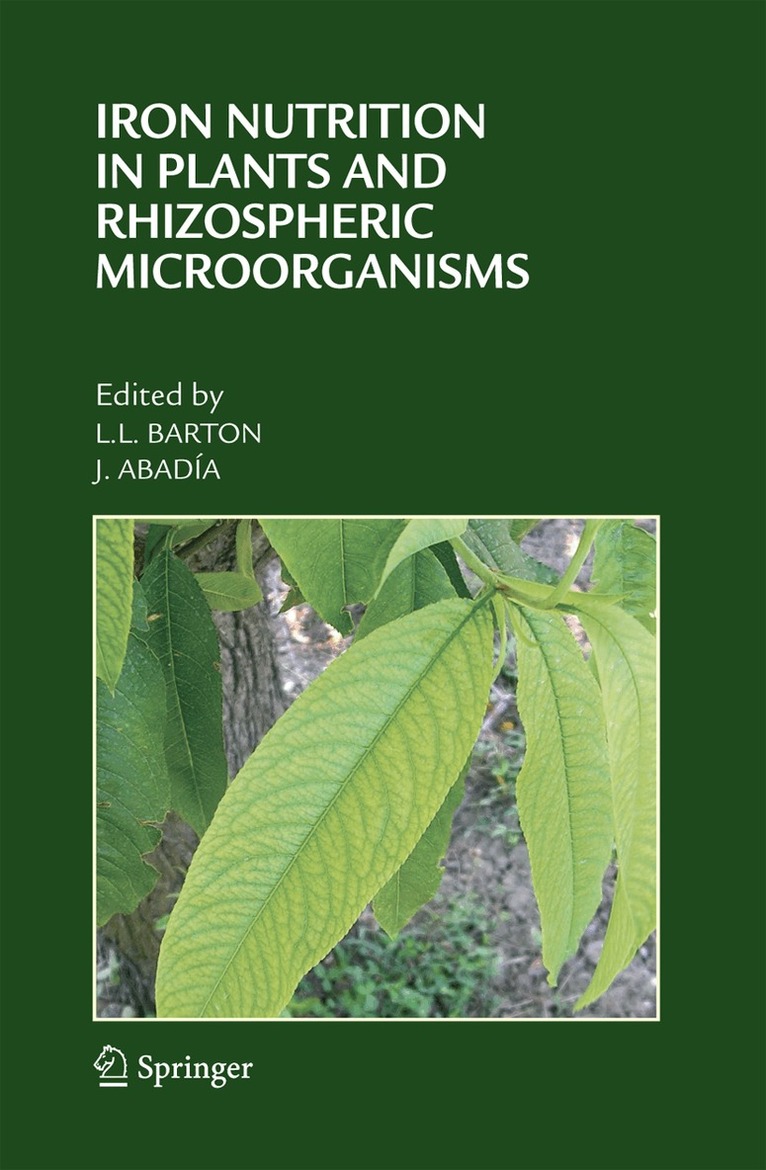
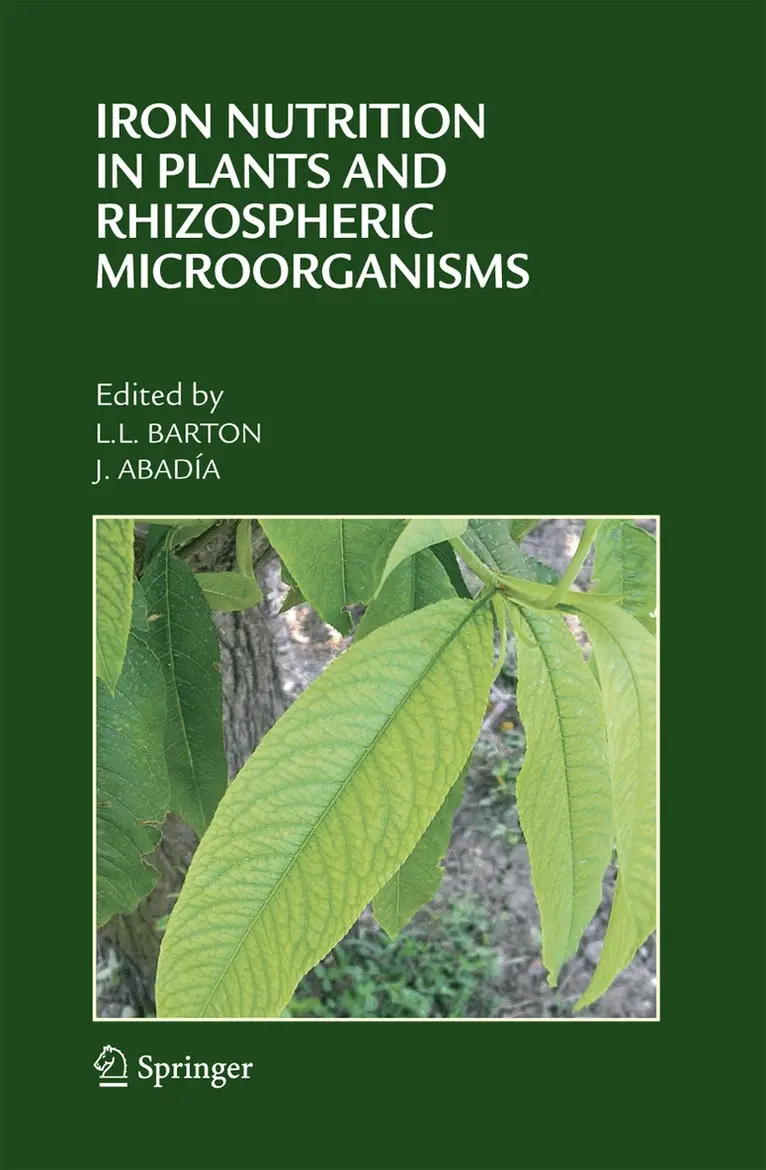
Animals including humans are highly dependent on plants to provide many different nutrients including iron in a useable form. Additionally, plants are used to support the growth of animals and obtaining high crop yields via optimal plant growth is an economic necessity. Thus, it is crucial to understand the role of iron in plant nutrition. This book provides comprehensive reviews on topics of plant-iron nutrition that are being addressed by different laboratories around the world. As one can see, the area of plant-iron nutrition is highly interdisciplinary, involving scientists of various fields of knowledge. Plant biologists are needed to characterize iron translocation throughout the plant following root iron uptake and to examine the regulation of iron-stimulated activities that influence crop yield and quality. Plant geneticists are contributing to the area of plant-iron nutrition by developing model systems to aid our understanding of the complex activities of the individual plant. Soil chemists are examining the interactions between iron and various minerals and organic matter soil components in the root zone. Microbiologists are providing a crucial perspective on how the interactions between the plant and soil microorganisms are important in plant iron nutrition. Additionally, the cycling of iron in the terrestrial environment is being examined by ecologists and related scientists. While it may be ideal to systematically examine iron nutrition in a single plant species, research is influenced by local or regional requirements.
2 426 kr
Skickas inom 10-15 vardagar
Animals including humans are highly dependent on plants to provide many different nutrients including iron in a useable form. Plant biologists are needed to characterize iron translocation throughout the plant following root iron uptake and to examine the regulation of iron-stimulated activities that influence crop yield and quality.
Iron Nutrition in Soils and Plants
Proceedings of the Seventh International Symposium on Iron Nutrition and Interactions in Plants, June 27–July 2, 1993, Zaragoza, Spain
Häftad, Engelska, 2012
3 147 kr
Skickas inom 10-15 vardagar
Iron is a major constituent of the earth crust. However, under alkaline conditions commonly found in arid and semi-arid environments iron becomes unavailable to plants. When plants are affected by a shortage of iron their leaves become yellow (chlorotic), and both plant growth and crop yield are reduced. The roots of plants affected by iron deficiency may develop a series of responses directed to improve iron uptake, such as increased proton excretion and iron reduction capabilities or excretion of iron chela tors called siderophores. Iron deficiency affects major crops worldwide, including some of major economic importance such as fruit trees and others. Correction of iron deficiency is usually implemented through costly application of synthetic chelates. Since these correction methods are very expensive, the competitivity of farmers is often reduced and iron deficiency may become a limiting factor for the maintenance, introduction or expansion of some crops. In spite of the many years devoted to the study of iron deficiency, the knowledge of iron deficiency in soils and plants is still fragmentary in many aspects. We have only incomplete information on the processes at the molecular level that make some plant species and cultivars unable to take and utilize iron from the soil, whereas other plants grow satisfactorily under the same conditions.