Jayne Wilkins - Böcker
Visar alla böcker från författaren Jayne Wilkins. Handla med fri frakt och snabb leverans.
3 produkter
3 produkter
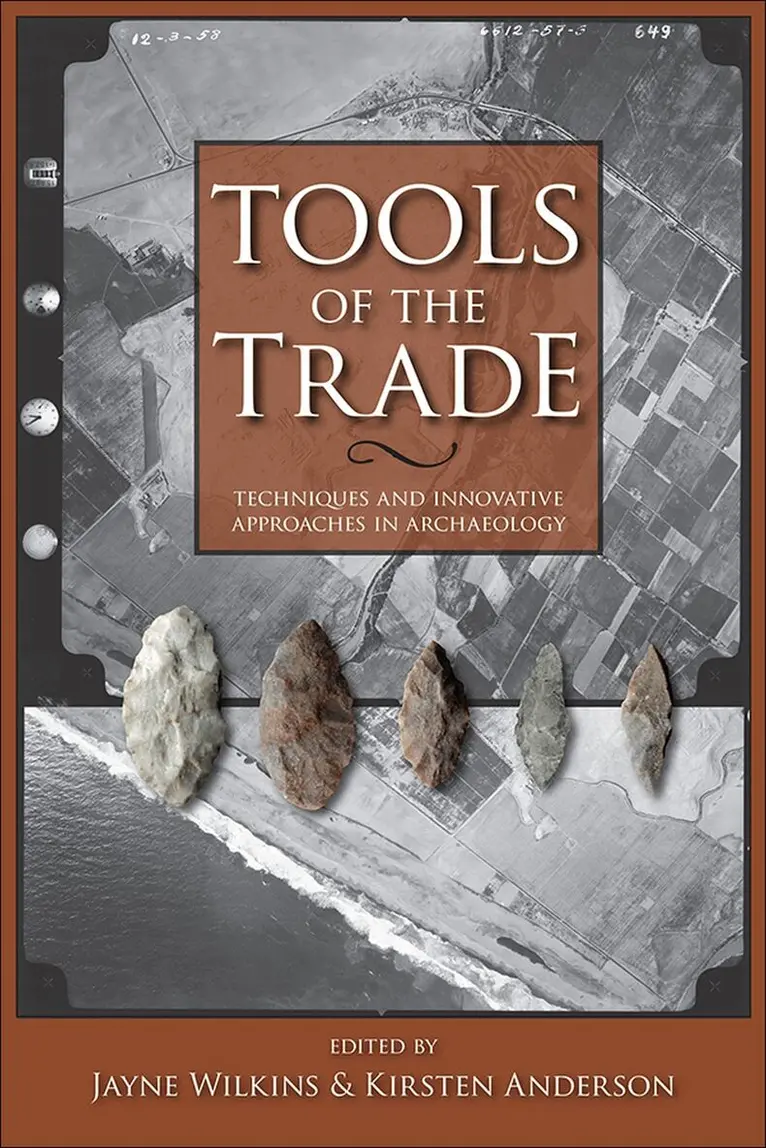
Tools of the Trade
Methods, Techniques and Innovative Approaches in Archaeology
Häftad, Engelska, 2009
446 kr
Skickas inom 10-15 vardagar
Tools of the Trade presents a collection of academic papers from the 2005 Chacmool archaeological conference, which includes a wide range of contributions from international archaeologists, senior professors, and students alike.Each chapter focuses on the discussion and application of unique and innovative 'tools' for archaeological analysis and interpretation, including micro- and macro-botanical analysis, experimental study, off-site survey, lithic use-wear, ceramic petrography, DNA analysis, chaîne opératoire, space syntax, and Geographic Information Systems.As a collective volume, the book also covers an impressive diversity of geographic regions and time periods, such as Precolumbian Mesoamerica, Plio-Pleistocene Africa, prehistoric and historic North America, and ancient Polynesia.Finally, this volume provides a somewhat introspective look at the origins of tool use, technological development, and the means by which we have become the only species to ask the questions: What does it mean to be us and how can we find out?
2 961 kr
Skickas inom 10-15 vardagar
This handbook showcases an Africa-wide compendium of Stone Age archaeological sites and methodological advances that have improved our understanding of hominin lifeways and biogeography in the continent. The focal time spans the Pleistocene Epoch (c. 2.5 million–11,700 years ago) during which important human traits, such as obligate bipedalism that freed the hands to engage in creative activities, a large brain relative to body size, language, and social complexity, developed in the general forms that they are found today. The handbook is the first of its kind, and it is expected to play a significant role in human evolutionary research by:❖ Collating the African Stone Age record, which exists in a fragmented state along the lines of national boundaries and colonial experiences.❖ Showcasing emerging conceptual and methodological advances in African Pleistocene archaeology.❖ Providing reference datasets for teaching and researching African prehistory.❖ Making Africa’s Stone Age record accessible to researchers and students based in Africa who may not have access to journal publications where most new field discoveries are published.The Handbook features 128 chapters, of which 116 are site entries grouped by the host countries and presented in an alphabetical order. A number of those site-related entries examine multiple archaeological localities lumped under specific projects or study areas. The rest of the contributions deal with methodological topics, such as luminescence and radiocarbon dating, field data recovery, lithic analysis, micromorphology, and hominin fossil and zooarchaeological records of Pleistocene Africa. The introductory chapter provides an historical overview of the development of Stone Age (Paleolithic) archaeology in Africa beginning in the mid-19th century, and paleoenvironmental and chronological frameworks commonly used to structure the continent’s Pleistocene record. By making a good amount of AfricanStone Age literature accessible to researchers and the public, we wish to promote interest in human evolutionary research in the continent and elsewhere.
2 961 kr
Skickas inom 10-15 vardagar
This handbook showcases an Africa-wide compendium of Stone Age archaeological sites and methodological advances that have improved our understanding of hominin lifeways and biogeography in the continent. The focal time spans the Pleistocene Epoch (c. 2.5 million–11,700 years ago) during which important human traits, such as obligate bipedalism that freed the hands to engage in creative activities, a large brain relative to body size, language, and social complexity, developed in the general forms that they are found today. The handbook is the first of its kind, and it is expected to play a significant role in human evolutionary research by:❖ Collating the African Stone Age record, which exists in a fragmented state along the lines of national boundaries and colonial experiences.❖ Showcasing emerging conceptual and methodological advances in African Pleistocene archaeology.❖ Providing reference datasets for teaching and researching African prehistory.❖ Making Africa’s Stone Age record accessible to researchers and students based in Africa who may not have access to journal publications where most new field discoveries are published. The Handbook features 128 chapters, of which 116 are site entries grouped by the host countries and presented in an alphabetical order. A number of those site-related entries examine multiple archaeological localities lumped under specific projects or study areas. The rest of the contributions deal with methodological topics, such as luminescence and radiocarbon dating, field data recovery, lithic analysis, micromorphology, and hominin fossil and zooarchaeological records of Pleistocene Africa. The introductory chapter provides an historical overview of the development of Stone Age (Paleolithic) archaeology in Africa beginning in the mid-19th century, and paleoenvironmental and chronological frameworks commonly used to structure the continent’s Pleistocene record. By making a good amount of AfricanStone Age literature accessible to researchers and the public, we wish to promote interest in human evolutionary research in the continent and elsewhere.Awarded the 2025 ‘The Best Book Award’ by The Society of Africanist Archaeologists.