Jayoti Majumder Sarkar – författare
Visar alla böcker från författaren Jayoti Majumder Sarkar. Handla med fri frakt och snabb leverans.
2 produkter
2 produkter
Häftad, Engelska, 2026
1 726 kr
Kommande
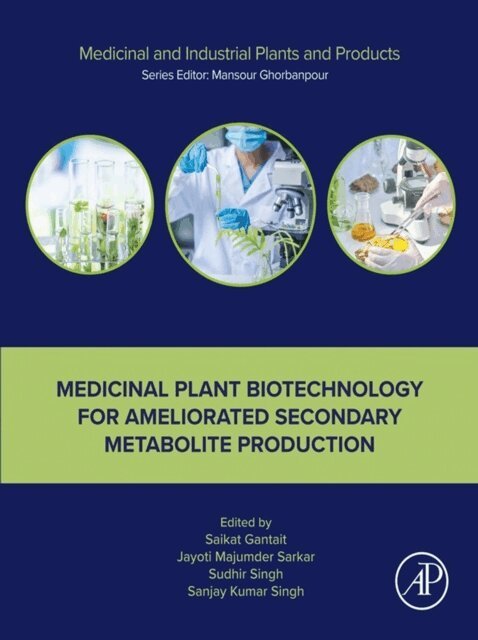
Medicinal Plant Biotechnology for Ameliorated Secondary Metabolite Production delivers a cutting-edge perspective on how biotechnology is reshaping the way medicinal plants are studied and utilized. By integrating advanced molecular techniques, precision genetic tools, bioprocessing strategies, and analytical platforms, this volume addresses the critical challenge of enhancing the biosynthesis and optimization of high-value bioactive compounds.The book moves beyond technical innovation to emphasize its role in meeting global demand for plant-derived therapeutics while ensuring ecological balance. It highlights how advancements can drive sustainability, reduce reliance on synthetic alternatives, and open new pathways to ensure the long-term viability of plant genetic material and biodiversity preservation. This future-oriented approach makes the volume not just a specialized reference, but a strategic guide for shaping the next generation of plant-based functional solutions.Part of the Medicinal and Industrial Plants and Products series, this state-of-the-art resource boasts a holistic approach with relevance across stakeholders in academic and industrial contexts seeking practical insights that can be adapted to diverse plant species and scaled for real-world industrial and commercial uses.Offers a multidisciplinary overview bridging botanical, biotechnological, and pharmaceutical discoveries, enabling readers to connect fundamental plant science with practical solutions.Explores emerging trends such as genome editing, elicitor-based interventions, and nanotechnology, alongside conservation and metabolomic profiling.Demonstrates cross-sector applications in healthcare, nutrition, agriculture, and ecological stewardship, broadening the impact beyond traditional pharmaceutical contexts.
Inbunden, Engelska, 2026
2 158 kr
Skickas inom 10-15 vardagar
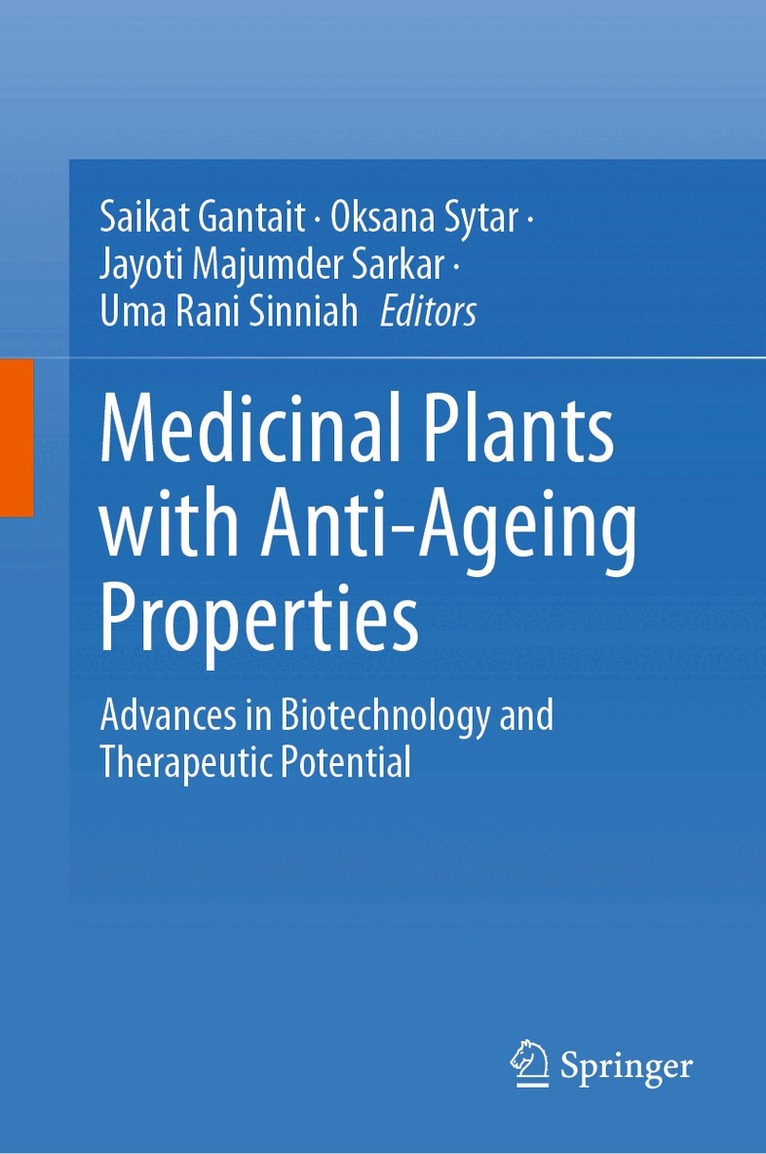
To ensure sustainable production of pharmaceutically significant active metabolites (from natural sources) with anti-aging properties, biotechnological interventions become the need of the hour when global warming and environmental pollution result in increasing UV radiation and, consequently, sunburn and aging of the tissue. In that context, the introductory chapter of this book outlines the concept and importance of medicinal plants available in local, national, and global regions that are rich in bioactive compounds responsible for anti-aging effects, along with their distribution, status, and limitations of conventional propagation and their biotechnological enhancement. The subsequent chapter provides insights into how environmental changes affect the anti-aging properties of metabolites in medicinal plants. There are dedicated chapters that provide insights on the genetic basis of anti-aging activity, the chemistry and physiology of modes of action, as well as the cellular mechanisms of secondary metabolites, along with the role of phytohormones for in vitro mass propagation, somatic embryos, their maturation, and the regeneration of anti-aging medicinal plants. Enhancement of anti-aging properties and the production of secondary metabolites with the interventions of LEDs, cell suspension, elicitation, bioreactor, auto-polyploidization, induced mutagenesis, and nanotechnology, as well as CRISPR/Cas9-mediated genome editing. Apart from genetic improvements, focus is given on conservation and exchange of anti-aging medicinal plants via cryopreservation and synthetic seed technologies. In conclusion, the study comprehensively covers secondary metabolite extraction techniques and the clinical evidence and significance of these metabolites. Expert scientists from 15 different countries, such as Argentina, Belgium, Botswana, Cameroon, China, Cuba, Czech Republic, Egypt, France, India, Japan, Mexico, South Africa, Türkiye, and Vietnam, have contributed 14 insightful chapters to this book. It is noteworthy to mention that there is a sustainable hunt for possible novel anti-aging compounds from natural resources, especially plants and herbs, and this book will be a potential guideline to facilitate that endeavor.