• Fri frakt över 249 kr
  • •
  • Snabba leveranser
  • •
  • Billiga böcker
Kundservice

Du är på sajten för privatpersoner.

Företag, bibliotek eller offentlig verksamhet?

Du handlar på classic.bokus.com, där alla dina funktioner finns intakta.
Till classic.bokus.com
Bokus logotyp. Gå till startsidan.
  • Erbjudanden
  • Nyheter
  • Student
  • Topplistor
  • Barn & ungdom
  • Bokus Play
  • E-böcker
  • Pocketböcker
  • Spel & pussel

10% studentrabatt med kod TERM26

Sidfot

Mina sidor

    Hjälp

    • Kundservice
    • Vanliga frågor och svar
    • Frakt och leverans
    • Retur vid ångerrätt
    • Reklamera vara
    • Betalning
    • Köpvillkor
    • Allmänna villkor
    • Information om webbplatsens tillgänglighet

    Om Bokus

    • Om oss
    • Pressrum
    • För studenter
    • För företag
    • För bibliotek och offentlig verksamhet
    • För leverantörer
    • Hållbarhet

    Populärt

    • Aktuella erbjudanden
    • Presentkort
    • Studentlitteratur
    • Nya böcker
    • Topplistor
    • Signerade böcker
    • Engelska böcker

    Inspiration

    • Boktips
    • BookTok
    • Populära bokserier
    • Barnbokskaraktärer
    • Populära författare
    Logotyp för Bokus
    Följ oss på Facebook (extern länk)Följ oss på Instagram (extern länk)Följ oss på YouTube (extern länk)Följ oss på TikTok (extern länk)
    bokus @ CookiesAnpassa cookiesIntegritetspolicyKöpvillkor
    Till Citymail hemsida (extern länk)Till Budbee hemsida (extern länk)Till Postnord hemsida (extern länk)Till Schenker hemsida (extern länk)Till Early Bird hemsida (extern länk)Till Walleys hemsida (extern länk)
    1. Naturvetenskap och teknik
    2. Matematik och naturvetenskap
    3. Biologi
    4. Biokemi

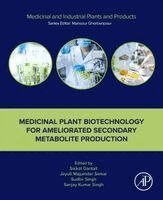
    Medicinal Plant Biotechnology for Ameliorated Secondary Metabolite Production

    AvSaikat Gantait,Jayoti Majumder Sarkar

    Häftad, Engelska, 2026

    Del i serien Medicinal and Industrial Plants and Products

    1 722 kr

    Kommande

    Beskrivning

    Medicinal Plant Biotechnology for Ameliorated Secondary Metabolite Production delivers a cutting-edge perspective on how biotechnology is reshaping the way medicinal plants are studied and utilized. By integrating advanced molecular techniques, precision genetic tools, bioprocessing strategies, and analytical platforms, this volume addresses the critical challenge of enhancing the biosynthesis and optimization of high-value bioactive compounds.

    The book moves beyond technical innovation to emphasize its role in meeting global demand for plant-derived therapeutics while ensuring ecological balance. It highlights how advancements can drive sustainability, reduce reliance on synthetic alternatives, and open new pathways to ensure the long-term viability of plant genetic material and biodiversity preservation. This future-oriented approach makes the volume not just a specialized reference, but a strategic guide for shaping the next generation of plant-based functional solutions.

    Part of the Medicinal and Industrial Plants and Products series, this state-of-the-art resource boasts a holistic approach with relevance across stakeholders in academic and industrial contexts seeking practical insights that can be adapted to diverse plant species and scaled for real-world industrial and commercial uses.

    • Offers a multidisciplinary overview bridging botanical, biotechnological, and pharmaceutical discoveries, enabling readers to connect fundamental plant science with practical solutions.
    • Explores emerging trends such as genome editing, elicitor-based interventions, and nanotechnology, alongside conservation and metabolomic profiling.
    • Demonstrates cross-sector applications in healthcare, nutrition, agriculture, and ecological stewardship, broadening the impact beyond traditional pharmaceutical contexts.

    Produktinformation

    • Utgivningsdatum:2026-09-01
    • Mått:191 x 235 x undefined mm
    • Vikt:450 g
    • Format:Häftad
    • Språk:Engelska
    • Serie:Medicinal and Industrial Plants and Products
    • Antal sidor:496
    • Förlag:Elsevier Science
    • ISBN:9780443439445

    Utforska kategorier

    • Biokemi inom Naturvetenskap och teknik
    • Biologi inom Naturvetenskap och teknik
    • Växtböcker inom Djur och Natur

    Mer om författaren

    Saikat Gantait is an assistant professor in genetics & plant breeding, as well as a plant breeder in the Crop Research Unit, Bidhan Chandra Krishi Viswavidyalaya (BCKV). Following completion of his PhD in Biotechnology from BCKV, he gained advanced research experience leading a group to conduct fruitful research while working as a research associate in a DBT (Govt. of India)-funded project, followed by working as a Post-Doctoral Researcher at Universiti Putra Malaysia. He has guided/co-guided multiple MSc and PhD students. His 15-year research works so far include molecular markers, plant tissue culture, polyploidy-induction, short-term (encapsulation/synthetic seed) and long-term (cryopreservation) conservation of medicinal and ornamental plant germplasms. In addition, he serves as an Editorial Board Member for several journals from Springer Nature, Elsevier, and Frontiers. Dr. Gantait has reviewed more than 400 manuscripts as an ad-hoc reviewer in more than 65 different eminent journals from Springer, Elsevier, Taylor and Francis, PLoS, and Wiley, among others. Dr. Gantait was awarded with a Post-Doc fellowship from MOHE, Malaysia, and successfully completed a 2-year advanced training at University Putra Malaysia on plant tissue culture and germplasm conservation. His name has been included in the list of Top 2% Scientists Worldwide (2023) by Stanford University. To date, Dr. Gantait has published >160 articles/chapters/books in peer-reviewed journals and books (with a cumulative SCI Impact Factor of >325 and >4500 Google Scholar citations), mostly as the first/senior author. Jayoti Majumder is an assistant professor in floriculture and landscaping at Bidhan Chandra Krishi Viswavidyalaya. She has been working in the field of Floriculture and Landscaping for more than 11 years very effectively and made a measurable impact as a passionate floriculturist for all fields related to flower nutraceuticals, secondary metabolites, edible flowers, floral pigment, flower preservation, application of nanotechnology in floriculture and in phytoremediation through aquatic ornamentals. She was appointed as a Scientist under ICAR-DFR, Pune, India, where she was engaged in germplasm conservation, breeding of marigold, tube-rose and annual flower crops, post-harvest and value addition of flowers. She is also engaged in activities related to underutilized edible flowers and their characterization for nutraceutical properties, adding value to flowers through the extraction of natural pigments and utilizing them for food coloring. While serving under Bidhan Chandra Krishi Viswavidyalaya, West Bengal, India, she guided multiple MSc and PhD students under her supervision. Her research works have been published in more than 30 papers in reputed national and international journals along with several popular/technical articles and bulletins. With the understanding of the administrative gradation, she has organized one national seminar and one international webinar in Horticulture. She is deliberately working for the upliftment of tribal and rural communities by enhancing their knowledge on ornamental crops cultivation and other extension activities through All India Radio and regional newspapers to make growers aware of new technological interventions in flower crops. She is an active member of several science academies and societies such as IAHS, SPH, and CWSS and is an editorial board member of JCW and SPH. Sudhir Singh joined Bhabha Atomic Research Centre (BARC) as a scientist in 2003 and has been working in the field of plant secondary metabolites and transgenic research since then. He completed his PhD from Mumbai University (Botany) and worked as a ‘Visiting Scientist’ at the Korea Atomic Energy Research Institute (KAERI), South Korea, from 2011 to 2013. Dr. Singh has successfully demonstrated the use of plant hairy root systems to understand the remediation of xenobiotics. He has developed transgenic plants with an improved accumulation of essential micronutrients such as Zn & Cu and may find use in phytofortification purposes. Currently, he is working on ‘enhancing camptothecin (a prominent anti-cancer compound) content in plants using various ‘OMICS’ approaches. Dr. Singh is a Review Editor for Frontiers in Plants Sciences (Plant abiotic stress section). He reviewed several manuscripts in prominent journals from Springer, Elsevier and PLoS. Sanjay Kumar Singh is deputy director General (Horticultural Science) at ICAR, India. His research contributions include development of commercial protocol for micropropagation and bio-hardening using arbuscular mycorrhizae in horticultural crops like grape, citrus, pomegranate, and their rootstocks for growing in saline conditions; micropropagation protocols in mango, guava, papaya, apple, custard apple, rose, carnation, gladiolus, lilium, chrysanthemum etc. He has identified and released four promising seedless grape hybrids (Pusa Aditi, Pusa Trishar, Pusa Swarnika, and Pusa Purple Seedless) and two varieties each in mango (Pusa Deepshikha and Pusa Manohari) and guava (Pusa Aarushi 7 Pusa Pratiksha). He is currently working on transcriptomics and functional genomics of the mango fruit. Dr. Singh has published over 275 research papers, 13 books, and 55 book chapters. He is a member of the International Society of Horticultural Science (Belgium) and life-member of over 45 national scientific societies and academies.

    Innehållsförteckning

    • 1. Biotechnological approaches for improved production of secondary metabolites: major bottlenecks and how to address them2. Micropropagation of medicinal plants: a promising approach to produce and conserve phytomedicines3. Genetic fidelity assessment of in vitro–regenerated medicinal plants: cytological, chromatographic, and molecular marker–based approaches4. Recent trends in the somatic embryogenesis research of medicinal plants5. Development of synthetic seeds for conservation, storage, and exchange of medicinal plants6. Biotechnological strategies to enhance phenolic compound biosynthesis in medicinal plants7. Advancing phytochemical biosynthesis through in vitro mutagenesis: strategies and applications8. Elicitation for enhanced production of secondary metabolites and bioactive molecules9. Bioreactors: a scalable approach for secondary metabolite production in medicinal plants10. Sustainable production of camptothecin using plant cell culture and metabolic engineering11. Rhizobium rhizogenes-mediated genetic transformation for augmented production of high-value secondary metabolites in medicinal plants12. CRISPR/Cas9-mediated gene editing and its application for developing novel genotypes in medicinal plants13. Gas chromatography–mass spectrometry-mediated plant metabolomics analysis: recent trends in in vitro cultures and potential pharmacological applications14. Nanoparticle-mediated approaches for enhancing cryopreservation of medicinal plant germplasm: innovations and future directions15. Spice crops with therapeutic and cosmetic uses: genetic resources, active principles, high volume macro- and micropropagation, breeding, and genomics16. Natural colorant- and dye-yielding plants: health benefits, genetic resources, micropropagation, in vitro pigment production